publications
Scientists Have Deciphered the Surviving Fragments of a 2,000-Year-Old Philosophical Treatise Frozen in Time by Mount Vesuvius' Eruption
Key takeaways
- Ellen Wexler | Writer and Special Projects Editor
- Every generation that followed faced the same dilemma: They could wait for technology to advance, abandoning hope of reading the ancient texts in their own lifetime.
- In recent years, researchers have settled on a third option.
Ellen Wexler | Writer and Special Projects Editor
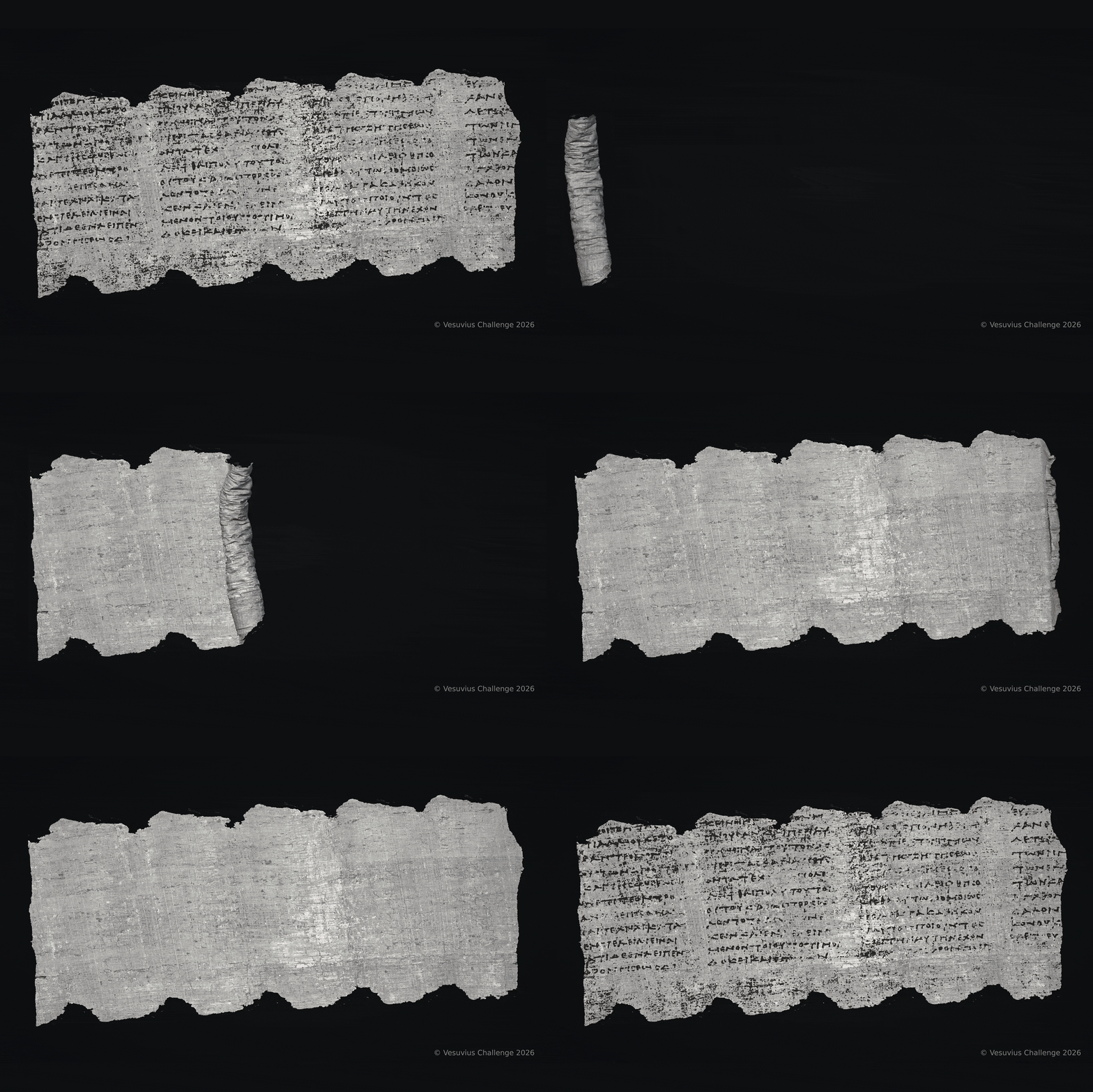
Add as preferred source Researchers have virtually unwrapped a nearly five-foot-long segment of PHerc. 1667. Vesuvius Challenge When Mount Vesuvius erupted in 79 C.E., volcanic ash buried a vast library in the Roman town of Herculaneum. The hundreds of papyrus scrolls trapped inside were only rediscovered more than 1,500 years later, in the mid-18th century. But when scholars tried to unroll them, the carbonized manuscripts crumbled to dust.
Every generation that followed faced the same dilemma: They could wait for technology to advance, abandoning hope of reading the ancient texts in their own lifetime. Or they could try to open the scrolls themselves—and risk destroying them.
Article preview — originally published by Smithsonian. Full story at the source.
Read full story on Smithsonian →
More top stories
Aggregated and edited by the Scoop newsroom. We surface news from Smithsonian alongside other reporting so you can compare coverage in one place.
Editorial policy · Corrections · About Scoop