Anduril isn’t just building the future of warfare; it’s redesigning it
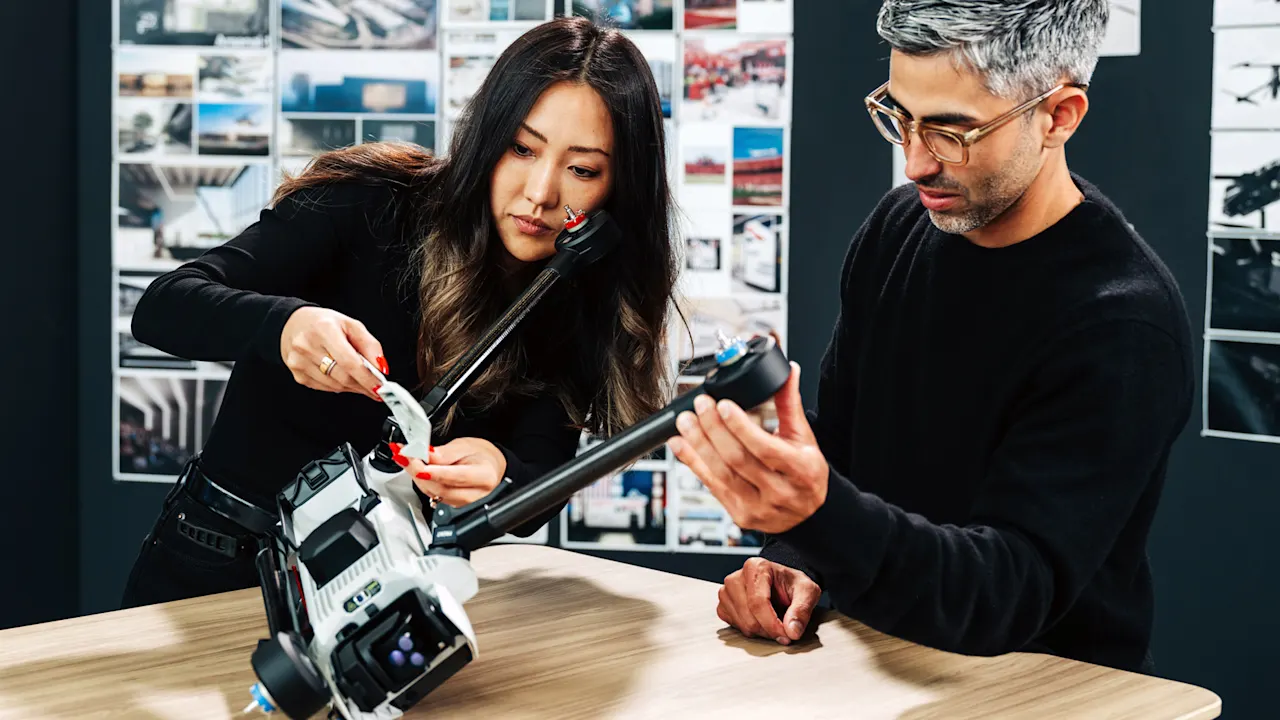
What’s the closest you’ve ever stood to a drone? I’m not talking about a cute quadcopter, but a military-grade death machine that can carry enough warheads to obliterate a bridge, a tank, or a building? Sure, I’d heard of them. I’d seen them on the news. I’ve closely followed the paper, scissors, rock war in Ukraine where every six weeks the Ukrainians or Russians break the rules with new drone hacks. But it wasn’t until I was standing in front of the Fury, an autonomous plane meant to fly alongside F-16s and other military jets, that our Terminator era of warfare really hit me. This thing looks mean in an unknowable way, like a deep-sea predator that’s shed its gills and taken to the skies. It’s hard to look at the Fury without feeling a little afraid, and even a little disgusted. And yet for all my qualms around military spending and my dreams about a peace-filled world without war, ultimately I respond exactly like I’m supposed to: I’m relieved that the Fury is on our side. Or I should say, it can be, for a price. I’m standing next to Jen Bucci, the leather-jacket-clad head of design at Anduril, America’s hottest defense startup. She’s giving me a tour of the showroom, which looks a little like a Costco, with its unadorned concrete floors and stockpile of products—in this case, underwater missiles, an autonomous submarine mothership, and a variety of vertical-launching drones—that are sold in bulk. We’re heading toward the design lab, where Bucci’s team of 50 designers help craft the look and feel of Anduril’s offerings, from the shape of the weapons to the way they’re marketed. I’m the first journalist to be invited inside, and from the moment I step into the space, it’s clear Anduril isn’t interested in being a traditional defense contractor. Anduril is a defense manufacturer founded in 2017 by technologists Palmer Luckey, Brian Schimpf, Trae Stephens, Matt Grimm, and Joseph Chen—a group of technologists and ventu