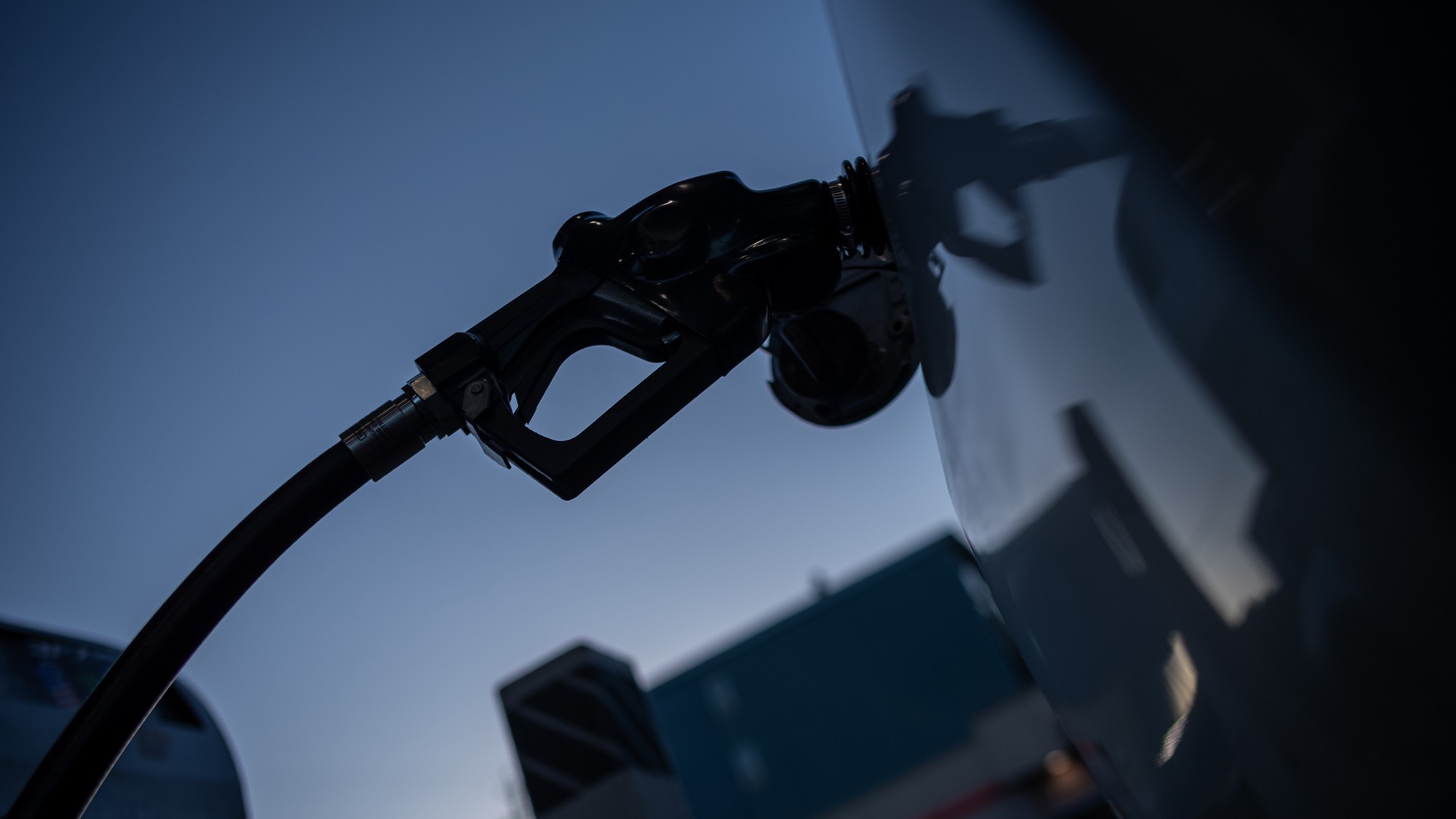
The Gas-Tax Reckoning
In February, the average price of gas was less than $3 a gallon. Today it’s nearly $4.50. Since the start of the Iran war, Americans have spent an extra $39 billion filling the tank.As summer travel season arrives, Congress is considering suspending the 18.4-cent-per-gallon federal gas tax, which largely funds the nation’s highway and transit capital spending, for the first time ever. Democratic Senators Mark Kelly and Richard Blumenthal proposed a “gas-tax holiday” in March; Republican Senator Josh Hawley introduced a bill to suspend the tax. Donald Trump has urged doing so. GOP Senator Mike Lee—who, as recently as 2022, said that letting Joe Biden pause the gas tax would be “treacherous” and “wrong”—wrote on X that it might as well be abolished altogether. Graham Platner, the Democratic U.S. Senate candidate from Maine, has proposed the same.A pause is unlikely to happen: Several key senators are opposed. That it is being considered at all is a sign of the gas tax’s zombie status, not yet dead but not really alive. “It’s not as important as it used to be in any dimension,” Severin Borenstein, a professor of public policy at UC Berkeley’s Haas School of Business, told me. Pausing the tax is a lose-lose proposition: It won’t do much to bring down the price at the pump—but it will accelerate a crisis of infrastructure funding that no one wants to solve.[Ian Bogost: The romance of the gas-station sign]It’s a miracle the United States has a gas tax at all. Since its introduction nearly a century ago, the levy has been derided by the oil industry, the auto industry, AAA, trucking and manufacturing interests, and coalitions of governors. And yet, hidden from consumers at the pump, it has endured as the main way Washington sends road money to the states. Gas and diesel taxes contribute 83 percent of the approximately $64 billion that the Highway Trust Fund distributes every year.Lately, however, the gas tax has been less effective. For one thing, the fee, which has not be