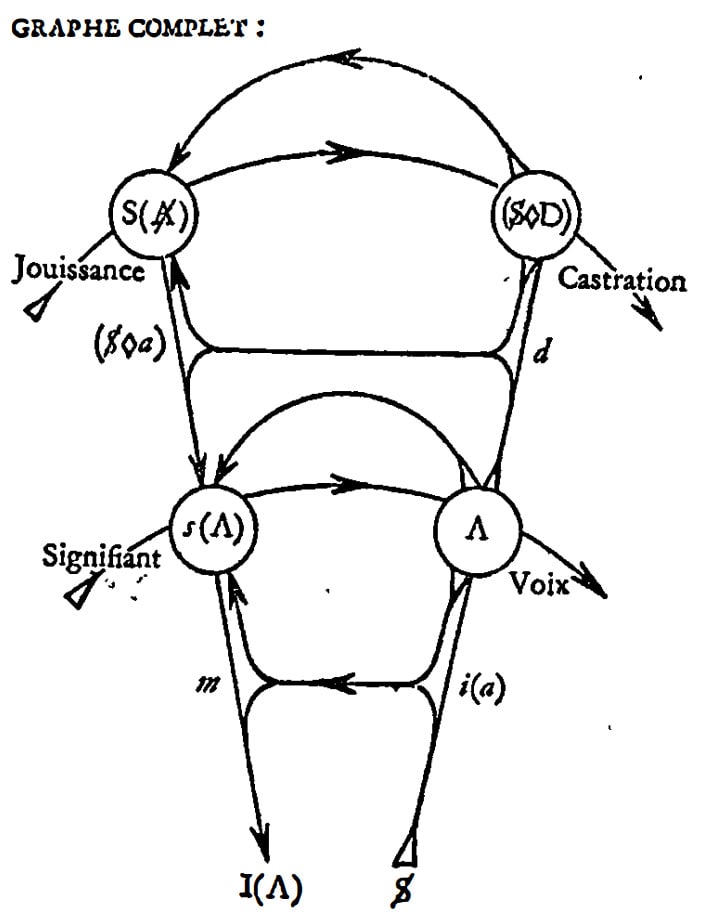
Agent Foundations Reminds Me of Continental Philosophy
Nevertheless, I shall take advantage of your kindness in assuming we agree that a science cannot be conditioned upon empiricism.— Jacques Lacan, “The Subversion of the Subject and the Dialectic of Desire in the Freudian Unconscious”[1]Freud developed the first modern theory of the unconscious. His writings on drives, dreams and the id were instrumental in developing modern practices of psychology and neuroscience. Modern researchers are unlikely to leverage concepts like the superego or the oedipal complex, because we have been able to further our understanding of the mind through empirical work, which does not support many of Freud’s specific claims. Freud pushed us in the right direction, but he lacked an empirical foundation to make precise claims.Freudian psychoanalysis mapped well to our narrative claims about the mind. Particularly coming out of the prudishness of late 19th century Europe, it was intuitive to learn we all had unconscious drives that did not track with societal norms. Stefan Zweig, writing about the austere Austro-Hungarian norms of his youth, wrote:The more a woman was supposed to appear as a “lady,” the less her natural forms were permitted to be discernible; fundamentally, fashion, with this deliberate guiding principle of hers, was merely serving obediently the general moral tendency of the time, whose chief concern was covering and concealing.[2]— Stefan Zweig, Die Welt von Gestern (1942)Leaving this period of social conservatism for the competing liberalisation and violence of the first half of the 20th century, it should not be surprising if the public was eager to learn about our suppressed tendencies, nor if they continued to explore this narrative framework far past its utility.In 1952, Jacques Lacan began a series of seminars on his idiosyncratic psychoanalytic theory, which would later be published as “Écrits” in 1966. Building on the work of Freud and connecting it with the structuralist linguistics developed by Ferdinand de Saussu