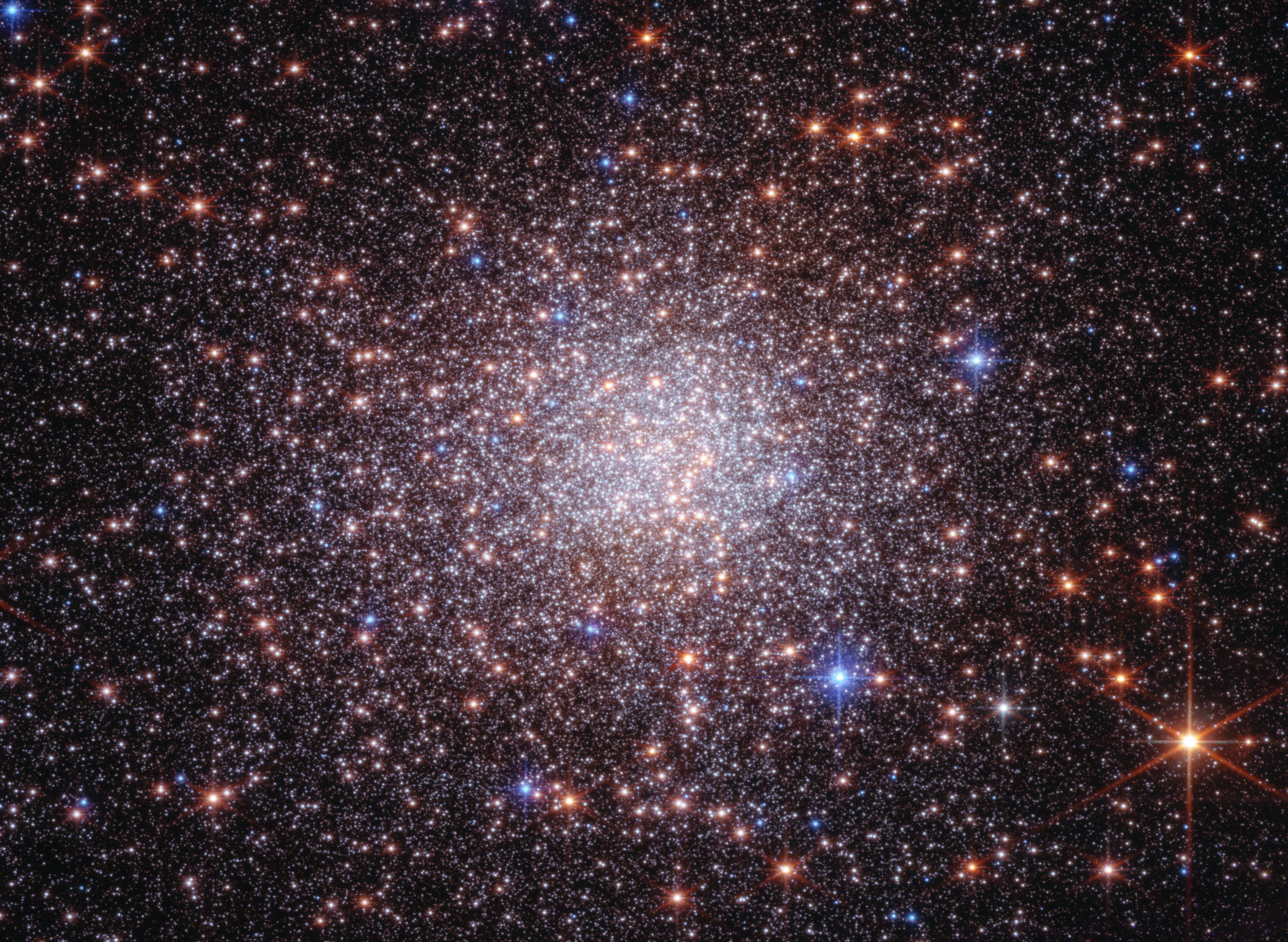
NASA Webb, Hubble Reveal History of Relic of Milky Way’s Formation
Why this matters: new research or scientific developments with potential real-world impact.
Explore Webb Science James Webb Space Telescope (JWST) NASA Webb, Hubble Reveal… Webb News Latest News Latest Images Webb’s Blog Awards X (offsite – login reqd) Instagram (offsite – login reqd) Facebook (offsite- login reqd) Youtube (offsite) Overview About Who is James Webb? Fact Sheet Impacts+Benefits FAQ Webb Timeline Science Overview and Goals Early Universe Galaxies Over Time Star Lifecycle Other Worlds Science/Engineering Explainers Observatory Overview Launch Deployment Orbit Mirrors Sunshield Instruments & ISIM Module Instrument: NIRCam Instrument: MIRI Instrument: NIRSpec Instrument: FGS/NIRISS Optical Telescope Element Backplane Spacecraft Bus Webb vs Hubble -> Multimedia About Webb Images Images Videos What is Webb Observing? 3d Webb in 3d Solar System Podcasts Webb Image Sonifications Webb’s First Images Team International Team People Of Webb More For the Media For Scientists For Educators For Fun/Learning 7 Min Read NASA Webb, Hubble Reveal History of Relic of Milky Way’s Formation New observations from Webb combined with multiple observations from Hubble prove that Terzan 5 is a self-contained, self-enriching stellar system that contains up to four distinct star populations. It orbits within our Milky Way galaxy’s central bulge. Credits: Image: NASA, ESA, CSA, STScI, Giorgia Zullo (University of Bologna), Francesco Ferraro (University of Bologna); Image Processing: Alyssa Pagan (STScI) Researchers using two of humanity’s most powerful observatories — NASA’s James Webb and Hubble Space Telescopes — have definitively shown that Terzan 5 is not a globular star cluster as it was once classified, offering new insight into how galaxies like our own form and evolve over time. A globular star cluster typically has only one ancient star population. New data not only confirms the existence of two distinct populations of stars in Terzan 5, but also provides evidence for two more recent rounds of star formation. Although located within the crowded bulge of ou