SMOKERS’ CORNER: REWRITING THE PAKISTAN NARRATIVE
Why this matters: local context for readers following news across Pakistan and the region.
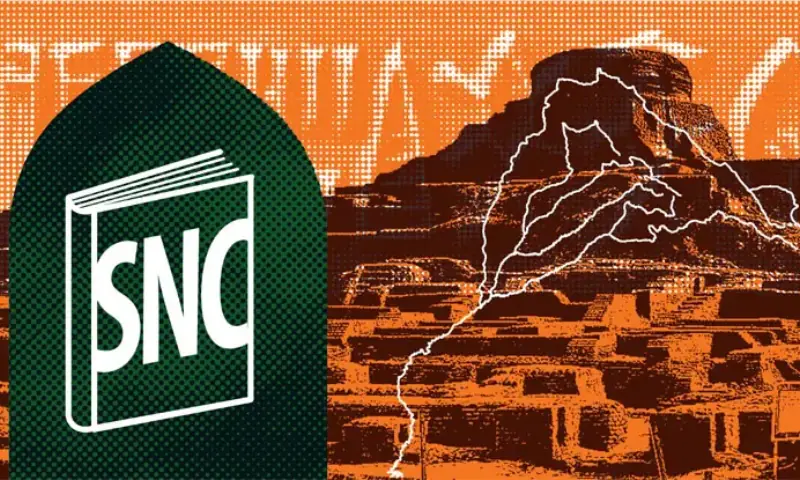
Illustration by Abro Introduced by the Imran Khan administration (2018-2022), the controversial Single National Curriculum (SNC) represented a final institutional attempt to preserve a state-curated national narrative dating back to the 1970s. By the 2010s, this identity framework had begun to fracture under the weight of escalating sectarian violence, unprecedented Islamist terrorism and fraying civil-military relations. The Islamist violence intensified alongside growing political friction between the military and the Pakistan Peoples Party (PPP)-led government that took power in 2008. The resulting instability triggered a national debate over the state’s religious narrative. The conflict between the state and the Islamists exposed a stark ideological contradiction: anti-state extremists were utilising the exact same Islamist rhetoric that the state, mainstream religious parties, and centre-right groups had been championing, especially ever since the 1980s. This forced a fundamental questioning of state-sponsored Islam, particularly its presence in school textbooks. For decades, the Pakistani state crafted a national identity detached from the Subcontinent’s past. But changing dynamics within the country and in the region are pushing it towards a different imagination of itself — as the modern inheritor of the ancient Indus civilisation This discourse was not entirely unprecedented. In the 1980s, intellectuals such as Sibte Hasan, K.K. Aziz and Ayesha Jalal created a counter-narrative by arguing that the state was distorting the foundational vision of Pakistan’s founder, Muhammad Ali Jinnah. They contended that Jinnah viewed Islam as an enlightened, humane and modern faith. This portrayal was in stark contrast to the rigid version of Islam and of Jinnah’s image sculpted by the state from the 1970s onward. However, the counter-narratives remained largely confined to elite intellectual circles. Meanwhile, the official state narrative grew increasingly dominant, thor