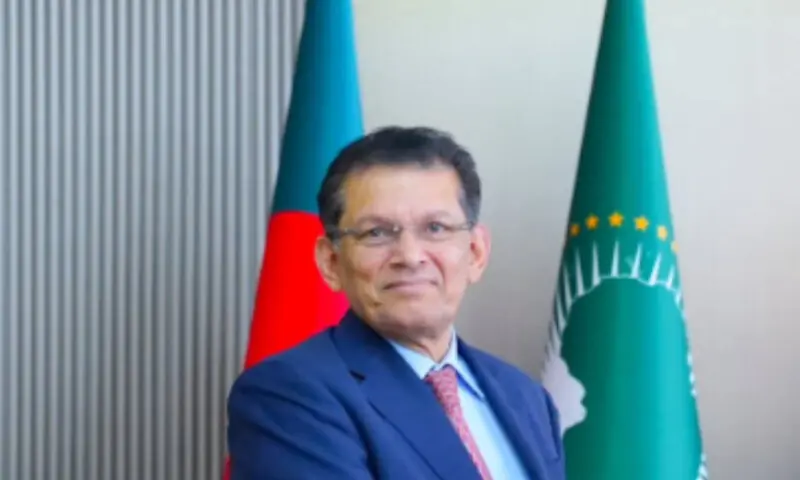
Bangladesh elected president of UN General Assembly in closely contested vote
Why this matters: local context for readers following news across Pakistan and the region.
UNITED NATIONS: Bangladesh’s Foreign Minister Khalilur Rahman was elected president of the United Nations General Assembly (UNGA) for its 81st session (2026–2027) on Tuesday, defeating Cyprus’s candidate Andreas S. Kakouris in a tightly fought vote that underscores the continuing importance of regional consensus-building within the global body. Rahman secured 99 votes in the 193-member UNGA, while Kakouris received 91 votes. There were no abstentions. The required majority for the election was 96 votes. How the election works The president of the UNGA is elected annually by the 193 member states, with each country holding one equal vote. According to the UN’s Rules of Procedure, the election is conducted by secret ballot unless members agree otherwise, and a candidate must obtain a simple majority of those present and voting to win. While the process is formally competitive, it is shaped in practice by a long-standing principle of geographical rotation, under which the presidency alternates among regional groups. For the 81st session, the Asia-Pacific Group was entitled to nominate candidates, leading to a contest primarily between Bangladesh and Cyprus-backed contenders within the agreed rotation framework. The president-elect assumes office at the opening of the UNGA session in September 2026 and serves a one-year term, presiding over plenary meetings, managing debate, and facilitating negotiations among member states. Significance of the outcome Bangladesh’s election is notable for several reasons. First, the margin reflects a competitive race within a system that often produces consensus or unopposed candidates. The relatively close result—99 to 91—signals a more contested political environment within the UNGA, where regional alignments and diplomatic campaigning increasingly matter. Second, the presidency is a high-visibility role in global diplomacy. Although the UNGA president does not set binding policy, the officeholder plays a key role in shaping the agend