Caltech Welcomes Astrophysicist Ray Jayawardhana as New President
Why this matters: new research or scientific developments with potential real-world impact.
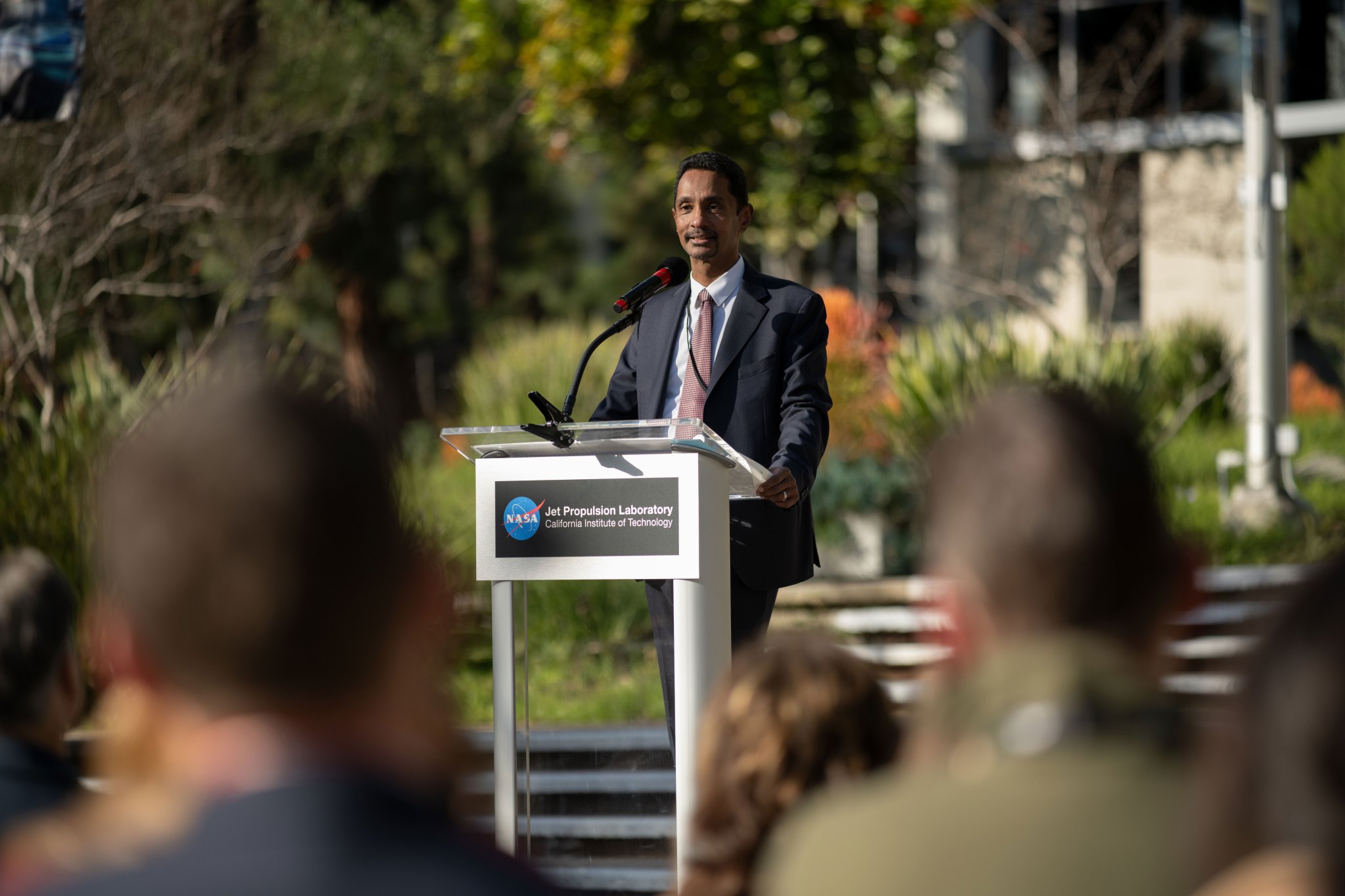
Ray Jayawardhana, Caltech’s 10th president, spoke at JPL on Jan. 6, 2026, the day his appointment was announced.NASA/JPL-Caltech Ray Jayawardhana begins his tenure today as the 10th president of the California Institute of Technology. His selection as Caltech’s president, and as the Sonja and William Davidow Presidential Chair and professor of astronomy, was announced Jan. 6. Jayawardhana succeeds Thomas Rosenbaum, who had served as Caltech’s president since 2014. Founded in 1891, Caltech manages the Jet Propulsion Laboratory for NASA. The lab traces its origins to 1936, when a group of Caltech graduate students and other rocket enthusiasts began pioneering work in rocket propulsion. Once NASA was established in 1958, JPL became the space agency’s first and only federally funded research and development center. “Today, I’m honored to begin my service as Caltech’s 10th president,” Jayawardhana wrote in his first message to the Caltech community. “Long before this day appeared on the horizon, Caltech and JPL have held a special place in my mind as beacons of humanity’s most ambitious acts of exploration and discovery.” Looking ahead, Jayawardhana said he will be a fierce advocate for the Institute’s mission and the people who advance it, partnering with Caltech and JPL colleagues and other stakeholders to ensure the Institute will continue to have transformative impact on humanity. He also said he aims to pursue bold, catalytic investments in “blue-sky” ideas on campus, at JPL, and across the Institute’s suite of global observatories; enrich the educational experience of undergraduates, graduate students, and postdoctoral scholars; and expand the Institute’s engagement with the public. “Dr. Jayawardhana steps into this role at a pivotal moment for Caltech, JPL, and NASA,” said Dave Gallagher, director of JPL. “We look forward to working closely with him on missions that will help define a new era of U.S. exploration — extending humanity’s reach into the solar system,