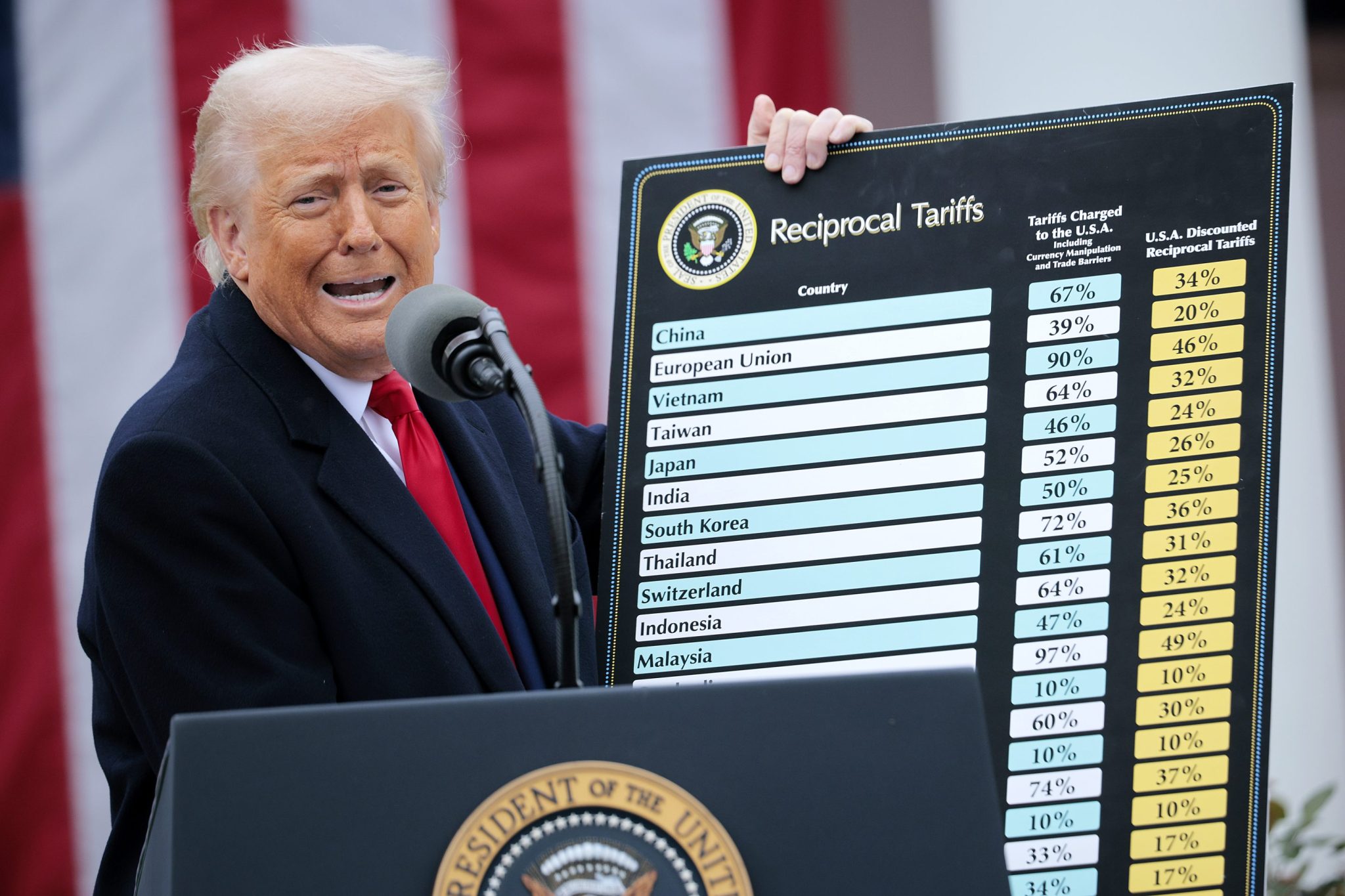
A year after Liberation Day, Trump’s tariffs have done ‘significant damage’ to the U.S. economy, says Moody’s chief economist
Economists now have more than a years’ worth of data to pick over when it comes to the impact of Liberation Day tariffs. While some might argue the revenue tariffs have generated are a gamechanger for the economy, others point to cost for those paying them.Mark Zandi, chief economist at Moody’s Analytics, is concerned about the health of U.S. consumers. He previously told Fortune that—with the exception of job losses—a significant portion of U.S. families are effectively living in a recession.Tariffs haven’t helped their fortunes. In a note yesterday, Zandi said that the data are “definitive”: “The tariffs have done significant damage to the economy,” he wrote. “Since that day, job growth has come to a standstill, with only the non-traded healthcare industry adding meaningfully to payrolls,” Zandi added. “Also, since that day, inflation has accelerated, with the consumer expenditure deflator increasing at a 3% year-over-year pace, up from 2.5% before the tariffs and well above the Federal Reserve’s target of 2%.” Zandi’s take counters arguments from the likes of U.S. Treasury Secretary Scott Bessent, who believes tariffs are the “dog that didn’t bark,” and that supply-side shocks don’t cause inflation, only temporary price moves in narrow markets—which the Fed should be encouraged to look through. “We disagree,” with that argument, Aditya Bhave, chief U.S. economist at Bank of America wrote in a note late last month. “Supply shocks are inflationary because they shift the aggregate supply curve upward. Consumers respond by spending less in real terms and/or saving less. Indeed, since Liberation Day, real consumer spending has slowed, the saving rate has declined and y/y headline PCE inflation has increased by more than 40 [basis points].” Setting the consumer impact aside (albeit a major factor in the health of the U.S. economy), it’s hard to