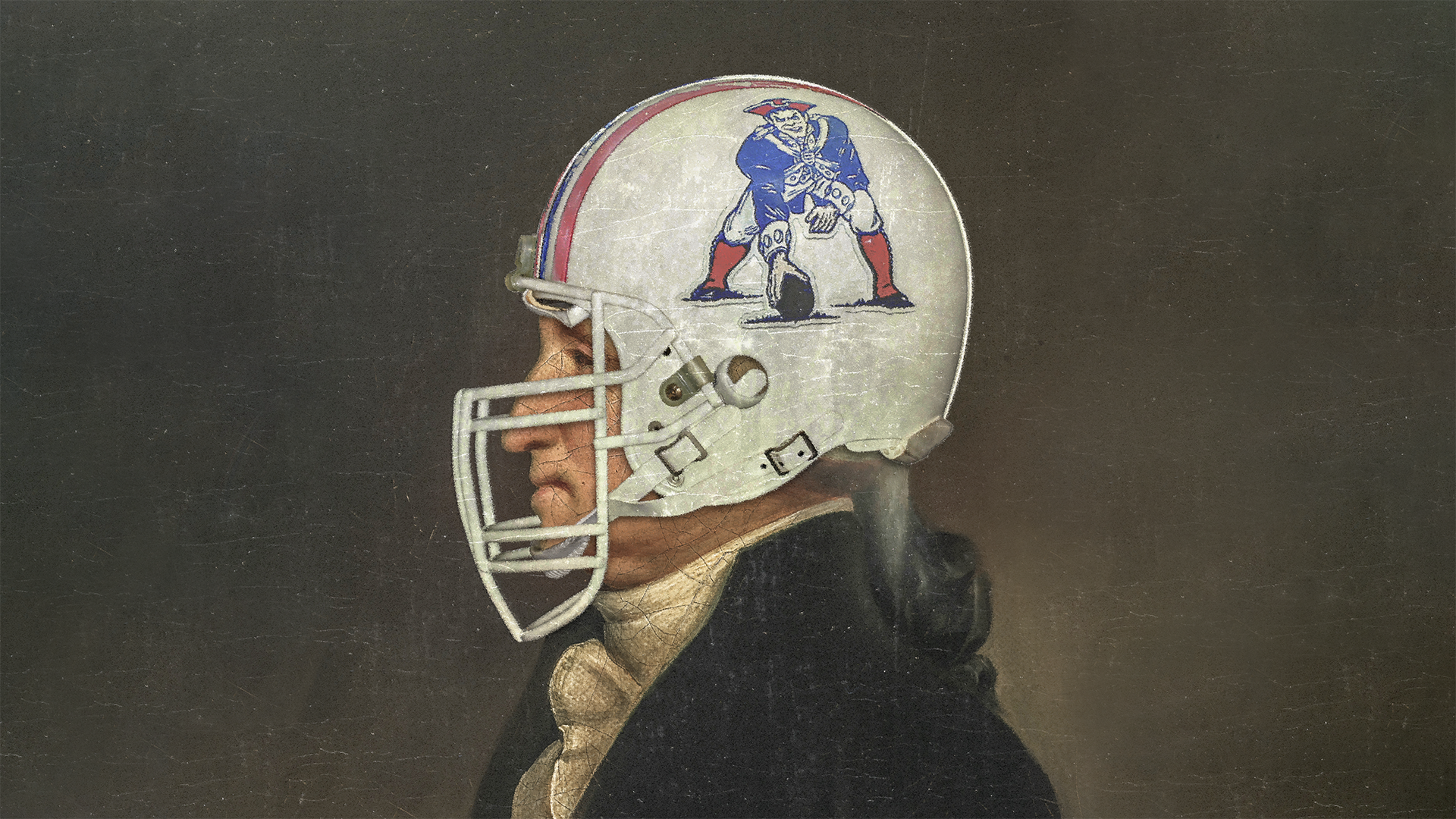
The Rebellious Origins of American Sports
The sentry box at the royal governor’s residence in Boston was a too-inviting target for young Americans with an urge to kick, throw, or swing at something British. The regiments who occupied the city to enforce the Crown’s taxation were accustomed to dodging snowballs, oyster shells, and burning coals. Then, one January day in 1769, a gang of boys found a novel form of harassment: They launched an unruly game of “foot-ball” in the street facing the sentry box. As the boys played, the action came ever closer to grazing the redcoat on duty. What happened next infuriated Royal Governor Sir Francis Bernard, a meaty-faced, tilt-chinned baronet. Somehow, probably by piling into it, the boys toppled the sentry box onto the street.That foot-ball game was more than just a “little rude boyish trick,” as a newspaper account, often attributed to Samuel Adams, put it. It was a barrier-crashing act, an early sign of a belligerently rule-testing national character. To Bernard, it was “another Proof of the Necessity of Regular Troops, to keep the Inhabitants in Order.”But keeping young Bostonians in order wasn’t so easy. In February 1770, another throng of boys, which may have included Paul Revere Jr., amused themselves in the street by practicing their aim with rocks and snowballs, which they threw at a Loyalist merchant’s windows. When their stones began hitting people inside the house, a British customs agent fired a shotgun at the boys, killing an 11-year-old named Christopher Seider. Just a week later, another street altercation resulted in the Boston Massacre, immortalized in Paul Revere Sr.’s engraving. “As Boston simmered on the eve of Revolution,” the scholar Daryl Leeworthy has observed, “even little things like footballs kicked at soldiers could bring the city dangerously close to the edge.”Viewed from the present, these young athlete-patriots seem to possess a quintessentially American mix of pride, irreverence, and subversion. The Sons of Liberty channeled these energ