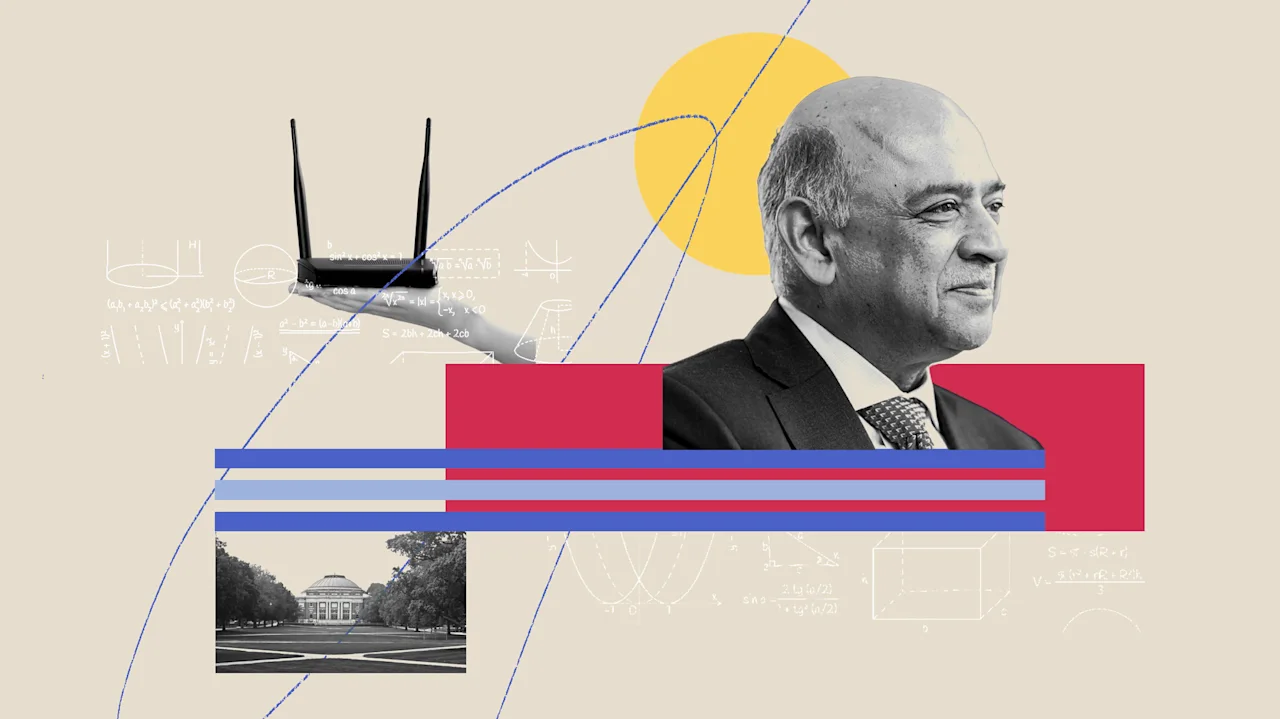
IBM CEO Arvind Krishna on his first job and the lessons he learned from it
I joined IBM Research in the early 1990s wanting to be a networking specialist. I spent time in grad school at the University of Illinois at Urbana-Champaign (UIUC) working on algebraic coding theory—specifically cyclic codes—for my master’s thesis. Cyclic codes are mathematical patterns that prevent signals from interfering with each other. Think of them as a way to let hundreds of conversations happen in the same room without anyone talking over each other. At the time, I thought that knowledge might never be useful again. But about six months into my job at IBM, serendipity struck. People started asking: is it possible to build a wireless network? Until then, wired networks were the only viable option outside of limited uses of wireless in aviation. But once the FCC gave out spectrum allocations, the need became urgent: how could you prevent hundreds of wireless devices in a building from conflicting with each other? That’s a classic coding problem. And it turned out to be exactly what I had worked on in grad school. I knew the answer right away; I didn’t need to reinvent it. What once seemed like obscure academic work suddenly became the foundation for what we now call Wi-Fi.That’s when I learned an important lesson: curiosity compounds. The questions worth pursuing don’t always yield immediate results. When you allow curiosity to lead you, you never know when it might pay off. Technology alone isn’t enough As we developed the technology and began collaborating with IBM’s product team, I learned another important lesson: you can’t win with technology alone. You also need a deep understanding of the market. We had demonstrated that high-speed wireless connectivity was viable. Still, the product team wasn’t convinced. We saw laptops on the horizon and imagined a world where people could work untethered. But the product team reminded us that customers had already invested heavily in wiring their offices, making Wi-Fi appear impra