AI drug discovery leaders warn U.S. health funding cuts risk falling behind global rivals
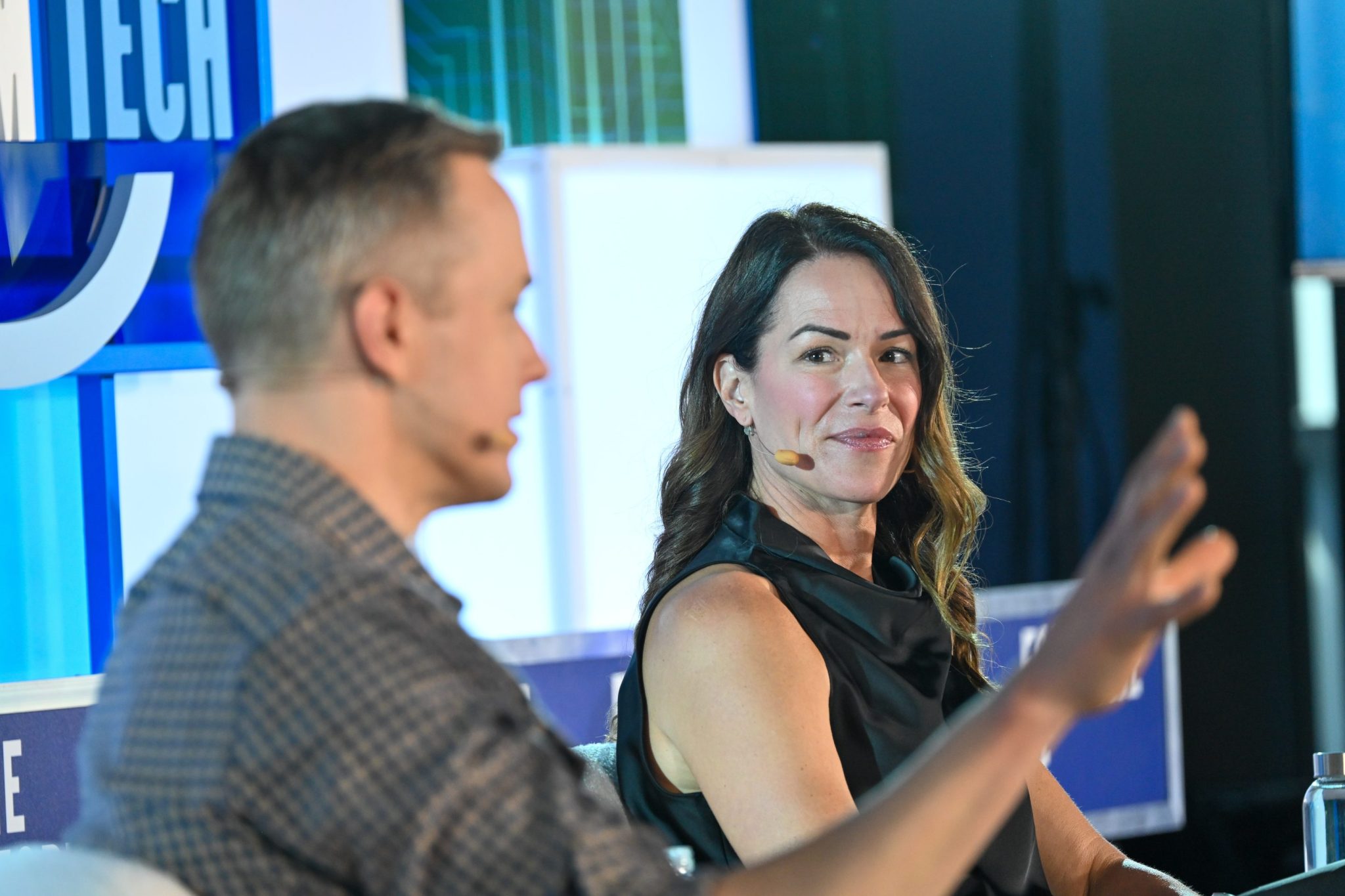
Washington pulled tens of billions from national health funding just as healthcare and biotech hit its Chat GPT moment. At Fortune Brainstorm Tech in Aspen this week, the people building AI drug discovery said (more or less) that the U.S. government picked the worst possible moment to blink. “Falling below the scientific intelligence of one’s adversary at a corporate level, at a sovereign level, is almost like an unimaginable competitive disadvantage,” said Geoffrey von Maltzahn, co-founder and CEO of Lila Sciences, at the conference on Tuesday. NVIDIA’s Kimberly Powell, vice president of healthcare, was more direct: “If we defund now, while the rest of the world leans in—which Europe is leaning in, which a lot of the Asian countries are leaning in—we will be left behind.” The duo made the case that the scientific method and agentic AI are, structurally, the same thing: pose a question, gather context, observe, reason, act. The implication being that the moment to pour resources in is now, not later. AI drug discovery is a $3.25 billion market today, growing at roughly 26% annually and projected to top $10 billion by 2031. And the broader bet on AI drug discovery has drawn serious capital—Demis Hassabis’s Isomorphic Labs raised a $2.1 billion Series B earlier this year—but the money is flowing into a space where timelines are long and finish lines move. Lila Sciences, the Flagship Pioneering spinout Von Maltzahn leads, has raised $550 million to build what it calls scientific superintelligence—AI systems running the scientific method around the clock across materials, chemistry, and life sciences. Lila’s agents recently identified catalysts for splitting water into hydrogen and oxygen that outperform the precious metals the industry currently relies on. A third of those suggestions, he noted, made no sense to his Caltech-trained team at first. They’re now the highest-performing catalysts on record. “I think