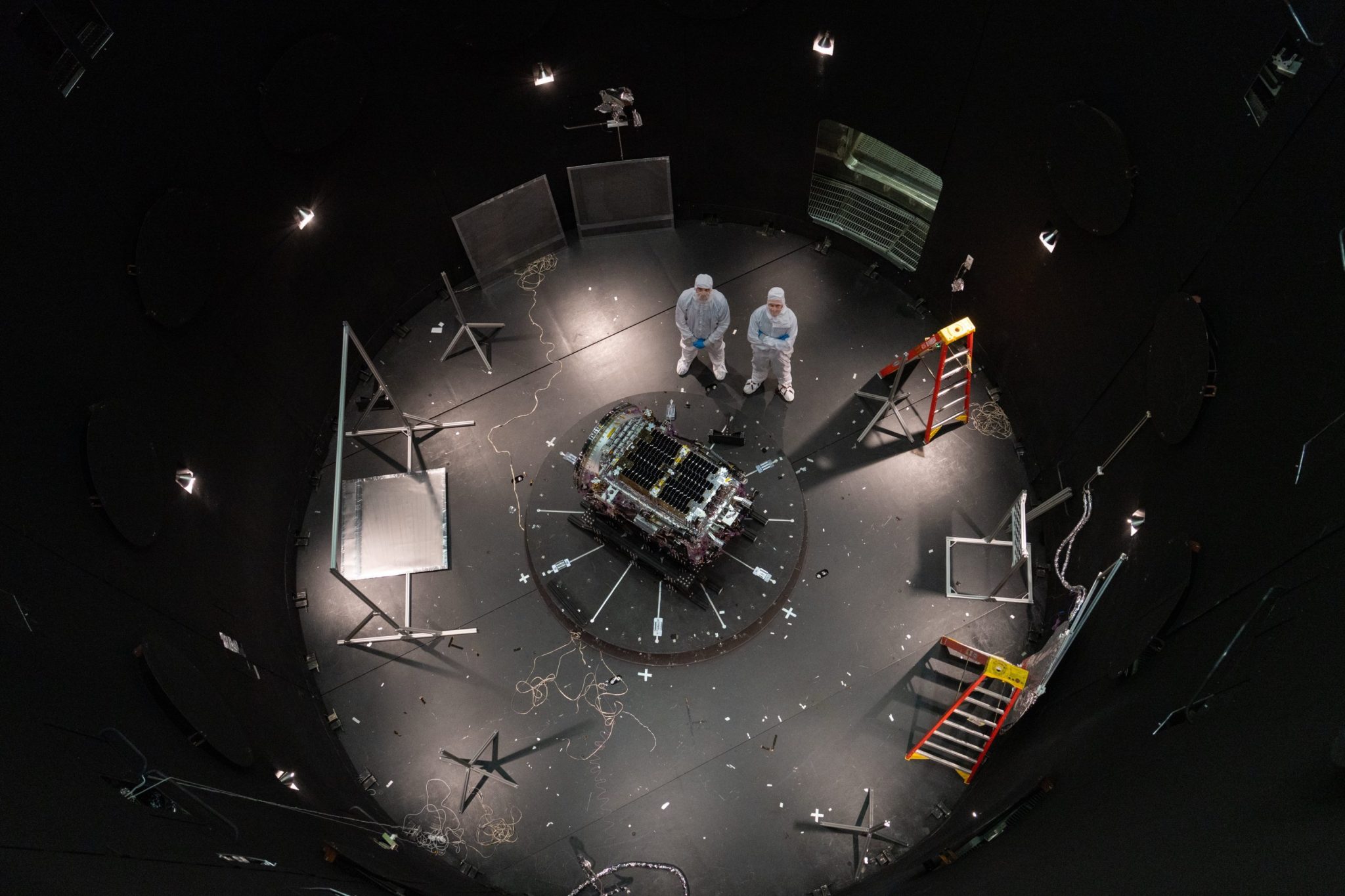
NASA plans daring robotic rescue mission to prevent an aging space telescope from falling back to Earth, and the legendary Hubble could be next
NASA is racing to save an aging telescope from falling back to Earth with a daring rescue mission. The $30 million salvage operation gets underway as soon as this week with the planned launch of a robotic lifesaver. NASA hired startup Katalyst Space Technologies to boost the Swift Observatory to a higher orbit where it can continue hunting for some of the universe’s biggest explosions. A three-armed spacecraft built by Katalyst will chase after Swift once it takes off from an atoll in the Pacific’s Marshall Islands aboard an airplane-launched Pegasus rocket. Liftoff could occur as early as Tuesday. Scanning the cosmos since its launch in 2004, Swift has been sinking faster and faster because of recent intense solar activity. It needs to get to a higher, more stable orbit as soon as possible to survive. NASA’s Hubble Space Telescope — also at risk — could be next. Like Swift, Hubble is losing altitude as the sun erupts with one flare after another. Katalyst Space CEO Ghonhee Lee said his company’s next-generation robot, still in development, could save the day for the much bigger Hubble in a couple years. Only China has attempted a mission like the upcoming one, successfully boosting a satellite into a higher graveyard orbit four years ago. “This is the first American space robot to go up and do anything like this,” Lee told The Associated Press. “NASA has all these big senior observatories … all of them can benefit from a service like this. So what we’re proving with this mission is this is a new play in the playbook that’s available.” It will take Katalyst’s autonomous spacecraft, named Link, about a month to rendezvous with Swift and catch it, and another couple months to raise its orbit from the current 224 miles (360 kilometers) to the desired 373 miles (600 kilometers). The 1.6-ton (1.4-metric ton) gamma ray observatory must be above 185 miles (300 kilometers) for the rescue to work. It’s expected to reach that point of