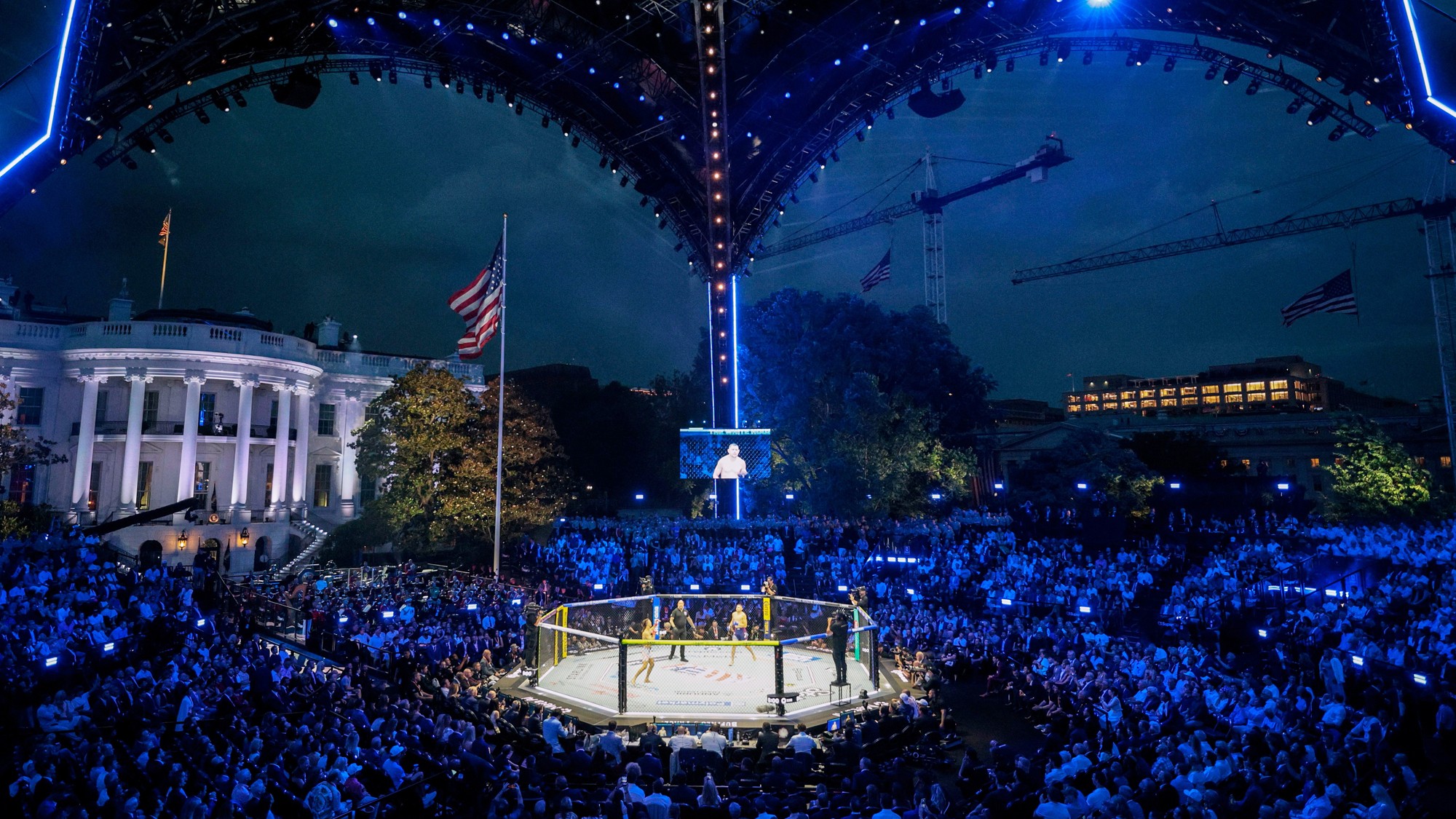
A Night of Dominance and Submission
Bo Nickal, his face shiny with Vaseline, had just finished pounding the nose and eyes and ears of his opponent, Kyle Daukaus, who lay on his back like an overturned, squashed bug. Immediately, Nickal jumped over the edge of the Octagon and landed just in front of Donald Trump, who stood up and grabbed the fighter’s hand. Still panting, Nickal thanked the president: “This wouldn’t be possible without you.” So ended the second bout of last night’s UFC 250, the extravaganza of squirting blood and patriotic kitsch that took place—to the stupefaction of all, including a giddy Joe Rogan—on the South Lawn of the White House.All of this was pure, distilled Trump. No previous American leader could plausibly have presided over the scene of a tattooed Brazilian fighter in a black cowboy hat and Lycra shorts running out of the White House, saluted by honor guards, with the intent of pulverizing another human being. He had built an Octagon on the lawn in part, surely, to troll his opponents, as he so often does, but what I saw in the fighting itself—in fight after fight after fight, seven in all—was an affirmative expression of Trump’s favorite kind of storyline: dominance and submission. This was not just a political stunt, but the best way he could imagine spending his 80th birthday.Other presidents have used stagecraft to project their worldviews. Ronald Reagan was an acknowledged genius at this—or, rather, his main image manager, Michael Deaver, was. Reagan would give speeches positioned so that the Statue of Liberty or the Berlin Wall was perfectly framed in the background. The idea was that Reagan would borrow from the symbolic power of these places.Trump has the same Hollywood instincts, but in the tableau he created last night, he was not using the White House to elevate himself; rather, he was swallowing it whole. The 600-ton star-spangled Claw, which looked like it was about to pick up the White House like a stuffed animal in an arcade game, was meant to convey dominan