NASA Sounding Rocket to Launch Student Experiments
Why this matters: new research or scientific developments with potential real-world impact.
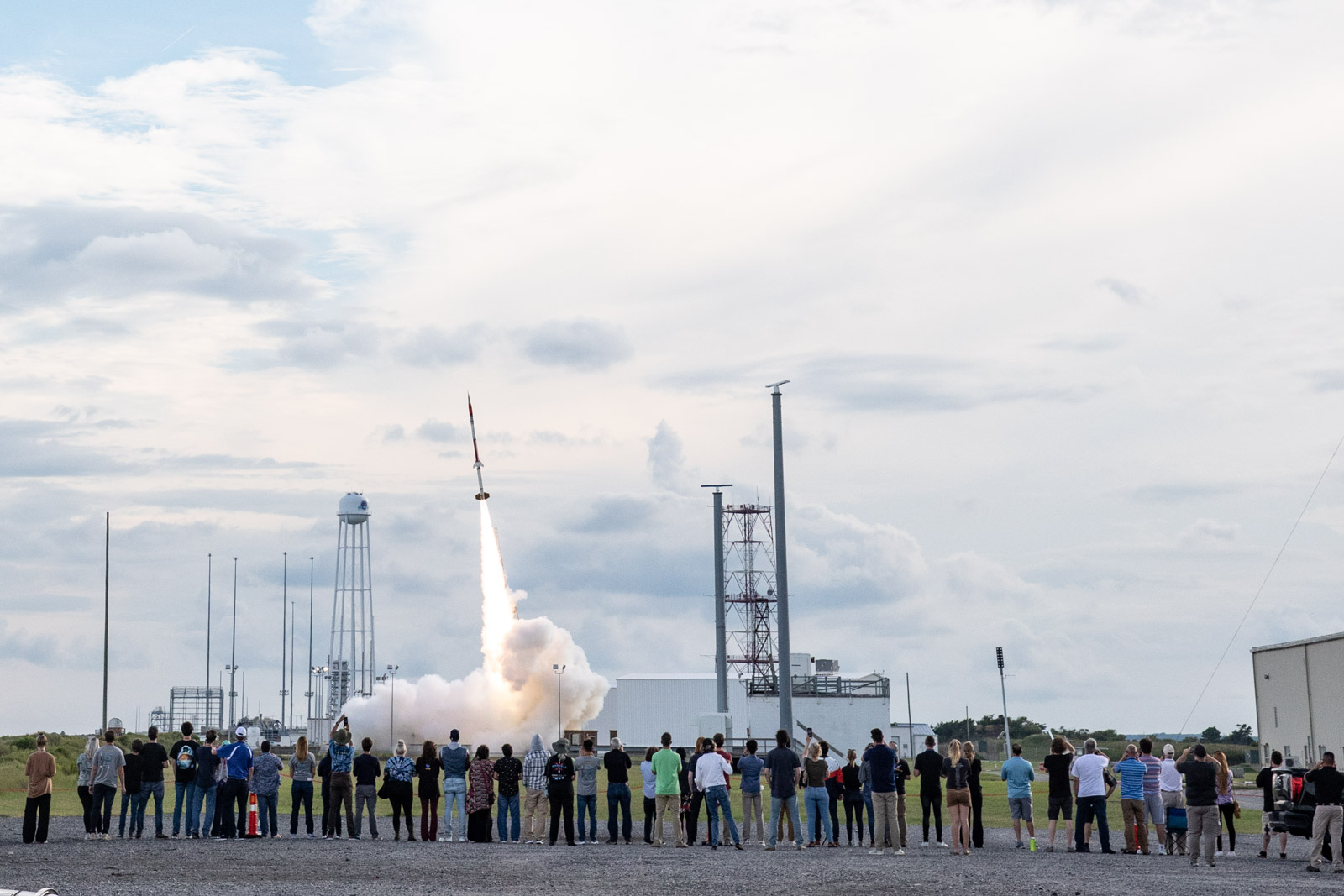
EDT, with a backup day on Thursday, June 25. Students watch as their experiments launch aboard a sounding rocket for the Rock Sat-X program from NASA’s Wallops Flight Facility Aug. 11, 2022, at 6:09 p.m. EDT. The Terrier-Improved Malemute rocket carried the experiments to an altitude of 99 miles before descending via a parachute and landing in the Atlantic Ocean.NASA Wallops/Terry Zaperach The RockSat and RockOn programs provide technical training and hands-on experiences that prepare and equip students to enter the United States aerospace industry. For the first time, NASA will combine both the RockSat and RockOn missions into one rocket, which will carry experiments developed by nearly 250 participants from 38 university and community college teams. “The challenge was finding ways to fit as many experiments onto one sounding rocket as we could,” said Victoria Stoffel, workforce development lead at NASA Wallops. “The Sounding Rocket Program Office team found creative ways to fit nearly 50 experiments into one rocket. We are grateful to the Wallops teams for making this happen for the students to get the most from this experience.” The RockOn teams work together to build their experiment onsite, getting hands-on experience putting together a circuit board from scratch and launching it into space. The more advanced RockSat program teams design and build their experiments, going through design reviews modeled on larger NASA missions. Each team can experience what it’s like working on a real NASA mission, from development to launch. The RockSat student experiments range from taking measurements of weather and radiation in Earth’s upper atmosphere to testing technologies, suc