This unfathomably huge fungal network keeps Earth cool and green
Why this matters: environmental and climate reporting with long-term consequences.
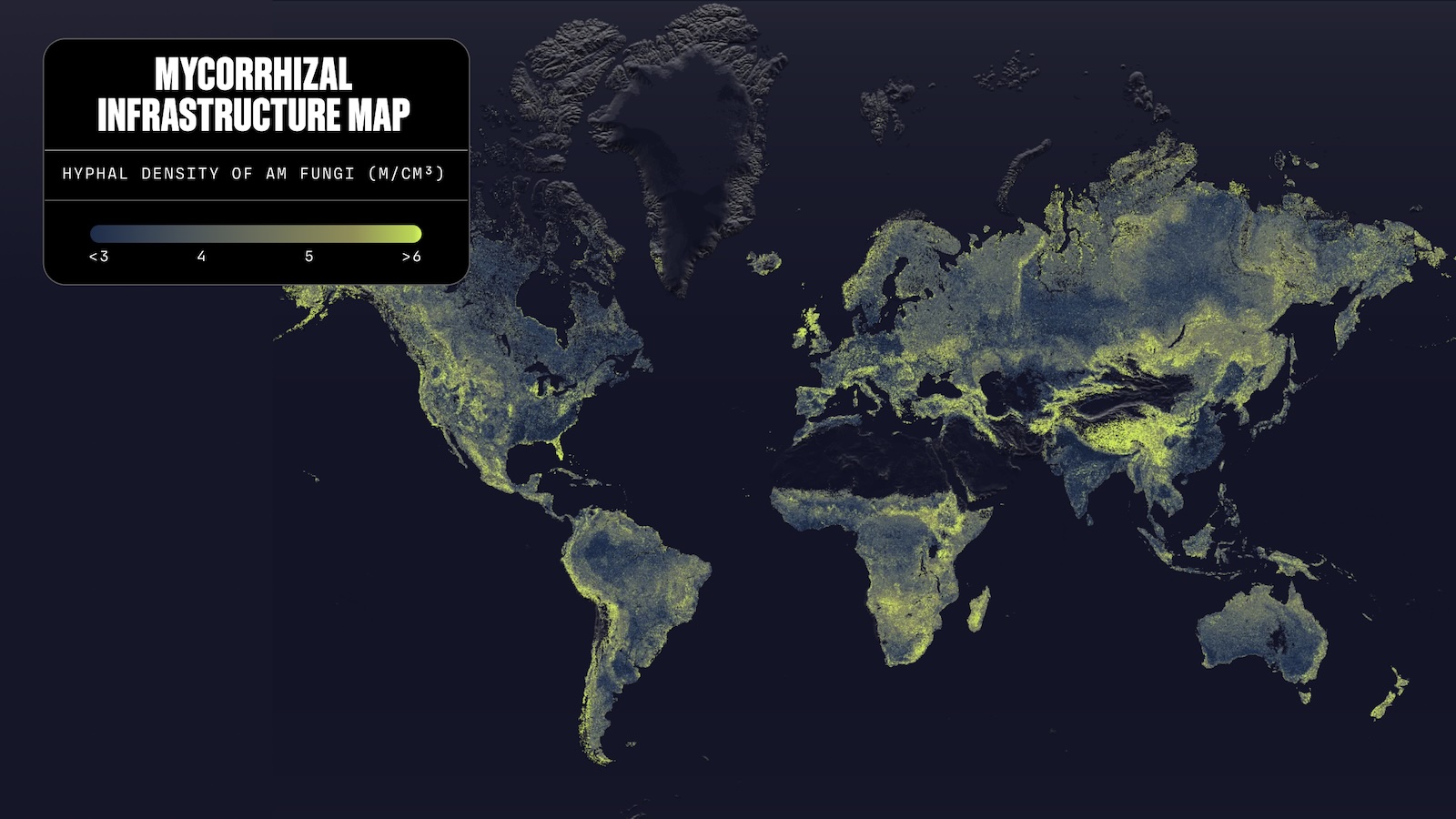
Even if you don’t like eating mushrooms, you’re in debt to fungi. One group of them, known as arbuscular mycorrhizal fungi, form vast subterranean networks of tubes called hyphae, hooking up with the roots of plants to exchange nutrients. Earth is so verdant in large part thanks to these partnerships, as this expansive infrastructure is associated with nearly three-quarters of all plant species. But because the network sprawls underground, it’s been difficult for scientists to determine just how much arbuscular mycorrhizal fungi is out there. (Good luck digging everywhere on the planet and taking samples.)Scientists have developed a workaround, which has produced some astonishing numbers. Using machine learning models, they’ve estimated that worldwide, the arbuscular mycorrhizal network stretches for 110 quadrillion kilometers, almost a billion times the distance from Earth to the sun. (Scoop up just a teaspoon of soil and you might find 10 meters of fungal strands.) Every year, these fungi shuttle around 4 billion metric tons of carbon, equal to 11 percent of humanity’s CO2 emissions. Because scientists have already taken thousands upon thousands of samples around the world, the researchers could train the models to build maps (you can play with them here) that predict where these fungi are more or less concentrated, even in the most remote environments. “We have started to have a clear picture of the full extent of these hidden living infrastructures that circulate carbon and nutrients in the soils beneath our feet,” said Toby Kiers, executive director of the Society for the Protection of Underground Networks and coauthor of the new paper, which published today in the journal Science. In this map, brighter yellow spots indicate higher densities of arbuscular mycorrhizal fungi. Courtesy of the Society for the Protection of Underground Networks There are two major classes of mycorrhizal species. The ectomycorrhizal fungi grow as sheaths around a plant’s roots, espec