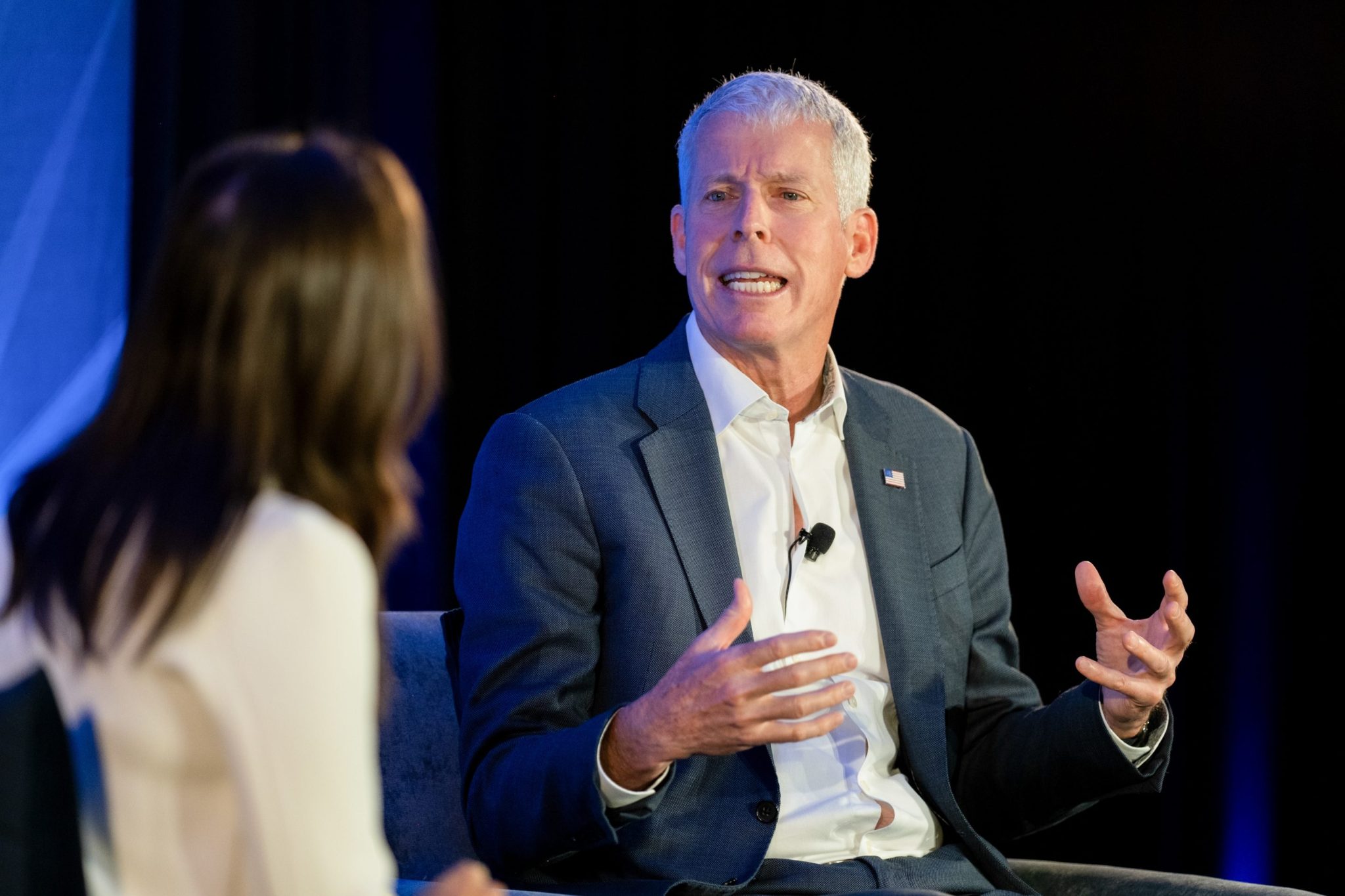
U.S. energy secretary says 7 million barrels of oil exiting Persian Gulf daily, but Chevron CEO rebuts the claim
U.S. Energy Secretary Chris Wright said nearly 7 million barrels of oil are now exiting the Persian Gulf daily—about half of the volumes that were stranded by the Strait of Hormuz chokepoint—thanks to U.S. military assistance, but Chevron CEO Mike Wirth rebutted the assertion, arguing that smaller, albeit rising, volumes are trickling out. More oil clearly has begun moving through the Strait of Hormuz of late amid the ongoing Iran war—although the exact volumes are hard to parse—but Wright’s estimates surprised energy market analysts to the upside. He credited U.S. military intervention. More vessels are also taking the calculated risk by turning off their transponders and going dark. Both Wright and Wirth were speaking June 12 at a Bloomberg energy event in Houston. With nearly 20% of the world’s global oil flows initially disrupted from the war, Saudi Arabia and the United Arab Emirates are diverting more volumes via pipelines. Wright said that left about a 14 million-barrel-per-day gap in typical flows of crude oil and some petroleum products. “Flows today are approaching half of the gap, and they’re rising,” Wright said. “Ultimately, we will restore the flows with our without [Iran].” He said the 7 million barrels per day is a “rough estimate,” adding, “and it’s rising.” But the Chevron CEO contented that those numbers don’t quite match what the Big Oil giant is observing. “Our view would be it’s probably not quite that much,” Wirth said, speaking shortly after Wright. “There are ships that have been transiting out—typically with their transponders off, typically at night, and with some support from the U.S. military. “That has helped ease the fundamentals of the physical [oil] markets,” Wirth said. “The market has been pretty remarkable in terms of how it’s adjusted—on the supply and demand sides—to buy time and address the risks that exist.” The U.S. wants oil flowing from the Gulf while maintaining a blockade on Iranian oil until a peace deal is finalized, Se