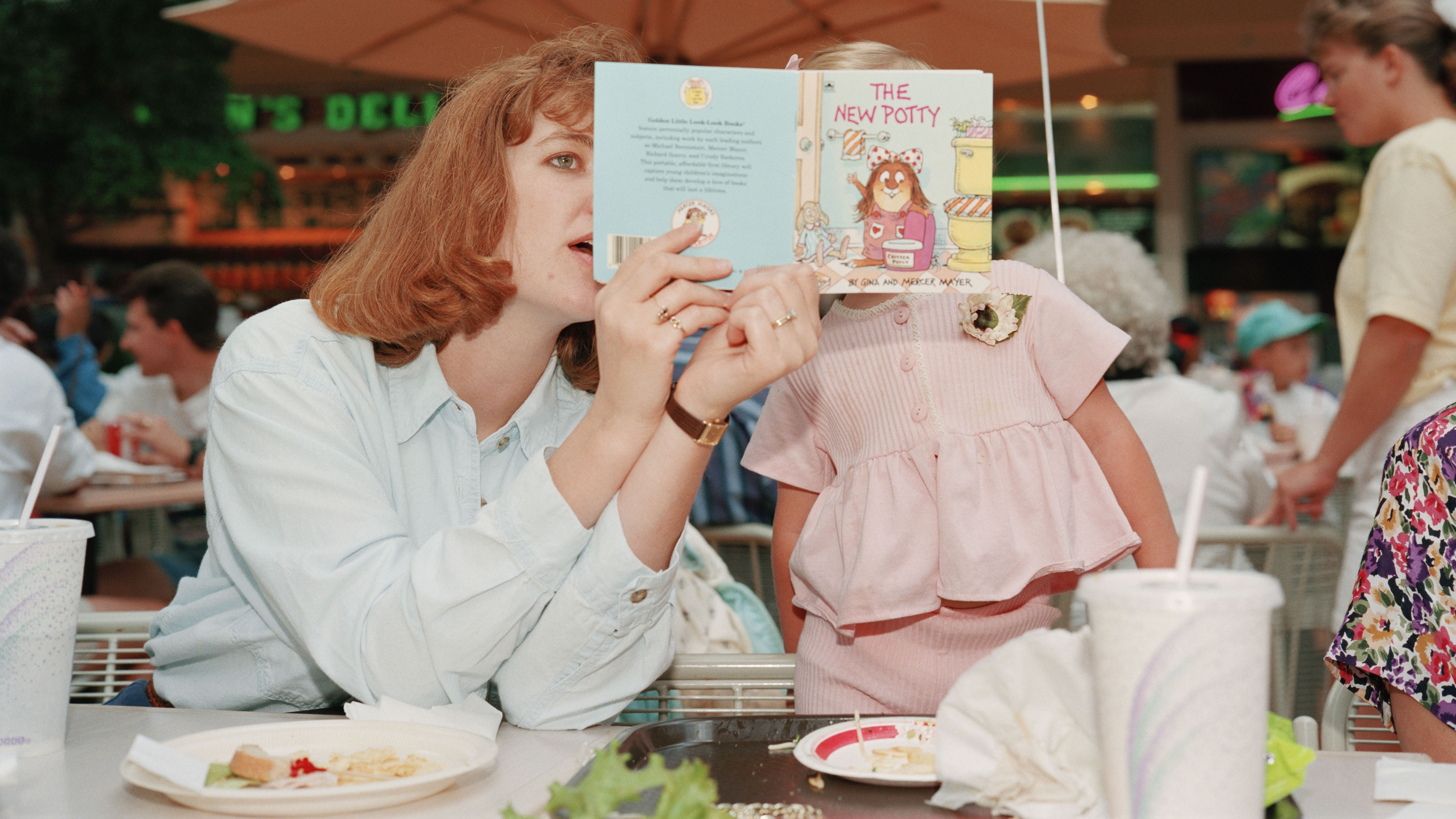
The Joy of Children’s Books—For Adults
Please don’t judge me, but in March 2020, when I moved across the country, I got rid of six boxes of books, including many classic works of literature and nonfiction. Gone were titles by Jane Austen (Northanger Abbey—I’d rather reread Pride and Prejudice) and Charles Dickens (A Tale of Two Cities—plain old disinterest). Moby-Dick went (I’d tried for years, and failed). So did Joan Didion’s Political Fictions and Robert Caro’s The Power Broker (just never got around to them).What I did not—and never would—get rid of: The Snowy Day, Miss Rumphius, The Little House, Cars and Trucks and Things That Go, Blueberries for Sal, and about 50 other children’s books. My copies have been with me since the 1970s and ’80s. They sit, always, in a place of honor, alongside artist monographs and exhibition catalogs. In 1991, when I left home for college, they moved with me from Davis, California, to New York City. From the East Village they traveled to Brooklyn, then Queens, then Brooklyn again, following me on a professional trajectory (half a dozen jobs) and a personal one (one marriage, one divorce). During my most recent move, purging my adult library created more physical space for my kid one—Caro’s books are roughly 20 times the width of an average Dr. Seuss title—but more important, the sifting represented a setting of priorities. The picture books took precedence.Again, I’m inclined to ask readers not to judge me. It’s a defensive crouch that comes from experience: I have heard numerous people suggest that in no way is “kid lit” on par with words written for grown-ups. (At least one of Margaret Wise Brown’s contemporaries dismissively referred to her genius works—Goodnight Moon, Little Fur Family—as “baby books.”)This kind of snobbery is what Mac Barnett, the author of many dozens of children’s books—including The First Cat in Space Ate Pizza, the Jack Book series, and Sam and Dave Dig a Hole—calls a “literary misdemeanor.” In his new book, Make Believe: On Telling Stories to