business
The ancient trick making food waste useful and tasty
Key takeaways
- The bioengineer, who runs a lab at Stanford University in California, is experimenting with fermentation using fungi.
- Fermentation is a biological process whereby organisms convert carbohydrates like starch or sugar into substances like alcohol, without using oxygen.
- Perhaps the best-known examples of fermentation are in baking and brewing, where yeast breaks down sugar into ethanol and carbon dioxide.
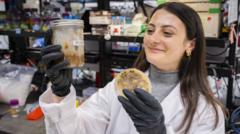
Anna-Katharina Preidl A Stanford University lab has made a cheese-like product from food waste Vayu Hill-Maini's lab has created a new cheese, or at least something that tastes like cheese, but is actually made from food waste.
The bioengineer, who runs a lab at Stanford University in California, is experimenting with fermentation using fungi.
"One of the most amazing things that we found recently is that we could take waste and add a few other ingredients in a fungal fermentation and create this delicious cheese that is like a Pecorino or Parmigiano," he says.
Article preview — originally published by BBC Business. Full story at the source.
Read full story on BBC Business →
More top stories
Aggregated and edited by the Scoop newsroom. We surface news from BBC Business alongside other reporting so you can compare coverage in one place.
Editorial policy · Corrections · About Scoop