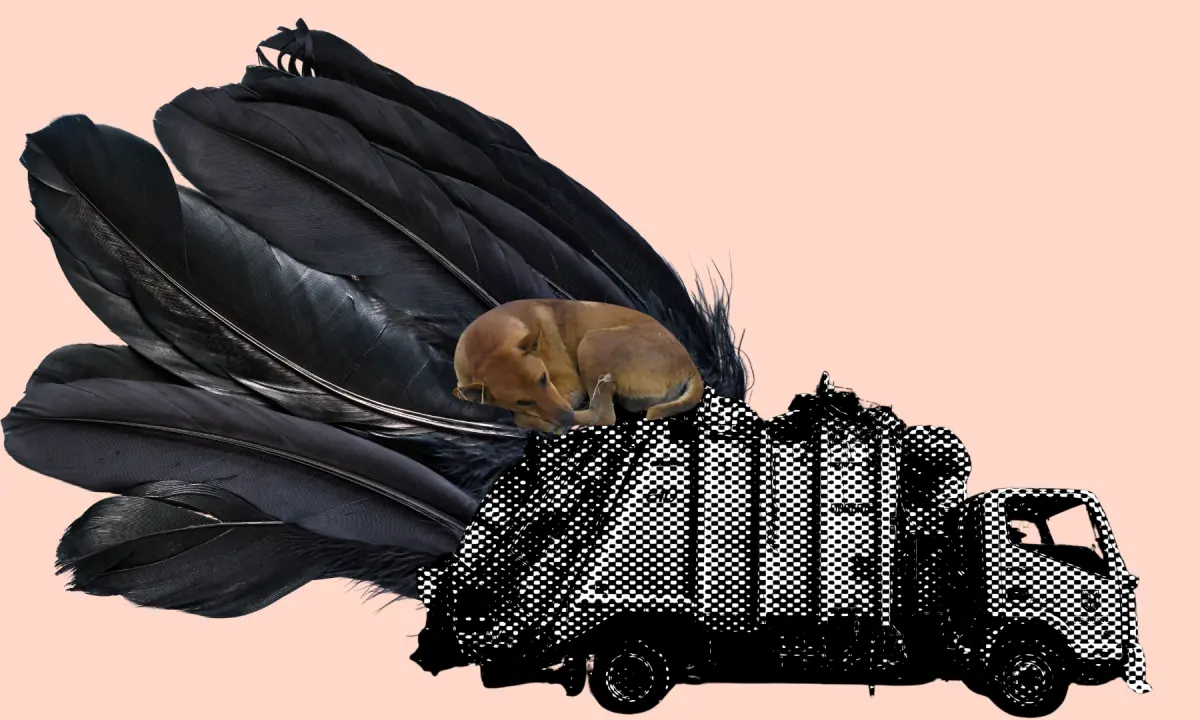
Behold, the Qabza Mafia of Karachi skies
Why this matters: local context for readers following news across Pakistan and the region.
We reached the old wolf in time to watch a fierce green fire dying in her eyes. I realised then, and have known ever since, that there was something new to me in those eyes — something known only to her and to the mountain. I was young then, and full of trigger-itch; I thought that because fewer wolves meant more deer, that no wolves would mean hunters’ paradise. But after seeing the green fire die, I sensed that neither the wolf nor the mountain agreed with such a view. These are the most moving lines from forester and philosopher Aldo Leopold’s A Sand County Almanac, his breakthrough work in ecological preservation which was published in 1949, almost a year after his death and has since become a cornerstone of environmental ethics. At one point in time, wolves were persecuted in the United States to the extent that by 1926, Gray Wolves had completely vanished from Yellowstone National Park and the 2.2 million acres of wilderness was left to elk and deer who roamed freely without fear of an apex predator. The result was an ecological disaster. The massive elk feasted on the riverbanks, wiping out young trees, causing soil erosion and taking a toll on the biodiversity. The worst affected were the beaver colonies as fewer new trees meant they were losing both a source of food and building materials. With the beavers gone, there was no one left to stabilise the river which started to flow freely. The water table dropped, fish lost their home and riverbanks eroded. In 1995, however, the US decided to slowly re-introduce Gray Wolves to Yellowstone and 14 of them from Alberta were released into the wild with 17 more Canadian ones a year later. The results were remarkable. In no time, the elk and deer started to avoid the open valleys and riverbanks, trees started to grow again, the beavers returned, and fish populations started to grow. The riverbanks stabilised and the river changed its behaviour. A feared predator, the big bad wolf, had become the saviour of an entire