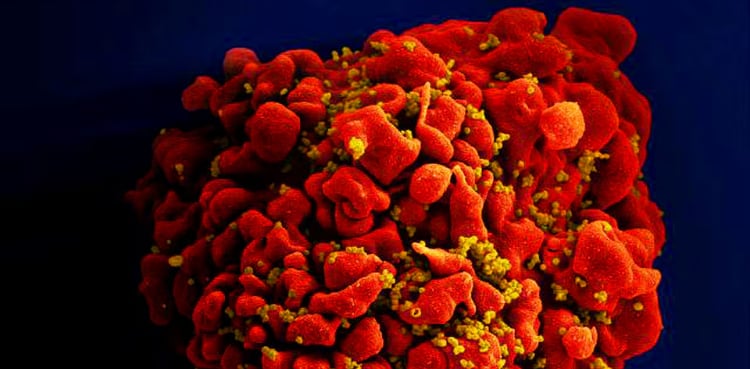
Small study shows one-time cell therapy can control HIV infection
Key takeaways
- The Phase 1 trial involved CAR-T, a one-time therapy in which a patient’s T-cells are extracted, altered and multiplied in a lab and infused back into their body.
- If left untreated, the virus replicates and destroys infection-fighting cells, eventually progressing to Acquired Immunodeficiency Syndrome, or AIDS.
- “Our goal is to make these therapies affordable and accessible,” said Dr.
Why this matters: local context for readers following news across Pakistan and the region.
Add ARY News on Google AAResize Re-engineering an HIV patient’s own immune cells to find and destroy the virus succeeded in controlling the infection in a small first-in-human study, but researchers said work is needed to confirm the findings and determine which patients are most likely to benefit.
The Phase 1 trial involved CAR-T, a one-time therapy in which a patient’s T-cells are extracted, altered and multiplied in a lab and infused back into their body. In this case, the CAR-T targeted the CD4 and CCR5 binding sites of the HIV.
If left untreated, the virus replicates and destroys infection-fighting cells, eventually progressing to Acquired Immunodeficiency Syndrome, or AIDS. Globally, around 41 million, people are living with HIV, and while advancements in antiretroviral therapy have transformed the infection into a manageable condition, treatment must be continued for life.