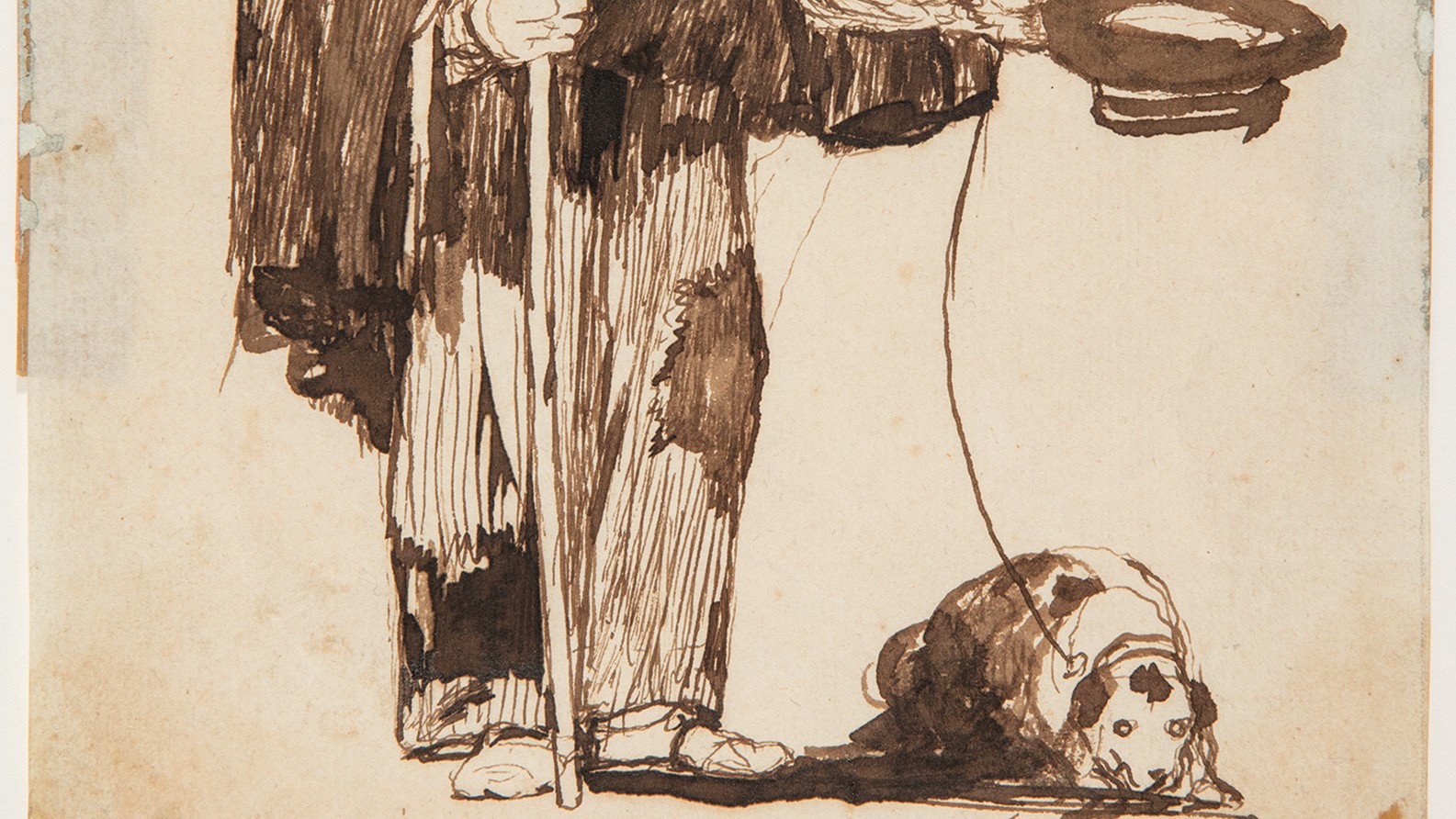
What Dogs See
Dogs follow the direction of a person’s gaze almost as well as another person can—better, in fact, when they are motivated to, because dogs are relentless. They track the movements of our eyeballs to see what we’re looking at so that they can look at it too, and they pester us to look just as attentively at them. When my late golden retriever had something to show me—a ball that had rolled under a fence, a man with an irregular gait—he didn’t always bark. Sometimes he stared first at the ball or man, then back at me, then at the ball or man again, until I retrieved the ball or moved away from the man. People speak with their eyes all the time, but every so often I’d be struck with wonder that a consciousness as radically different from mine could communicate so effectively. Then I’d love him even more, if such a thing were possible, and feel a little insecure. My dog was putting himself on my conversational level, as it were, or maybe the better way to say it is he was yanking me up to his level.The first animals to be domesticated, dogs began the process about 20,000 years ago, and the more time they spent in our field of vision, the longer they could maintain eye contact. Evolutionary theory offers an explanation: Dogs that could follow the human gaze and predict human actions had more success as hunting or herding partners.In a 1977 essay called “Why Look at Animals?” the art critic and novelist John Berger recounts an origin myth about the importance of seeing and being seen by creatures unlike us. To summarize a convoluted tale: A long time ago, before people had tamed animals, an animal looked at a person and the person looked at the animal, and the person saw that the animal was different and that they couldn’t understand each other. And yet the person recognized a fellow being with its own power, “comparable with human power but never coinciding with it,” and realized that to be seen by the animal was to become more fully oneself. We felt less lonely as a sp