Guest post: How CMIP7 will shape the next wave of climate science
Why this matters: environmental and climate reporting with long-term consequences.
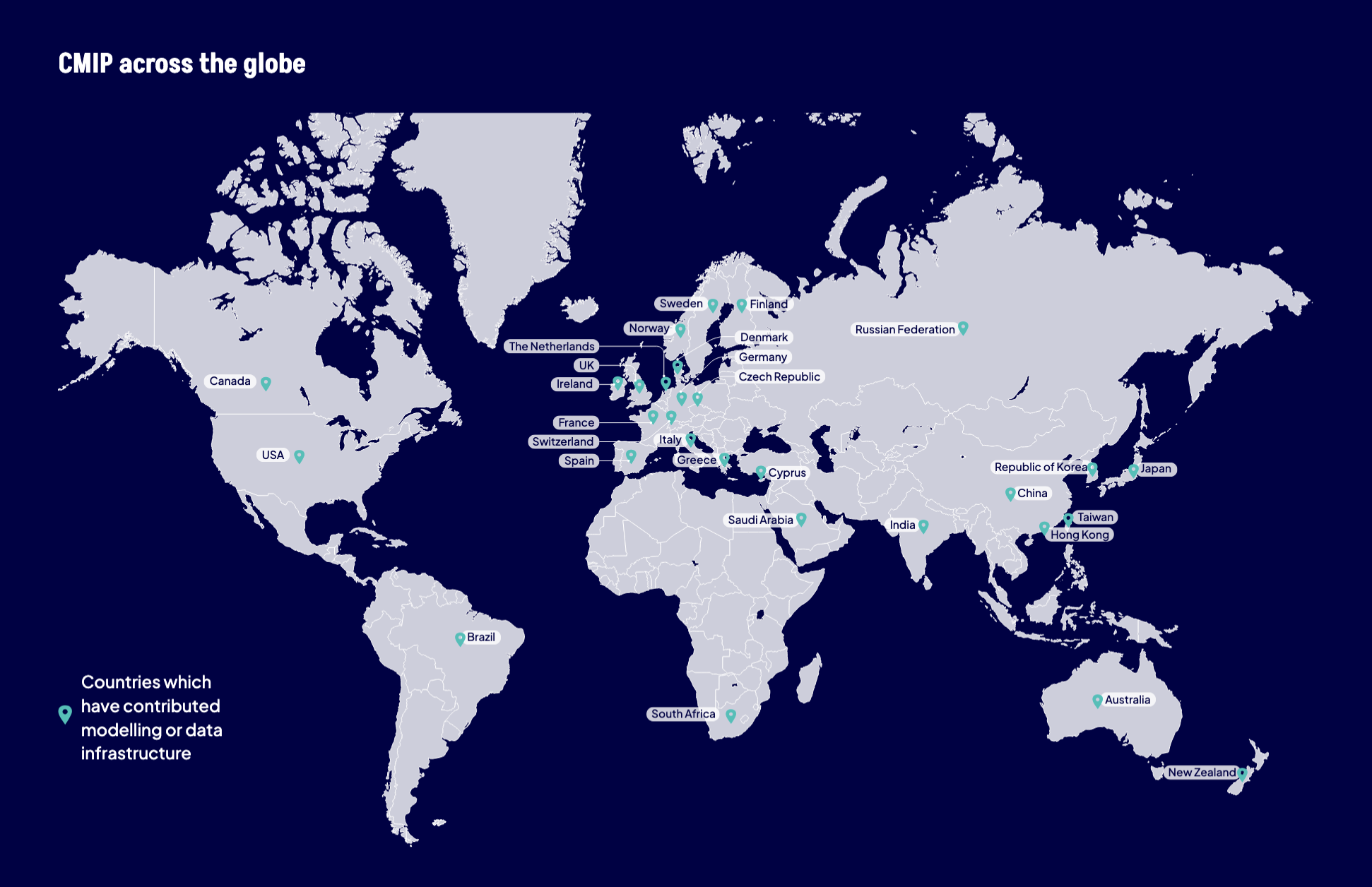
Hundreds of scientists in dozens of institutions are embarking on the next phase of the world’s largest coordinated climate-modelling effort. Climate-modelling groups use supercomputers to run climate models that simulate the physics, chemistry and biology of the Earth’s atmosphere, land and oceans. These models play a crucial role in helping scientists understand how the climate is responding as greenhouse gases build up in the atmosphere. For four decades, the Coupled Model Intercomparison Project (CMIP) has guided the work of the climate-modelling community by providing a framework that allows for millions of results to be collected together and compared. The resulting projections are used extensively in climate science and policy and underpin the landmark reports of the Intergovernmental Panel on Climate Change (IPCC). Now, the seventh phase of CMIP – CMIP7 – is underway, with more than 30 climate-modelling centres expected to contribute more than five million gigabytes of data – so much that downloading it using a fast internet connection would take two and a half years. Here, we look at what is new for CMIP7, including its model experiments, updated emissions scenarios and “assessment fast track” process. What is CMIP? Around the world, climate models are developed by different institutions and groups, known as modelling centres. Each model is built differently and, therefore, produces slightly different results. To better understand these differences, CMIP coordinates a common set of climate-model experiments. These are simulations that use the same inputs and conditions, allowing scientists to compare the results and see where models agree or differ. The figure below shows the countries that have either produced or published CMIP simulations. Countries that have contributed modelling or data infrastructure for CMIP. Credit: CMIP During this time, scientists use new and improved models to run experiments from previous CMIP phases for consistency, as well as n