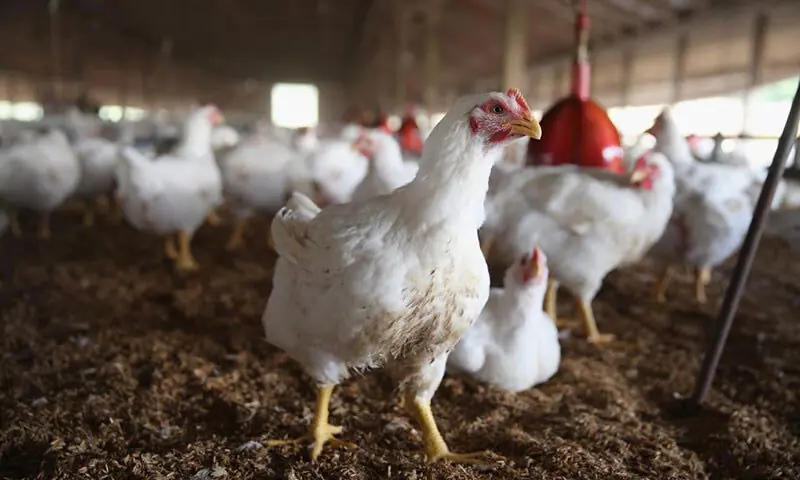
Poultry industry grows at consumers’ cost
Why this matters: local context for readers following news across Pakistan and the region.
Higher prices for poultry might cause a slowdown in the purchasing patterns of low- and middle-income people, but they still rely on poultry as it costs much less than beef and mutton. As per the Economic Survey FY25, rural poultry had shown modest gains, but commercial production remained the main growth driver. After remaining on the higher side, poultry live bird prices have fallen by an average Rs100 per kg to Rs370-420 per kg in Karachi after Eidul Azha. Consumers were expecting a further price drop in the wake of the closure of borders with Afghanistan, but the prices of poultry continued to show an upward trend. In October 2025, when the Afghan border was closed, the live-bird price had fallen to Rs310-360 per kg, down from Rs460-540 in September. However, according to traders, the export of poultry products such as birds, feed, day-old chicks and eggs remains suspended, but consumers have not seen any significant price falls. Prior to and after Eidul Azha, the demand for poultry usually declines as consumers shift towards meat from sacrificial animals, but this year traders kept chicken prices higher due to robust demand ahead of Eid. According to the weekly Sensitive Price Index (SPI) data for the period ending June 4, the prices of live birds in various cities across the country remained unchanged at Rs288-460 per kg. Consumers have seen the price of an egg drop to Rs20-22 from Rs25, as demand is thin due to school closures and hot weather. The Commissioner of Karachi had issued retail rates for live birds and meat at Rs296 and Rs445 per kg, respectively, but these rates are not available in shops. Member of the Executive Committee of the Pakistan Poul