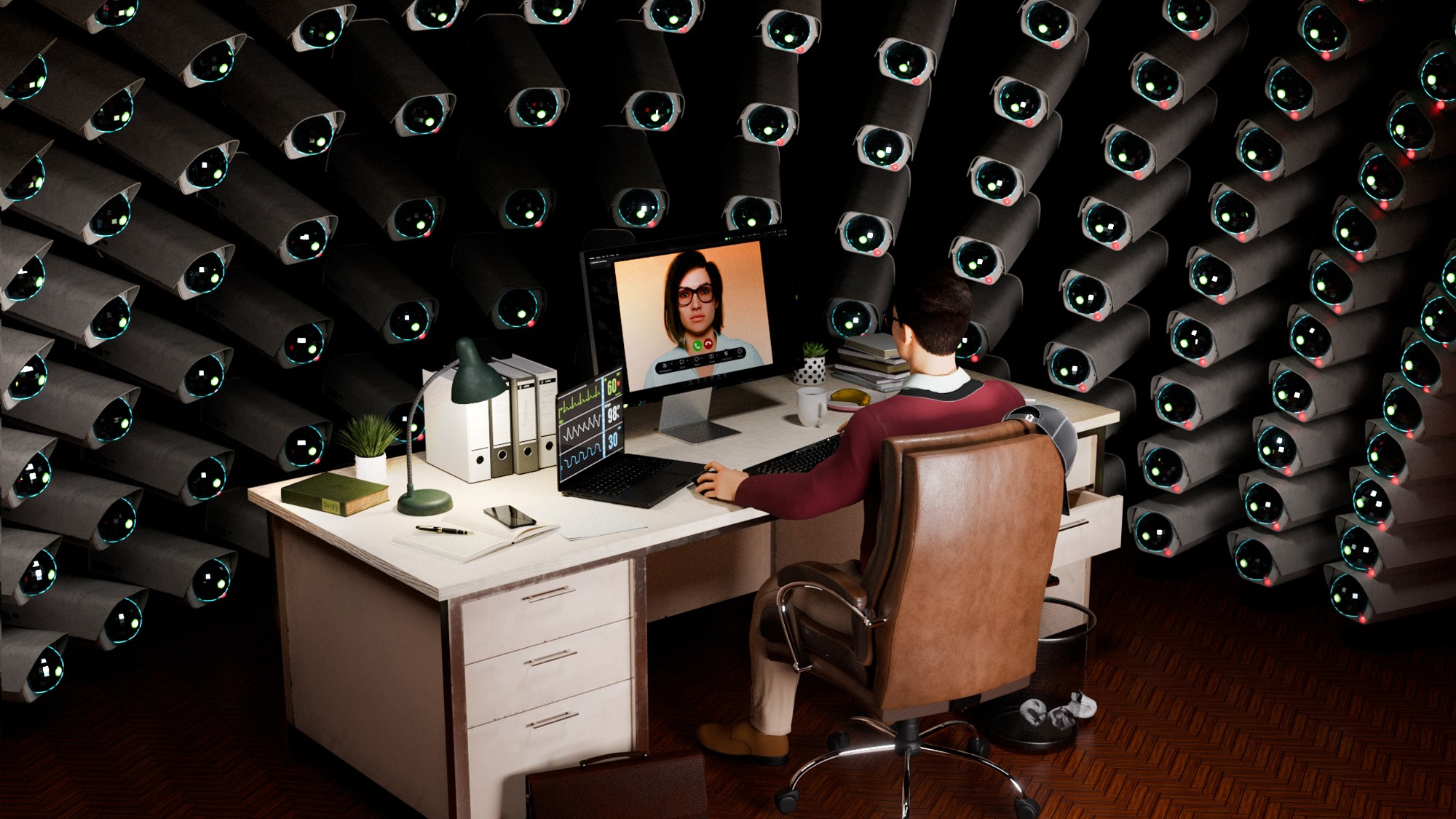
What if Your Boss Monitored Your Emotions?
The good news, for me at least, is that the computer thinks I have a nice personality. According to an app called Morph Cast, I was, in a recent meeting with my boss, generally “amused,” “determined,” and “interested,” though—sue me—occasionally “impatient.” Morph Cast, you see, purports to glean insights into the depths and vagaries of human emotion using AI. It found that my affect was “positive” and “active,” as opposed to negative and/or passive. My attention was reasonably high. Also, the AI informed me that I wear glasses—revelatory!The bad news is that software now purports to glean insights into the depths and vagaries of human emotion using AI, and it is coming to watch you. If it isn’t already: Morphcast, for example, has licensed its technology to a mental-health app, a program that monitors schoolchildren’s attention, and McDonald’s, which launched a promotional campaign in Portugal that scanned app users’ faces and offered them personalized coupons based on their (supposed) mood. It is one of many, many such companies doing similar work—the industry term is emotion AI or sometimes affective computing.Some products analyze video of meetings or job interviews or focus groups; others listen to audio for pitch, tone, and word choice; still others can scan chat transcripts or emails and spit out a report about worker sentiment. Sometimes, the emotion AI is baked in as a feature in multiuse software, or sold as part of an expensive analytics package marketed to businesses. But it’s also available as a stand-alone product, and the barrier to entry is shin-high: I used MorphCast at no cost, taking advantage of a free trial, and with no special software. At no point was I compelled to ask my interlocutors if they consented to being analyzed in this way (though I did ask, because of my good personality).Every successful technology needs to find a problem that people are willing to pay money to solve. In the case of emotion AI, that problem appears largely, so far,