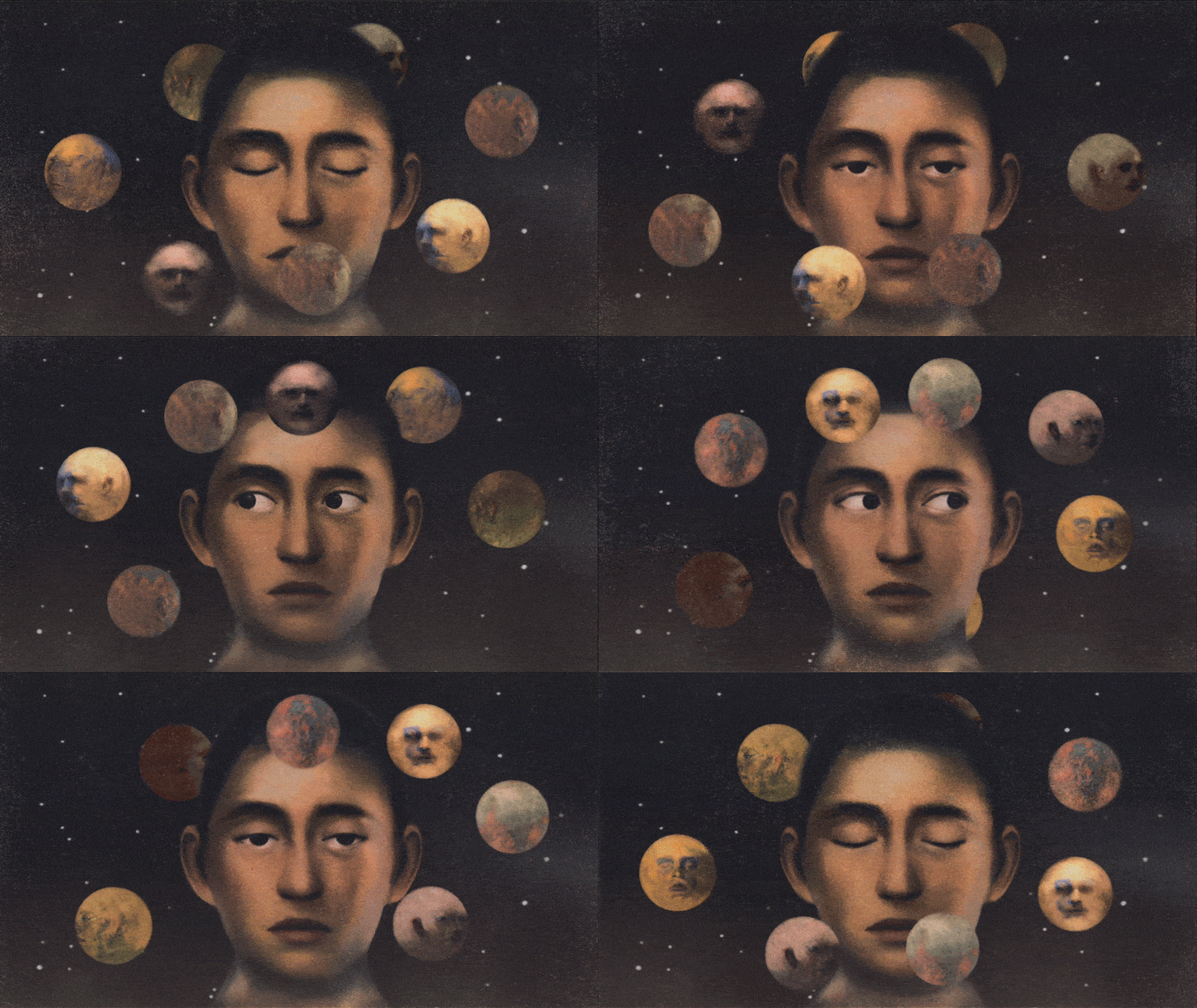
Six Surprisingly Human Stories About Aliens
When I look at the night sky, I don’t wonder whether alien life is somewhere out there; I think it probably is. Considering the sheer number of stars in the cosmos, and the possibly larger number of planets that revolve around them, the idea that humans are alone in the universe strikes me as unlikely. So, instead, I wonder: What is that life like, and will we ever encounter it?Searching for extraterrestrials is, generally speaking, the province of scientists. But I’m a writer, and many of us also seek answers to equally fundamental questions about our fellow humans. As I found while working on my own novel, writing about aliens can be strangely helpful in this pursuit. Just as astronomers use telescopes to examine celestial objects light-years away, novelists can invoke imagined civilizations to reveal truths closer to home, in part by forcing their characters into contact with alien environments and worldviews. These fictional interactions challenge assumptions about relationships and consciousness, allowing authors to ask how universal our values really are. In the following six books, each writer looks to space to skillfully explore what it means to live on Earth.Contact, by Carl SaganThis groundbreaking novel, first published in 1985, examines the divide between blind faith and evidence-based belief—and how readily one can blur into the other. When the Earth’s population receives an alien radio signal that includes instructions for building a mysterious machine, people must decide together what to do with it. In many ways, Contact celebrates humans’ ability to work in unison, even as it acknowledges how easily our pursuit of progress can lead to self-destruction. The science advocate’s passion for teaching comes through in his clear prose and clean explanations, and his novel offers a sense of hope that is rare in modern speculative fiction: When the advanced alien beings ultimately appear, they show their goodwill by taking the form of the humans’ “deepest lov