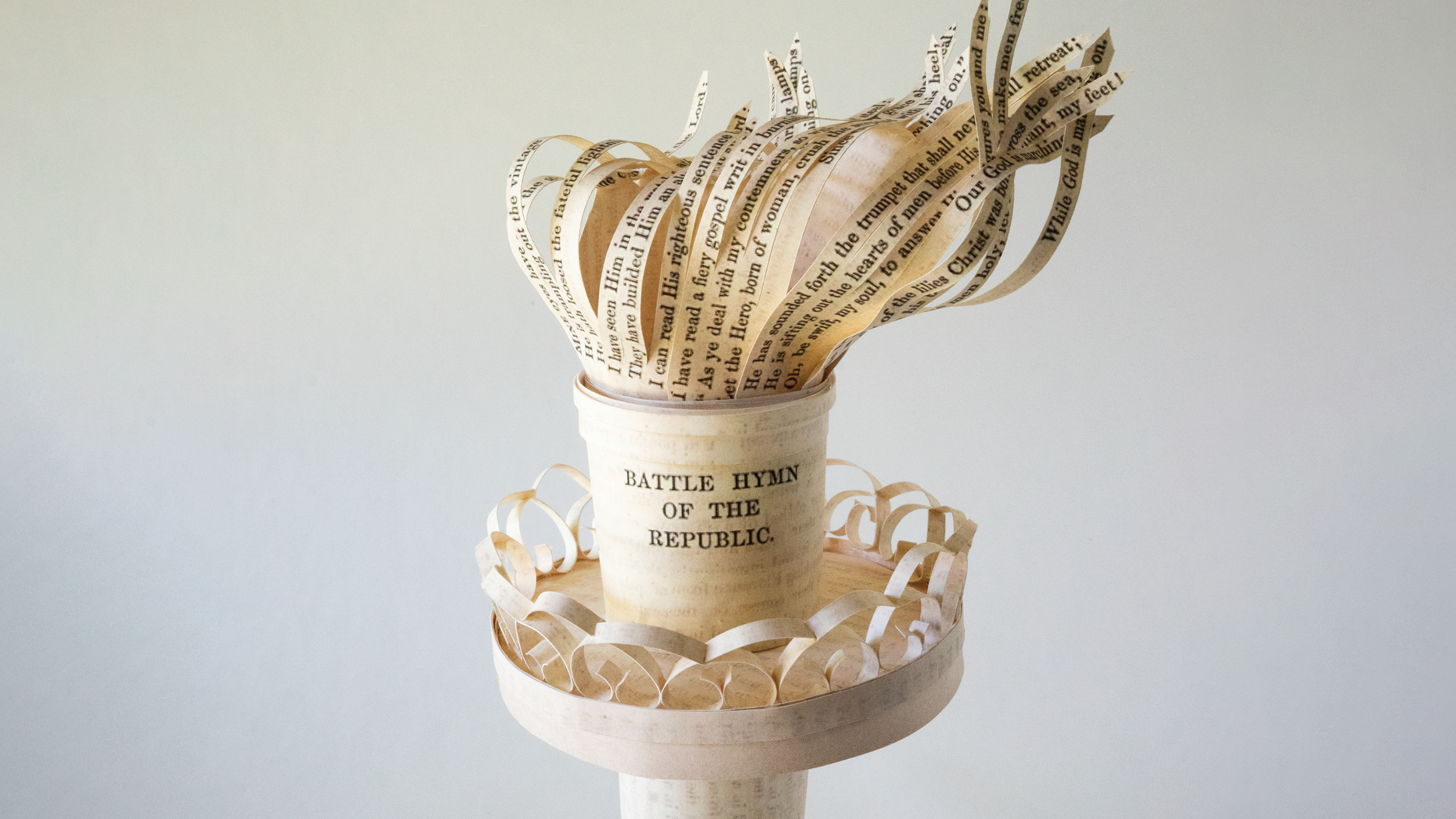
Never Call Retreat
We tend to think we have one national anthem, but to me, we have always seemed to have two. The first is the official one, “The Star-Spangled Banner.” The second is “Battle Hymn of the Republic.” The two are different on every level. Only one of them provokes us to ponder our identity as a nation.When we sing the first, we sometimes forget that we’re actually asking a question, and not a very important one. “O say can you see,” “The Star-Spangled Banner” begins, in search of an affirmation about the flag: It was there in the evening, when we saluted it; it was there through the night, when we saw it in the flashes of battle; is it still there now, as the day breaks?The second brooks no doubt. When we sing it, we don’t ask a question. We testify. “Mine eyes have seen the glory of the coming of the Lord,” we proclaim, before working through four more stanzas of earnest witness—seeing, hearing, and feeling God’s wrath on the way to service in a great national cause.The difference between the two songs is more than a matter of syntax. Though notoriously difficult for vocalists, “The Star-Spangled Banner”—recalling a single battle from a little-remembered war—is not a challenging text. The “Battle Hymn” is easier to sing, but harder to reckon with. Truly a hymn rather than an anthem, it is a song for serious movements and solemn occasions. It is stirring in its driving tune, but unsettling in its sanctified vision of violence. When Julia Ward Howe wrote it in a single blaze of inspiration, in November 1861, she captured the upright, abolitionist cast of mind common among many northerners: the idea that the Civil War was a holy crusade to end slavery and save the nation—a narrative of sin and redemption. When The Atlantic published her poem in February 1862, it quickly became a staple of American patriotic observance that would, in time, transcend its origins in the horrific destruction of the Civil War.“It is a misfortune of popular songs that they spoil their own effect