He’s the only lead tester in this contaminated neighborhood. He graduates next month.
Why this matters: environmental and climate reporting with long-term consequences.
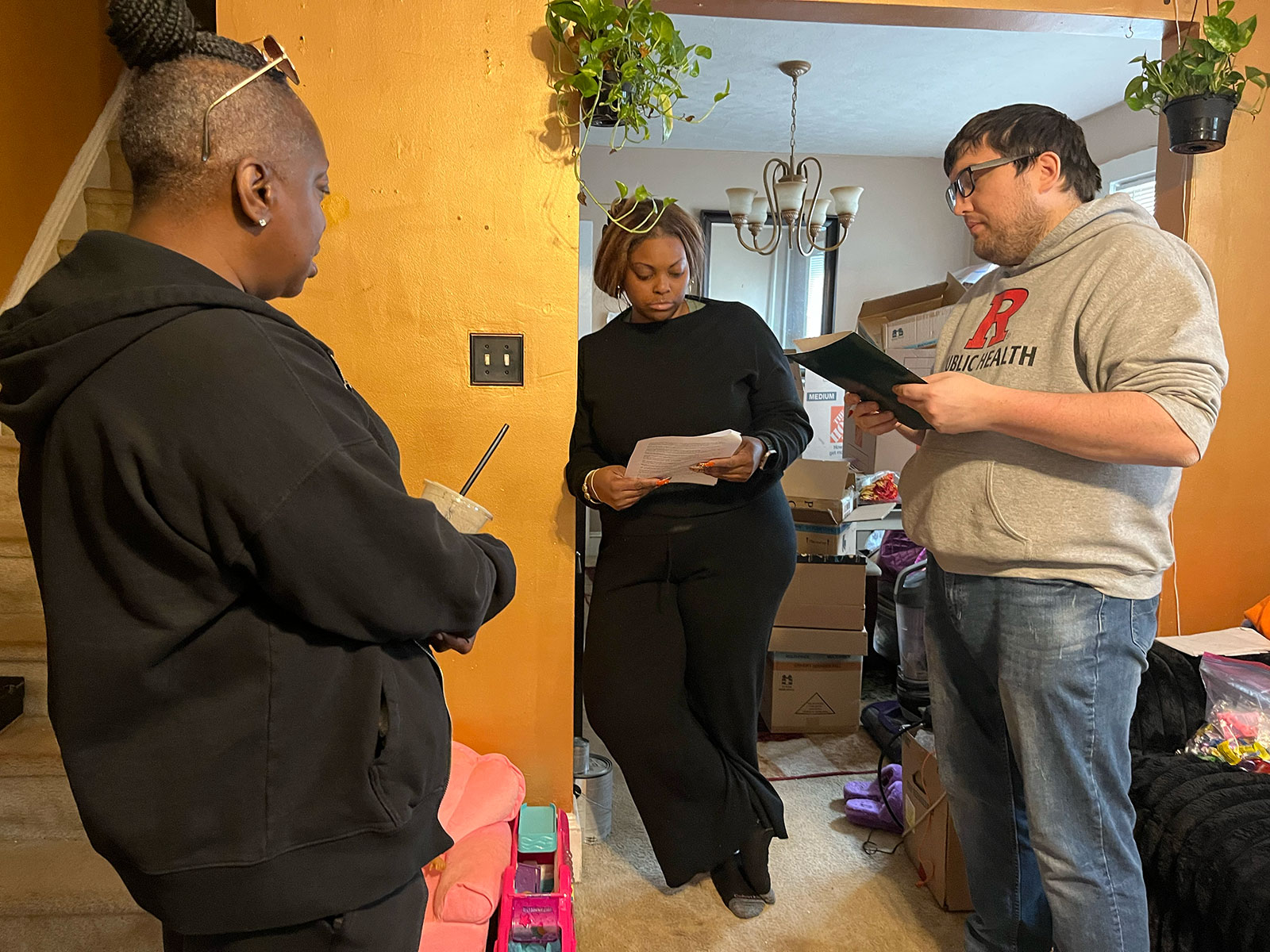
Kim Booker never thought much about lead during her roughly 27 years living in Trenton, New Jersey. Born and raised in the once-industrial powerhouse, she first heard about the heavy metal at community meetings organized by the East Trenton Collaborative, a local nonprofit that works on environmental health and safety issues. There, she learned that the prevalence of lead-laden pipes and paint, a legacy of the city’s industrial past, could have contaminated the drinking water in her home and the soil around her property. She knew that her three-bedroom home was old, making it likely it had lead pipes. Booker noticed the paint on the walls chipping off. And she realized, too, that her late grandmother and sister were both diagnosed with Alzheimer’s, which researchers have tied to lead exposure. She wanted to know if she was being poisoned by the lead in her environment. With few free, comprehensive testing resources available to her, Booker turned to Shereyl Snider, one of the leaders of the collaborative, who in turn connected her with Sean Stratton, a doctoral student in public health at Rutgers University in late 2023. At the time, he was taking samples of lead to get a clear picture of how lead had contaminated Trenton homes for his dissertation work. Once Booker agreed, Stratton was soon at her home, testing for lead in her paint, yard, and water. Stratton visits Amber DeLoney-Stewart’s home in October to provide a full inspection with Shereyl Snider, a community member with East Trenton Collaborative. Anna Mattson When the results came back, Booker learned that her home was — as she’d suspected — contaminated with lead and that she had low but detectable levels of lead in her bloodstream. Stratton’s testing revealed that lead levels in her yard were more than 450 parts per million, above the Environmental Protection Agency’s hazard level. If not for Stratton, she would not have known. “The city shouldn’t rely on a student to do this work,” Stratton said.