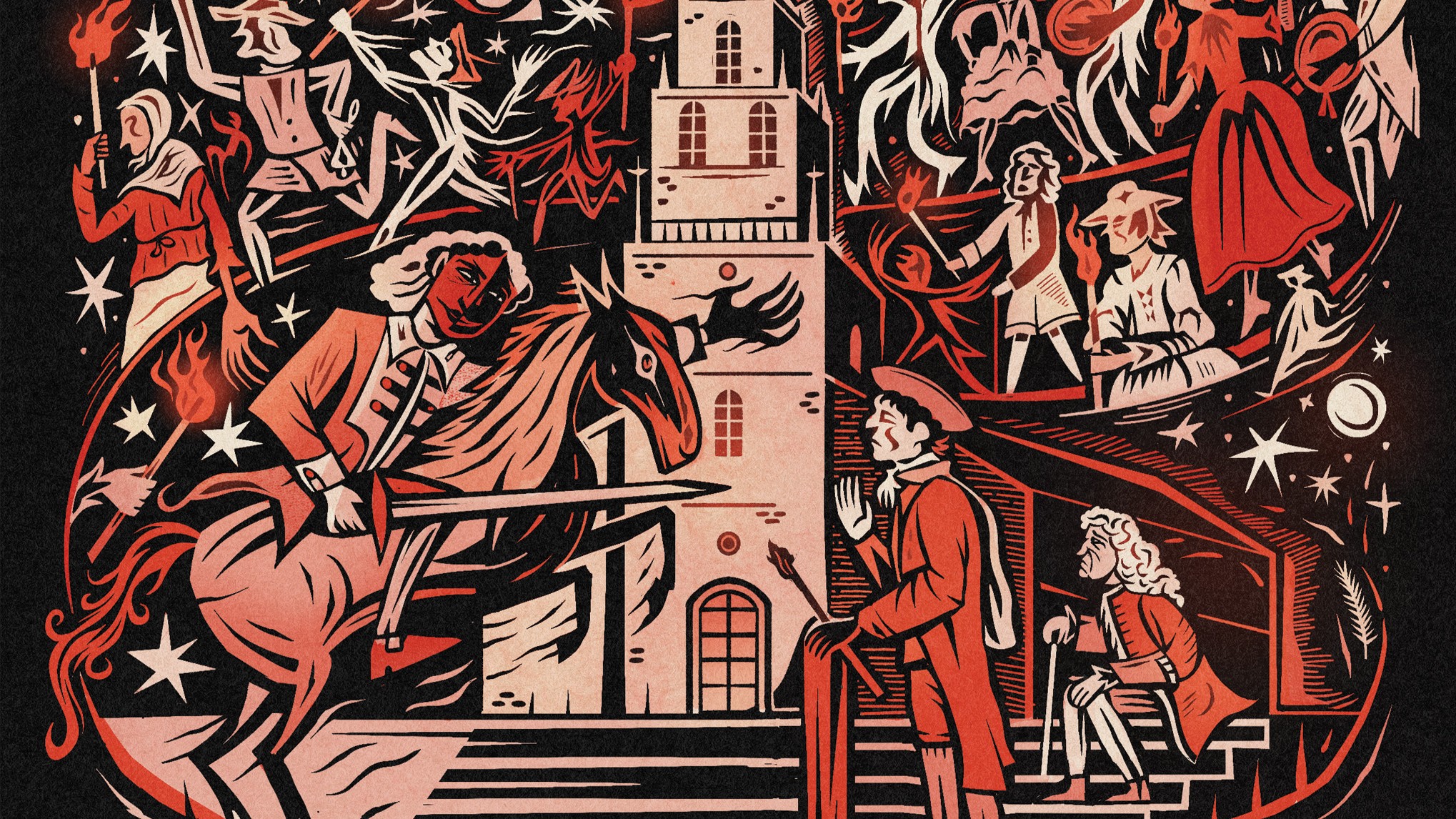
Nathaniel Hawthorne’s American Horror Story
Illustrations by Laurie Avon In January 1836, Nathaniel Hawthorne moved from Salem to Boston to assume the editorship of The American Magazine of Useful and Entertaining Knowledge. It wasn’t a typical editorial arrangement. Hawthorne would not manage a staff of writers, or make assignments to a network of correspondents. The lean budget required him to rely entirely on a single contributor: himself.The issues that Hawthorne produced are, in fact, full of useful and entertaining knowledge. He published essays on John C. Calhoun, “Modern Jewish Passover,” and the history of hats. Some of these he composed; others he digested or simply aggregated from books or other magazines. Longer articles were punctuated with shorter curiosities: a new medical explanation for snoring; how to ascertain the height of a mountain using only a thermometer; the spontaneous combustion of a math professor; what the plague smelled like (“mellow apples,” some said; mayflowers, said others).To read these issues today is to marvel at Hawthorne’s ability to fill so many pages, even if some articles have aged better than others. (Snoring, it turns out, is not caused by poor circulation.) But the work was running him ragged. Desperate for help, Hawthorne pressed his sister Elizabeth into service. “Concoct, concoct, concoct,” he implored her in a letter. “I make nothing of writing a history or biography before dinner. Do you the same.” Elizabeth submitted a profile of Alexander Hamilton and sundry other items. But the job still proved too demanding. In late summer, an exhausted Hawthorne resigned his post and retreated to Salem.Hawthorne was 32 and beginning to lose hope that he could make a living as a writer. (In a letter to his other sister, he pegged his net worth at “precisely 34 cents.”) The problem was the wages, not the work. In an astonishing burst of creativity, he had already written and published the short fiction that, together with The Scarlet Letter (1850), would eventually establish