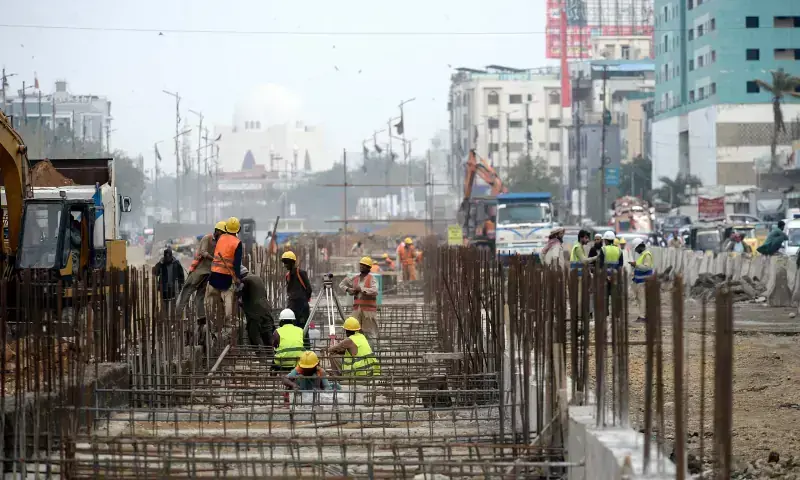
Sindh’s development question
Why this matters: local context for readers following news across Pakistan and the region.
With development spending slashed by 30 per cent despite glaring infrastructure deficits and current expenditure rising by 20pc to sustain an already bloated and inefficient provincial bureaucracy, the proposed Rs3.5 trillion Sindh Budget, which projects a Rs37 billion deficit, is anything but forward-looking. The current budget reinforces the perception that the PPP has diluted many of its core values to align with the country’s prevailing power structure, making it increasingly difficult to distinguish the party from its rivals. What still sets it apart is its legacy of sacrifices for democracy, its contribution to the Constitution and a more equitable distribution of resources among provinces, and its historic role in mobilising ordinary citizen to stand up for their rights. Chief Minister Murad Ali Shah, who also holds the finance portfolio, presented the budget — the 28th since the PPP came to power in Sindh in 2008 and retained it through three successive elections. The party’s enduring political dominance in the province appears to have bred a degree of complacency. Despite limited progress on key development indicators, the government continues to prioritise subjects that do not necessarily align with Sindh’s most pressing economic and social needs. Sindh’s development trajectory has lagged behind that of Punjab for years and even Khyber Pakhtunkhwa in some cases, while its development outcomes remain below potential. According to regionally disaggregated data from the 2023 Population and Housing Census, the province’s literacy rate has remained virtually unchanged since 2019, standing at 57.5pc, compared to 66.3pc in Punjab and 61pc in Khyber Pakhtunkhwa. School enrolment is equally concerning, with only 53pc children enrolled, far below Punjab’s 73pc in Punjab and KP’s 62pc. After 27 past PPP budgets carrying similar promises, the lack of meaningful progress raises a simple question: why should the public believe this time will be any different? Despite r