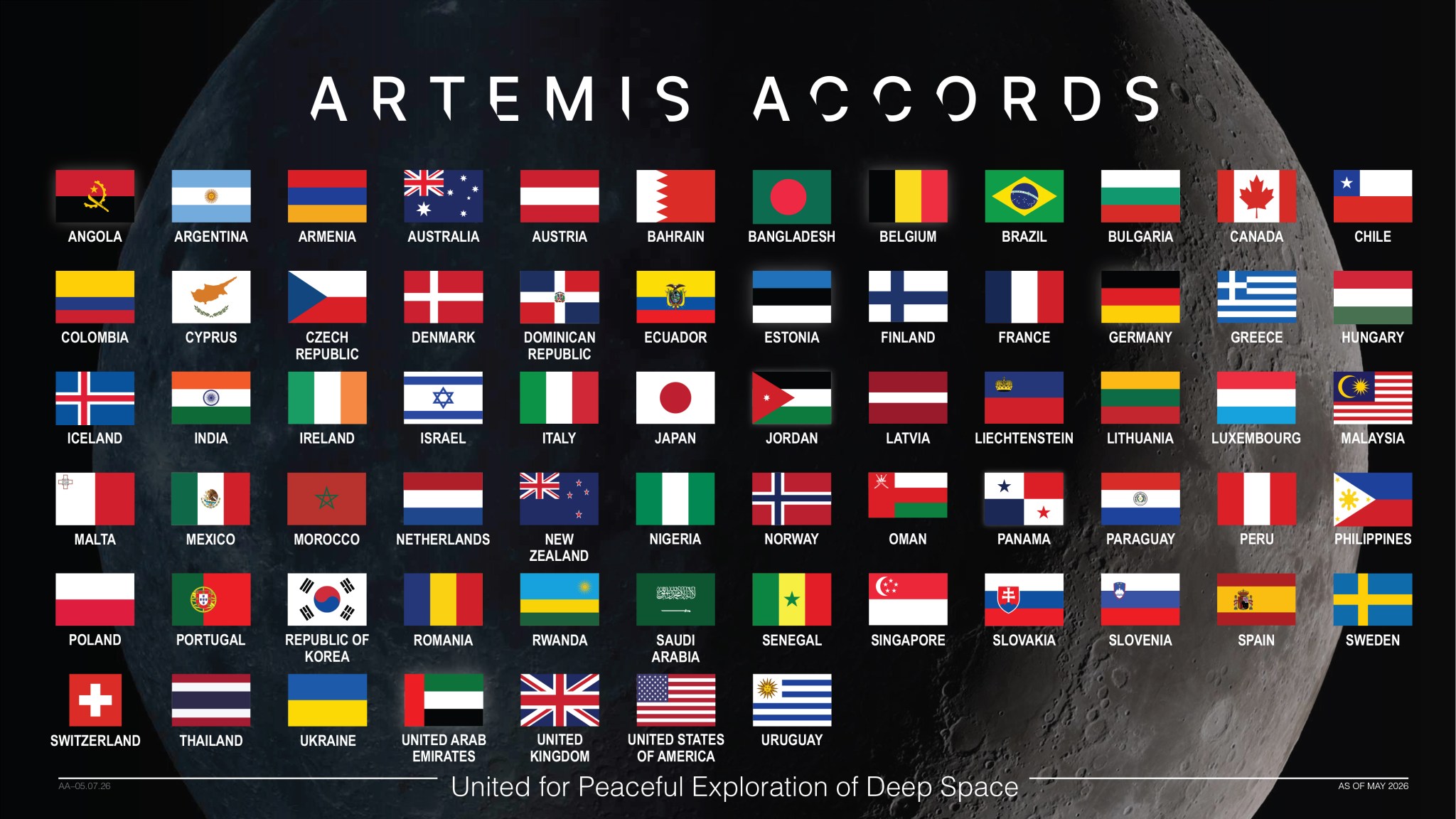
NASA Welcomes Paraguay as 67th Artemis Accords Signatory
Why this matters: new research or scientific developments with potential real-world impact.
Credit: NASA The Republic of Paraguay signed the Artemis Accords on Thursday during a ceremony in Asunción, becoming the latest nation to commit to the shared principles guiding civil space exploration. “Today, I am proud to welcome Paraguay as the 67th signatory to the Artemis Accords,” said NASA Administrator Jared Isaacman. “They join an ever-growing coalition of like-minded nations committed to the peaceful, transparent, and responsible exploration of space. Established by President Trump in his first term, the Artemis Accords provided the principles for how we explore the Moon, Mars, and beyond. Now, with his national space policy, we are putting the Artemis Accords into practice with our Moon Base. We are creating opportunities for all Artemis Accords signatories, including Paraguay, to join us on the lunar surface and advance our shared objectives in this next era of exploration.” U.S. Embassy Asunción Chargé d’Affaires ad interim Aaron Pratt shared Isaacman’s remarks during the ceremony. Minister President of the Paraguayan Space Agency Osvaldo Almirón Riveros signed on behalf of Paraguay. “The signing of the Artemis Accords represents a historic milestone for Paraguay and reflects our commitment to international cooperation, the peaceful use of outer space, scientific development, and the advancement of national space capabilities,” said Almirón Riveros. “This step strengthens Paraguay’s position within the global space community and opens new opportunities for research, innovation, and sustainable development.” The Paraguayan Space Agency was established in 2014 and has worked to develop capabilities in satellite technology and Earth observation, including with international partners. Its first satellite, GuaraníSat‑1, launched from the International Space Station in 2021. The agency now is preparing to launch its second satellite, GuaraníSat‑2, in October aboard a Falcon 9 from Vandenberg Space Force Base in California. The mission was developed with coll