It’s not a recession. But Goldman says your paycheck is acting like it
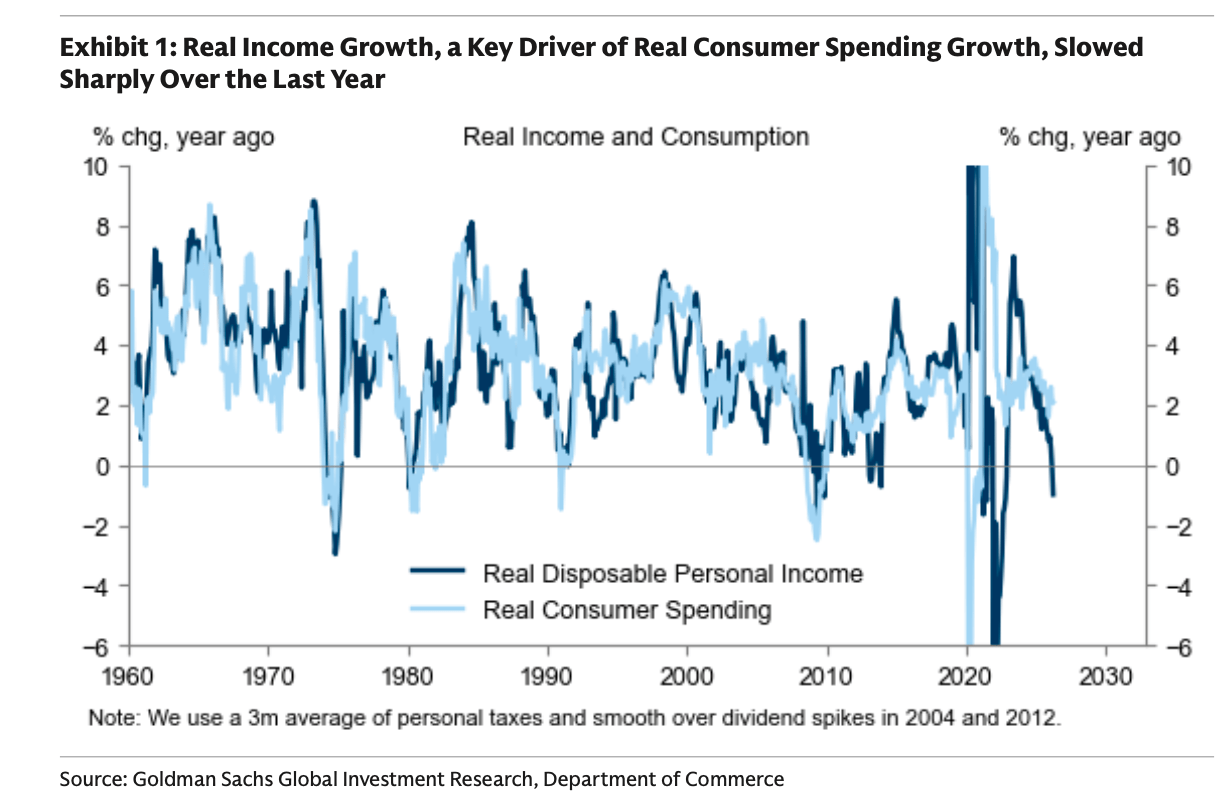
Americans aren’t losing their jobs. The stock market isn’t in freefall. And the official recession call is nowhere in sight. But Goldman Sachs is sounding an alarm about something quieter and more insidious: the purchasing power of the American paycheck is eroding at a pace the economy almost never sees unless it’s already in a downturn. In a research note published Sunday, Goldman economists Manuel Abecasis and Joseph Briggs found that real personal income per worker — stripped of government transfers and adjusted for inflation — declined 0.6% over the past year. That’s a pace they describe as “rarely seen outside of recession,” with the only comparable non-recessionary episodes being a brief inflation shock in mid-2022 and a tax-policy distortion in 2013. The culprits are familiar by now: tariffs driving up the cost of goods, energy prices eroding what’s left, and wage growth that simply hasn’t kept up. Together, they’ve done something that job growth and a resilient labor market haven’t been able to prevent — they’ve quietly made most Americans poorer in real terms. It’s a dynamic Goldman has been tracking with growing alarm. In April, the bank warned that the U.S. economy was becoming increasingly K-shaped — one where the income divide between higher and lower earners had been quietly accelerating. The latest note puts numbers to why: lower-income households, who spend a larger share of their budgets on food and energy, are bearing the brunt of the real income squeeze, facing headwinds that higher earners can more easily absorb. The cushion is running out So far, consumers haven’t blinked. Spending has held up, and the economy hasn’t shown the kind of demand collapse that typically accompanies recession-level income weakness. But Goldman says that resilience has a clear explanation — and an expiration date. Two factors have kept spending propped up. First, tax cuts in the One Big