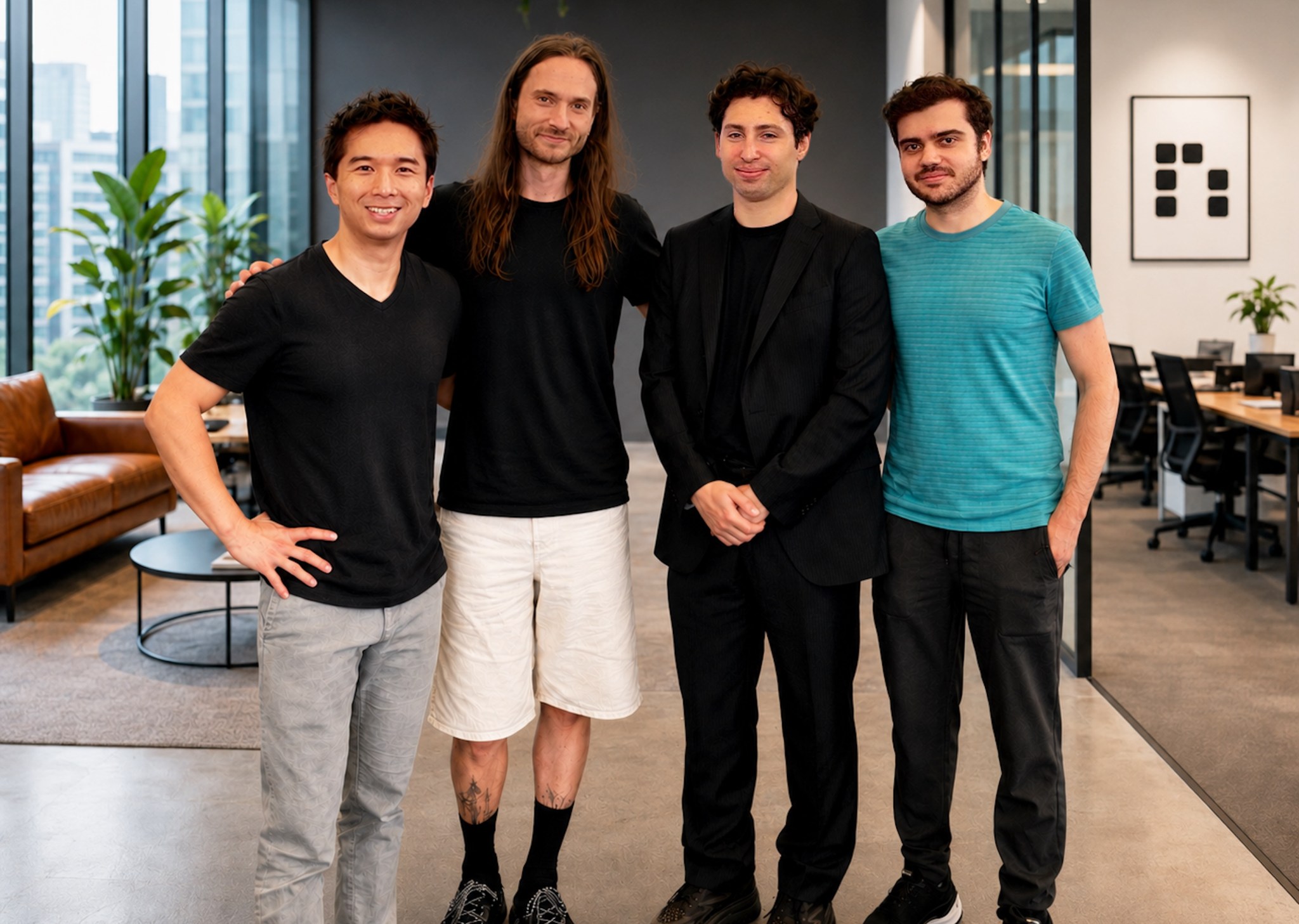
Exclusive: The researchers who built AI-generated DNA just raised $50 million to reinvent biology
Eric Nguyen was a perpetual student, much to his parents’ chagrin. After receiving a master’s of engineering at Cornell and doing a stint training AI to interpret and understand the visual world, Nguyen enrolled in a Stanford bioengineering Ph D program specifically to find a problem worth fighting for. “I basically went back to the Ph D to look for purpose,” he told Fortune. “I wanted to find something that I thought I could contribute to, that if I didn’t work on it, nobody else would.” He found it in DNA. Nguyen’s startup Radical Numerics emerged from stealth with a $50 million seed round led by Emergence Capital, Fortune learned exclusively. Obvious Ventures, Triatomic Capital, Factory, and First Spark Ventures also participated. Patrick Collison, the CEO of Stripe and cofounder of the Arc Institute, backed the company at pre-seed. Radical Numerics teaches AI to read, write, and reason in the language of biology—not just DNA, but RNA, proteins, and every other molecule that makes living systems work, all at once, in a single model. The company’s founding team—Nguyen, Michael Poli (chief AI scientist), Stefano Massaroli (president), and Armin Thomas (chief technology officer)—are among the researchers who created the field of generative genomics. Three of the four previously built core technology at Liquid AI, an MIT-spinout designing new AI model designs. Together they built Evo and Evo 2, the first AI models capable of generating DNA at scale, trained on the genomes of more than 100,000 species. Last September, researchers using Evo’s open-source weights produced the world’s first fully AI-designed functional virus (it was harmless to humans). That milestone is what pushed the team to build a company. “It still wasn’t being picked up in the way we thought it would,” Nguyen said of the academic work. “So we basically said: we have to show the recipe.” The overall AI drug discovery market