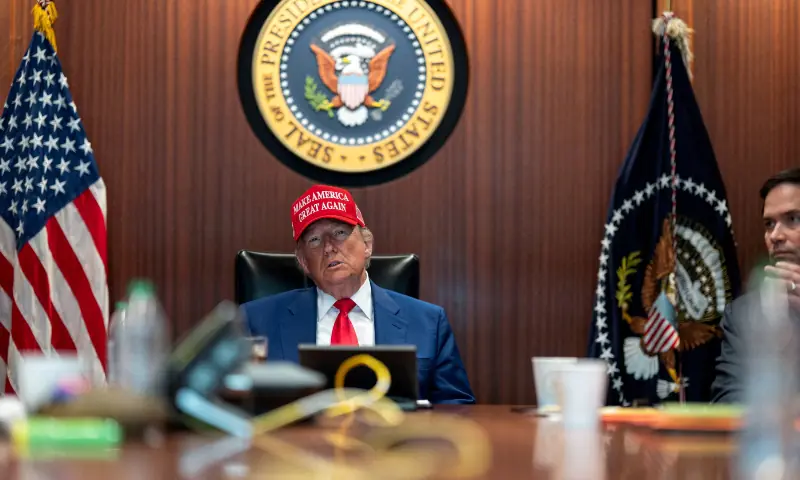
Iran standoff could leave Trump worse off than before he went to war
Why this matters: local context for readers following news across Pakistan and the region.
More than two months into a conflict that has failed to deliver a decisive military or diplomatic win, United States President Donald Trump faces the risk that a standoff with Iran will drag on indefinitely and leave an even bigger problem for the US and the world than before he launched the war. With both sides outwardly confident they hold the upper hand and their positions far apart, there is no obvious off-ramp in sight, even as Iran submitted a fresh proposal to restart negotiations. Trump quickly rejected it on Friday. For the US president and his Republican Party, the implications of a continued impasse are grim. An unresolved conflict would likely mean the global economic fallout, including high US gasoline prices, will persist, putting further pressure on Trump, whose poll numbers are falling, and darkening Republican candidates’ prospects ahead of November’s midterm congressional elections. Unmet goals Those costs highlight a deeper problem: the war has failed to achieve many of Trump’s stated goals. While there is little doubt that waves of US and Israeli strikes heavily degraded Iran’s military capabilities, many of Trump’s often-shifting war objectives — from regime change to shutting Iran’s path to a nuclear weapon — remain unfulfilled. Fears for a more protracted deadlock have grown since Trump called off a trip by his negotiators to Islamabad last weekend and then dismissed an Iranian offer to halt the war, suspended since April 8 under a ceasefire agreement. Tehran proposed setting aside discussion of its nuclear programme until the conflict is formally ended and a deal is reached on reopening the Strait of Hormuz. That was a non-starter for Trump, who has demanded the nuclear issue be dealt with at the outset. There was a glimmer of hope on Friday when state news agency IRNA reported Tehran had sent a revised proposal through Pakistani mediators, causing a drop in global oil prices that had risen sharply since Iran effectively closed the strait. Tr