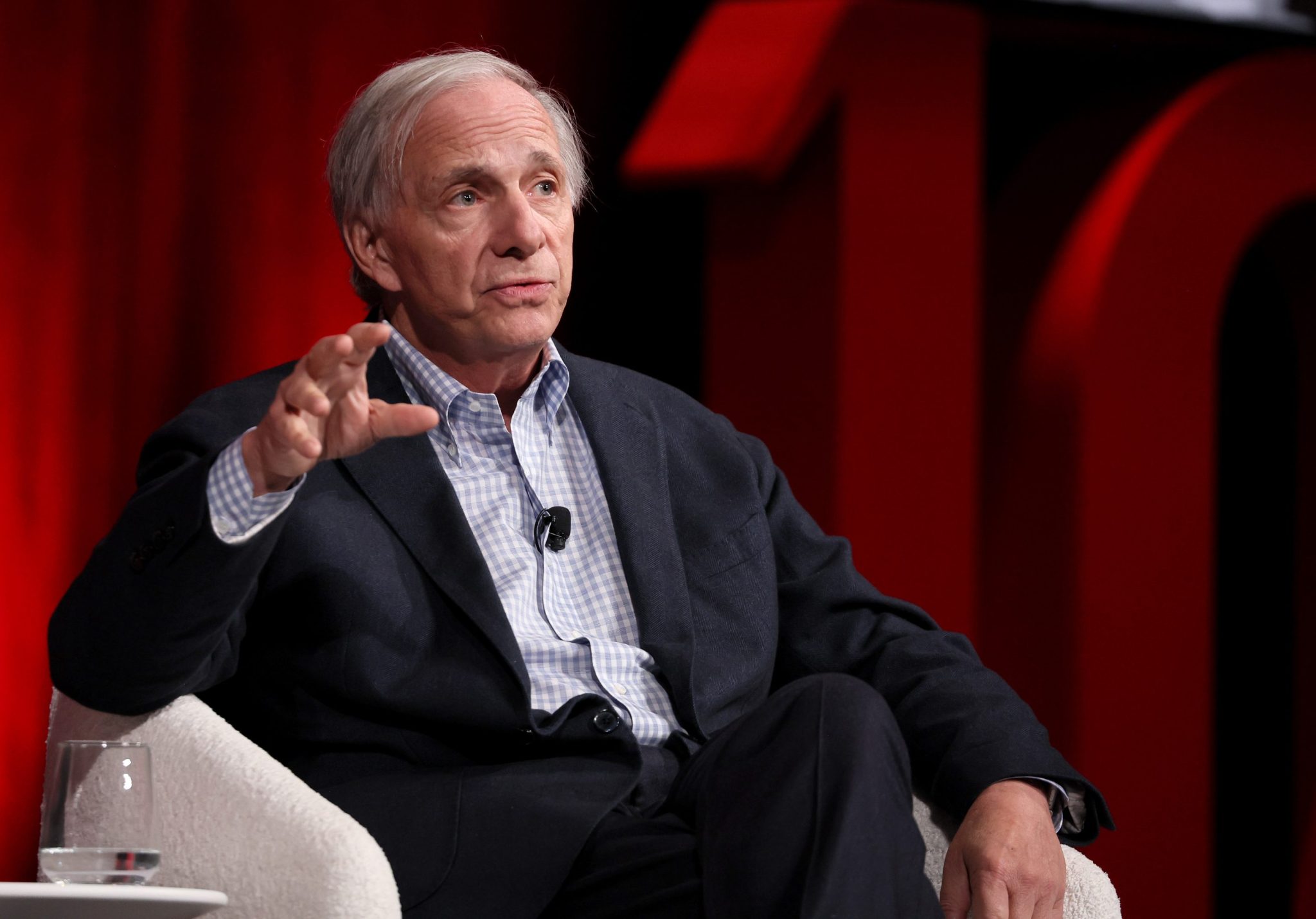
Ray Dalio just finished a 10-day trip to China. He says global leaders know America ‘doesn’t have what it takes to fight to maintain its empire’
Ray Dalio has spent 42 years visiting China, building relationships with senior officials and studying its political history back to 221 BCE. But after a recent 10-day trip to Beijing — part of a month-long tour of Asia — the Bridgewater Associates founder says something has changed, and changed fast. “Over the past few months there has been a big shift in the world order,” Dalio wrote in a sweeping essay published June 18 on Linked In, where his newsletter has 750,000 subscribers. (A truncated version of the piece also previously appeared in the Financial Times.) The catalyst, in Dalio’s telling, was the United States’ handling of Iran’s seizure of the Strait of Hormuz. The episode convinced leaders across Asia — including those who host American military bases — of something they had long suspected but never quite said aloud: that the American public “does not have the willingness to endure the discomforts of war,” and that Washington “doesn’t have what it takes to fight to maintain its empire.” The historical parallel Dalio reaches for is pointed. “This situation looks a lot like the British handling of Egypt’s taking of the Suez Canal,” he wrote, “which signaled the end of the British Empire.” It is a comparison that Dalio has been building toward for months: in March, he wrote in Fortune that the 2020s feel like “the rise of a new type of world order” resembling “pre-1945 world orders with great powers conflicts and gunboat diplomacy” — a view he illustrated with a Bank of America chart tracing 2,000 years of GDP dominance that showed China’s current ascent as a return to historical norms, not a disruption of them. A new hierarchy takes shape and the righting of a 100-year wound What Dalio observed in Beijing was not an adversarial standoff but rather a diplomatic migration. World leaders, he says, are now traveling to meet President Xi Jinping