So You Want a Coat of Arms
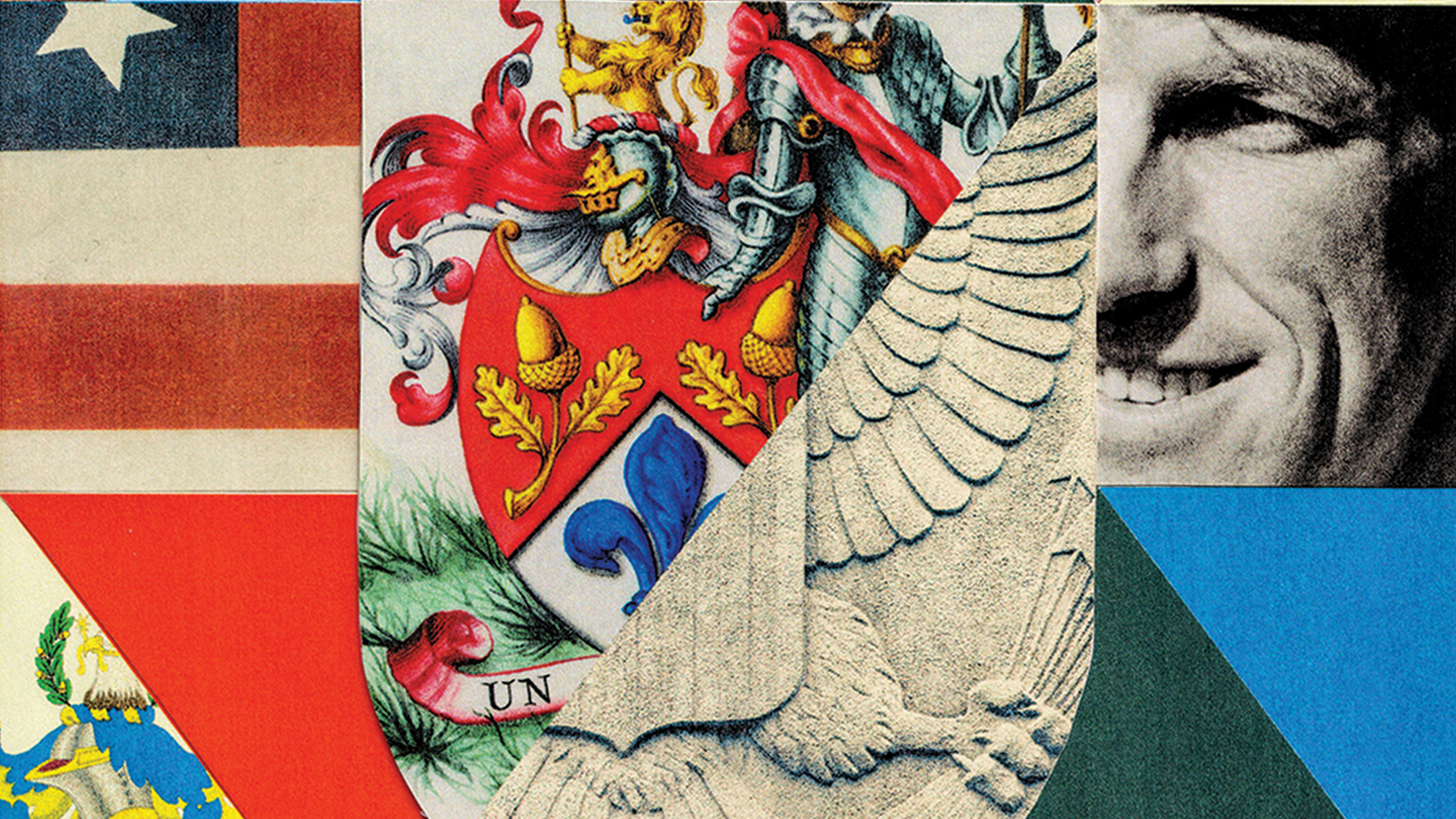
The first thing you notice upon entering the College of Arms, in London, is a small and incongruously blue statue of a kiwi, clutching a gold axe in its right claw. Sorry, let me try that again: In the odd historic language of heraldry, this is “a kiwi Azure grasping in the dexter foot an ice axe bendwise Or.”The bird belongs to the coat of arms of Sir Edmund Hillary, a New Zealander, who was part of the first team to conquer Mount Everest. (Penguins are also involved in Hillary’s arms, as is the hearty if ungrammatical motto Nothing venture nothing win.) No one could tell me why the kiwi statue ended up in this beautiful brick building around the corner from St. Paul’s Cathedral, but the college is a magnet for this sort of historical detritus. Next to the kiwi is the cushion on which Queen Elizabeth II sat during her coronation. I lean in closely to see if any impression of the royal buttocks remains visible. It does not.Founded in 1484, the College of Arms operates as part of the Royal Household, answering to the monarch. Its main functions are determining whether someone is entitled to use an existing coat of arms, and granting new arms to individuals and corporations. In Britain, having a coat of arms is still part of public life; you cannot join the Order of the Garter, a personal club of worthies curated by the sovereign, without one. For a fee of about $12,000, the college will perform the genealogical research and design work necessary to grant you arms. But the college also caters to an unlikely group of would-be knights-errant: Americans. “We get so many genuine inquiries—it’s a huge amount,” Dominic Ingram, a herald at the college who conducts such research, told me. Of the 120 or so arms the college grants each year, it estimates that up to 10 percent are honorary grants for non–British citizens, and the bulk of those go to Americans.“I loved how the application and vetting process was essentially the same protocol that has been used for centuries,” Ang