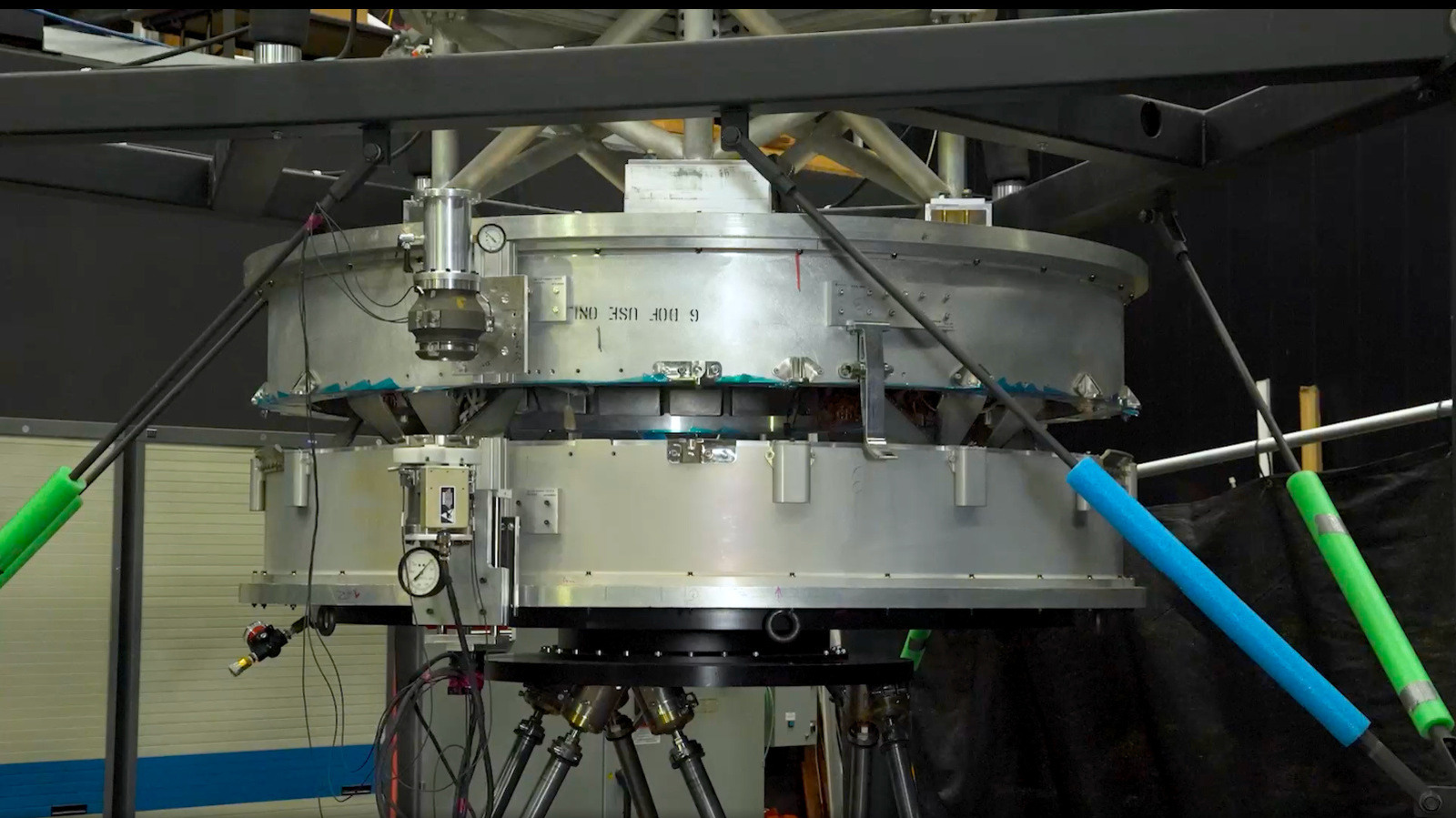
NASA tests an in-orbit refueling device for deep space missions
Key takeaways
- The cryocoupler, developed by L3Harris, will facilitate refueling in orbit.
- NASA/Tyson Eason Future deep space missions may need to refuel in orbit before they can head to their final destinations.
- Effective cryocouplers will have to be able to facilitate the transfer of extremely cold fluid, such as liquid hydrogen and liquid oxygen, without leaking.
The cryocoupler, developed by L3Harris, will facilitate refueling in orbit.
NASA/Tyson Eason Future deep space missions may need to refuel in orbit before they can head to their final destinations. NASA has been working on in-orbit refueling solutions for years, and one of its latest efforts is testing a "cryocoupler" developed by American tech company L3Harris. You can think of the cryocoupler as the nozzle of a gas pump, which is needed so it can fit a car's fuel tank. Cryocouplers will allow spacecraft to link to orbiting gas stations, so they can fill up before they leave the vicinity of our planet.
"In-orbit cryogenic refueling between two spacecraft has yet to be done and remains one of the toughest engineering challenges in spaceflight," said Travis Belcher, cryocoupler project manager at NASA's Marshall Space Flight Center in Huntsville, Alabama. Effective cryocouplers will have to be able to facilitate the transfer of extremely cold fluid, such as liquid hydrogen and liquid oxygen, without leaking. And since these propellants have to stay chilled at hundreds of degrees below Fahrenheit, the device will need to have the proper materials and strong seals. They (obviously) cannot be manually operated, as well.