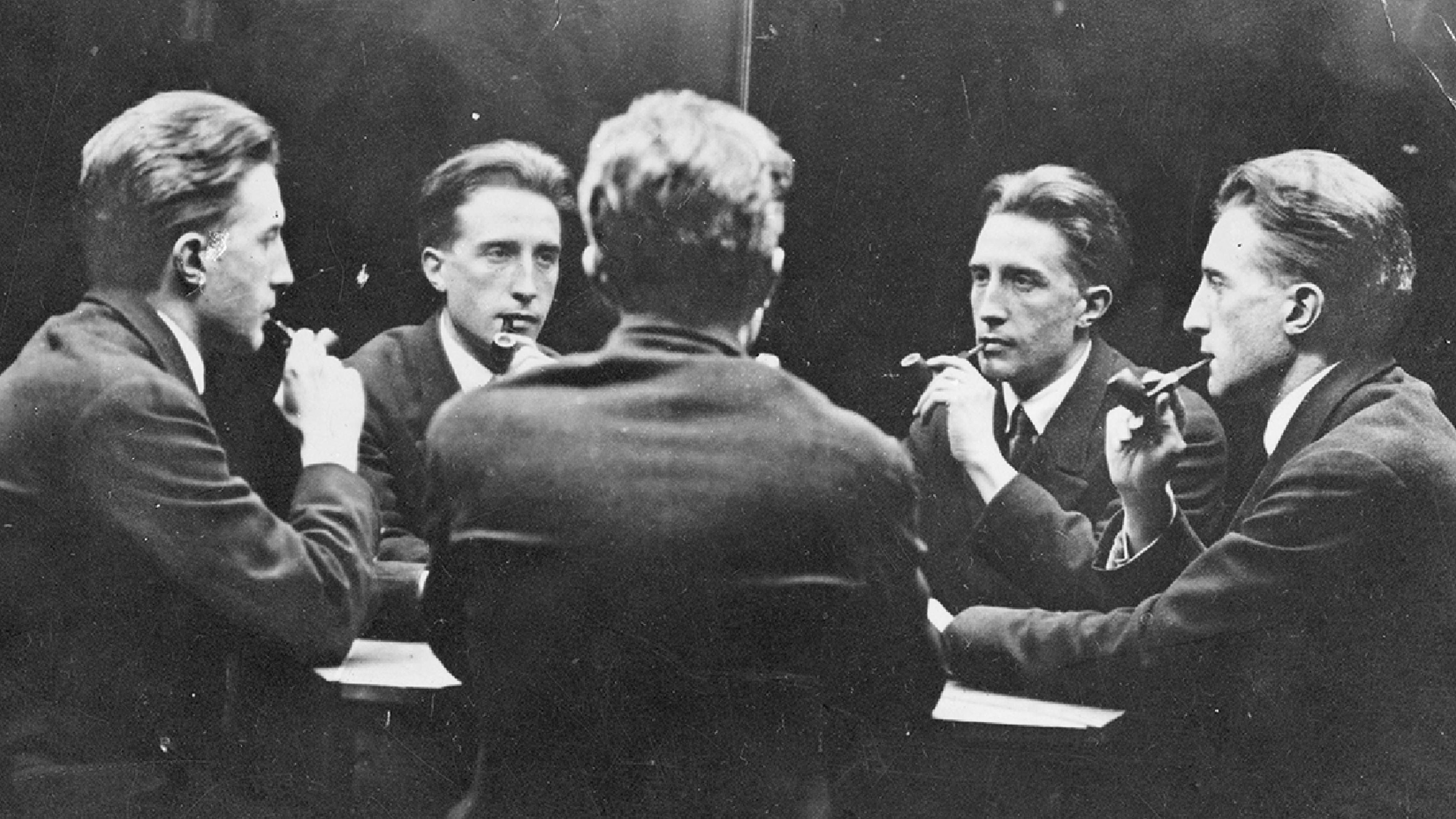
The Mischievous, Maddening Marcel Duchamp
Something about art disgusted Marcel Duchamp. Expression, taste, aesthetic intention—anything that gave off a whiff of the precious, he recoiled from. He was modern. He relished the impersonal operations of chance. He loved jokes and sex and the movements of modern machinery. “Painting is finished,” he said to the Romanian sculptor Constantin Brâncuși at an air show in Paris in 1912, when he was 25. “Who will do any better than that propeller?”The next year, Duchamp mounted a bicycle wheel onto an upside-down fork fixed to a wooden stool. He enjoyed the way the spokes rotated around a central axis, like a propeller, and how they reflected shimmering light, like a fireplace. He wouldn’t come up with the term until two years later, but Duchamp had created the first “readymade.” The mischievous, machine-obsessed, maddeningly inconsistent Frenchman was on his way to having an impact on modern creativity comparable to that of Richard Wagner or Charles Baudelaire on an earlier generation of modernists.Duchamp left behind a legacy that people either love or loathe. He is known as the father of conceptual art, but his so-called ideas were mostly idle notions, provocations, speculations. Opinion divides on whether he snuffed out or emancipated art. But fret as we might about the fate of art after Duchamp, this strange, original man—so nonchalant! so fanatical!—was engaged in something more private, urgent, and amorous (more on that later) than merely “making art.”A visit to the massive Duchamp exhibition at the Museum of Modern Art—his first North American retrospective in more than 50 years—can feel less like taking in a traditional exhibition than like wandering through an archive. (It was organized by MoMA’s curators Ann Temkin and Michelle Kuo, and Matthew Affron of the Philadelphia Museum of Art.) The items on display, many of them replicas sanctioned by the artist, have none of the aloof self-sufficiency, the “aura,” we expect from great art. Each object is instead mor