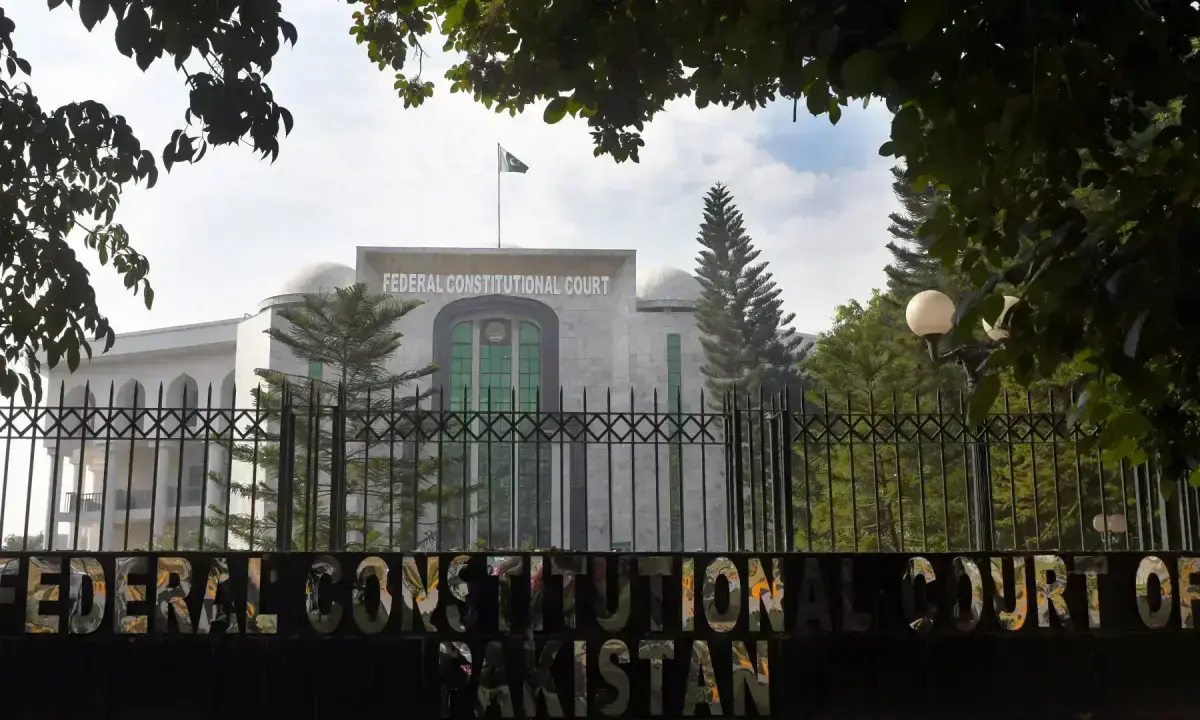
FCC rules income tax on immovable properties ‘confiscatory in nature’
Why this matters: local context for readers following news across Pakistan and the region.
ISLAMABAD: The Federal Constitutional Court (FCC) on Tuesday ruled that Section 7 E of the Income Tax Ordinance (ITO) 2001 was merely illusory since it was confiscatory in nature, imposed upon immovable properties, which neither generate income nor, in certain cases, are capable of generating any income. “The practical effect of such a levy is that a person owning a non-income-generating asset may be compelled to dispose of the asset to meet tax liability,” observed Chief Justice FCC Aminuddin Khan. The judgement came on the day when parliament was debating the finance bill 2026, which includes proposals to implement the May 7 short order in which the FCC had declared Section 7E ultra vires. This section, introduced through the Finance Act 2022, empowered authorities to charge tax on “deemed incomes” on assets and properties. The levy under section 7E operates in a discriminatory manner as it carves out exemptions in favour of certain classes of persons, thereby subjecting similarly placed taxpayers to unequal treatment, emphasised the CJ. The detailed reasons noted that the provision does not withstand constitutional scrutiny since it falls outside the legislative competence of the federal legislature. Justice Aminuddin notes tax raises legitimate concerns regarding excessive fiscal burden, economic redundancy “Where a levy is structured in a manner that taxes both the source of acquisition and thereafter the asset itself without reference to income generation, it raises legitimate concerns regarding excessive fiscal burden and economic redundancy,” observed Justice Aminuddin Khan, who had headed a two-judge Supreme Court that decided several petitions filed by a number of taxpayers against the judgements of the Sindh High Court (SHC) and the Lahore High Court (LHC) as well as the Federal Board of Revenue/Commissioner Inland Revenue (CIR). The detailed reasons noted that subsequent to the 18th Amendment, similar disputes had assumed increased frequency, primarily