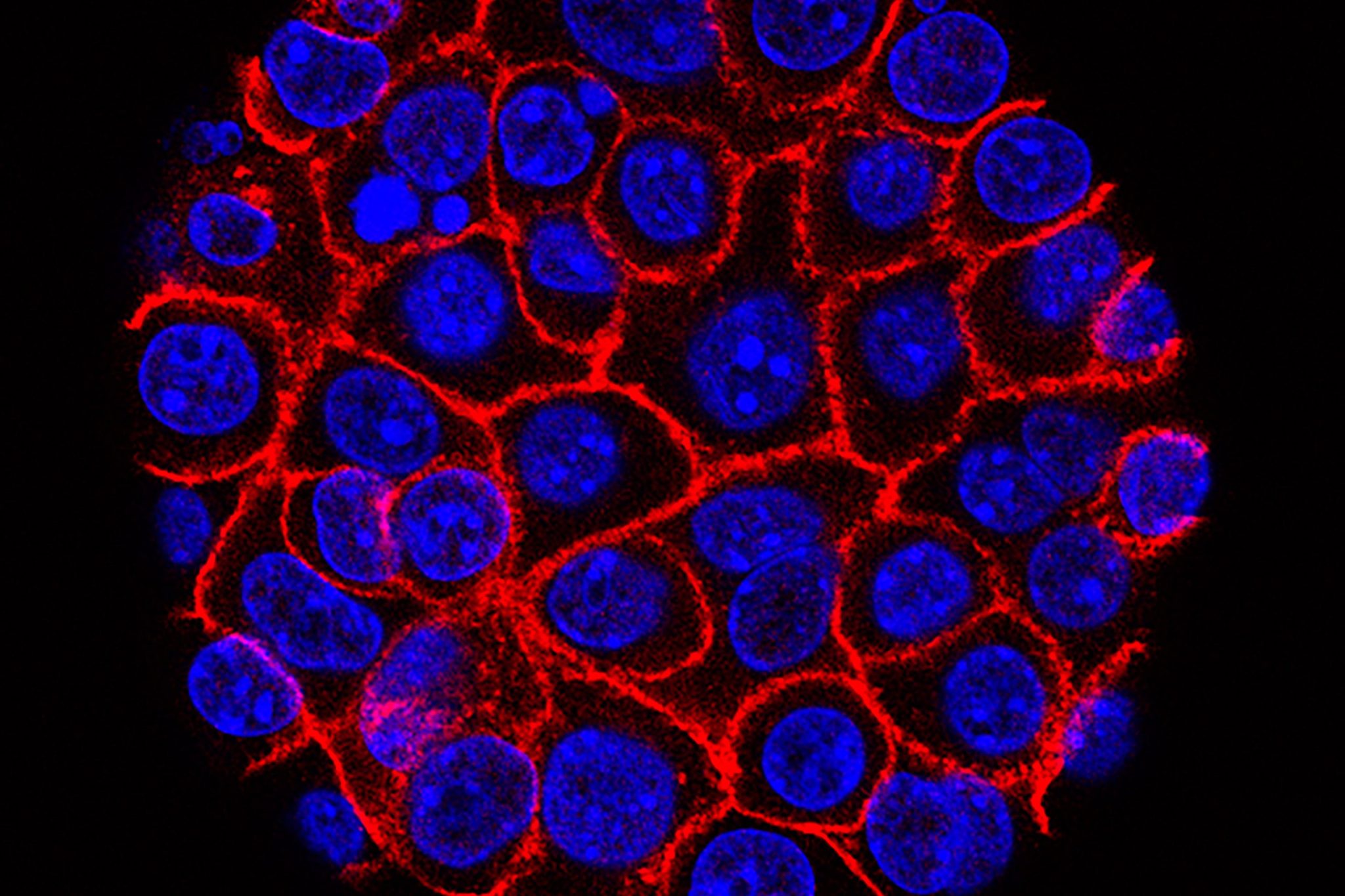
Experimental pill nearly doubles survival time for people with advanced pancreatic cancer. ‘I actually started crying’
A novel pill helped people with advanced pancreatic cancer live longer, researchers reported Sunday, raising hopes of long-needed better treatments for one of the deadliest types of cancer. “While not curing the cancer, it is a very large step forward,” said Dr. Zev Wainberg, of the University of California, Los Angeles, who helped lead the study. The drug is called daraxonrasib and it blocks a mutated protein that fuels tumor growth in more than 90% of pancreatic cancer cases — a target that had eluded treatment for decades. The daily pills nearly doubled survival time, with fewer severe side effects, in a study that randomly assigned the experimental drug or more chemotherapy to 500 patients whose metastatic, or spreading, cancer had quit responding to prior treatment. The findings were published in the New England Journal of Medicine and presented Sunday at the American Society for Clinical Oncology meeting in Chicago. Those taking daraxonrasib lived for a median of 13.2 months compared with 6.7 months for chemotherapy recipients. While that may seem like a small improvement, Wainberg said it marked the first drug to show a substantial advantage over chemotherapy. “Having treated pancreatic cancer for 16 years, I actually started crying” when first seeing the study results, Dr. Rachna Shroff of the University of Arizona Cancer Center, who wasn’t involved with the research, said from the ASCO meeting. She was struck by how “patients stayed on this treatment because it was providing durable and meaningful benefit to them.” The pills’ effects eventually wane but recipients used them for significantly longer than the comparison group stayed on chemotherapy, reporting less pain and a better quality of life as their tumors shrank. Many still were using the drug after the data was analyzed, which Wainberg said means the survival gap may widen as researchers continue tracking them. Dr. Brian Wolpin, of the Dana-Farber Cancer Institute, presented the findings