5 Things I Learned About People From Doing Stand-Up Comedy
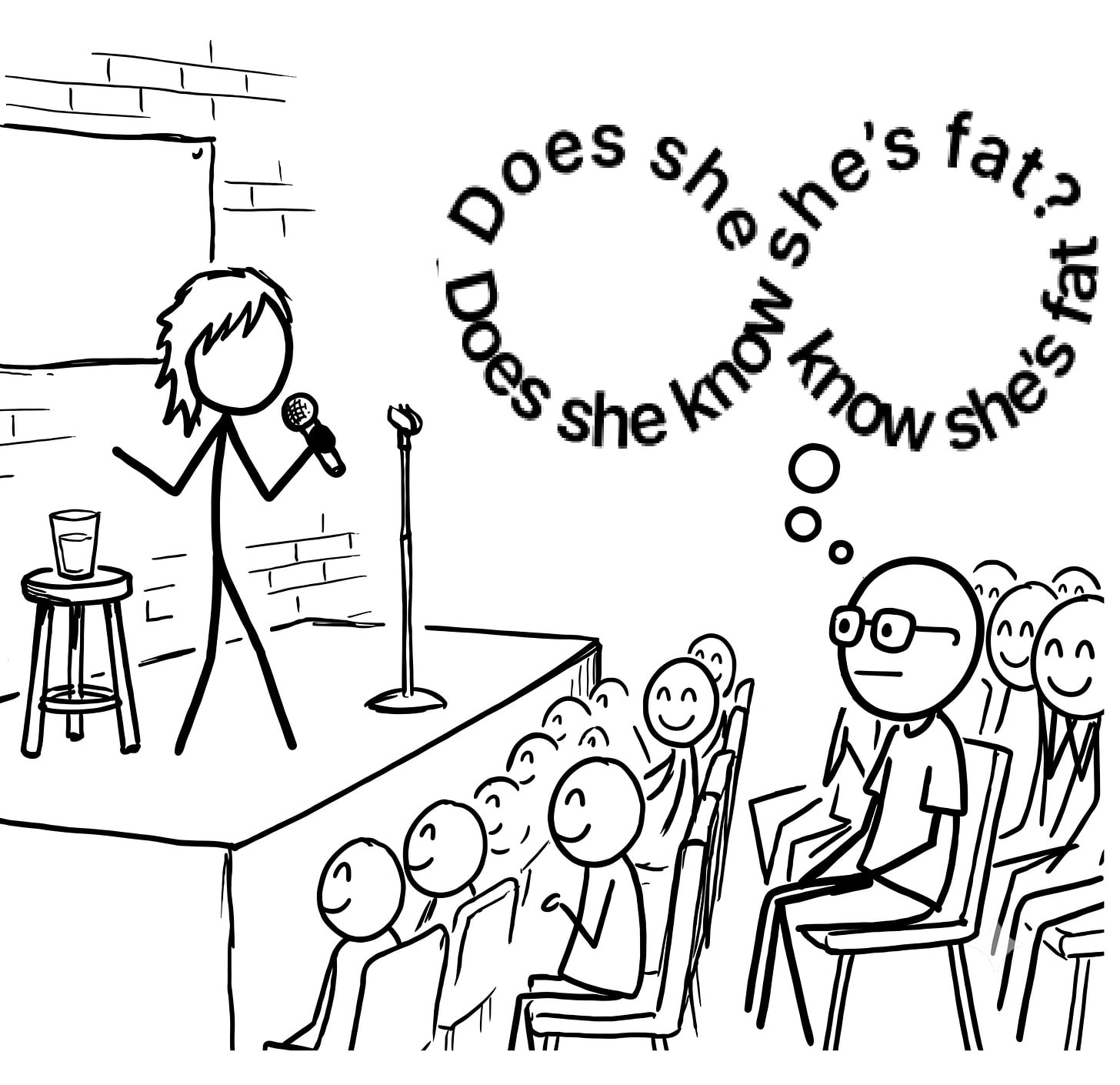
I’ve been doing stand-up comedy for two months now, which is a total gear shift from my previous job in AI policy. I’ve learned some fascinating things about how humor works, but also about how people perceive each other, and how crowds can be surprisingly hive-minded. For those interested in improving their models of people and the world, here are five of those things!1. People need to put you in a box The first thing a stand-up audience craves, consciously or unconsciously, is for you to tell them what kind of person you are. Are you an artsy lesbian, a hard-working immigrant, a married average Joe? For some reason, people can’t laugh until they have a box to put you in. If they can’t place a comedian, half the audience’s minds will be occupied trying to figure out who is talking to them. Must be some sort of innate human drive to quickly categorize new people you meet. This is why so many stand-ups start by addressing their appearance, accent, etc. (“I know what you’re thinking… [generic punchline about their appearance].”)I experienced this need to categorize myself when watching this set by Robby Hoffman recently. I couldn’t quite figure out who was speaking to me and just felt like I couldn’t quite settle until I got more of a grasp on who she is as a person. (This is less applicable to comedians who don’t tell stories or talk conversationally, and instead purely do one-liners. This style of comedy can feel less personal, so I suppose that’s why the urge to know more about the comedian may be lower.)In comedy, something glaring in the audience’s mind that goes unaddressed is called a “loop”. Common loops are a strange/loud laugh in the crowd, something going wrong on stage, or mentioning something that makes the audience concerned, such as the death of a relative. Generally, comedians want to “close” such loops as quickly as possible because people just can’t laugh while thinking “She just knocked over the microphone and hasn’t addressed it!” or “Is he okay?” S