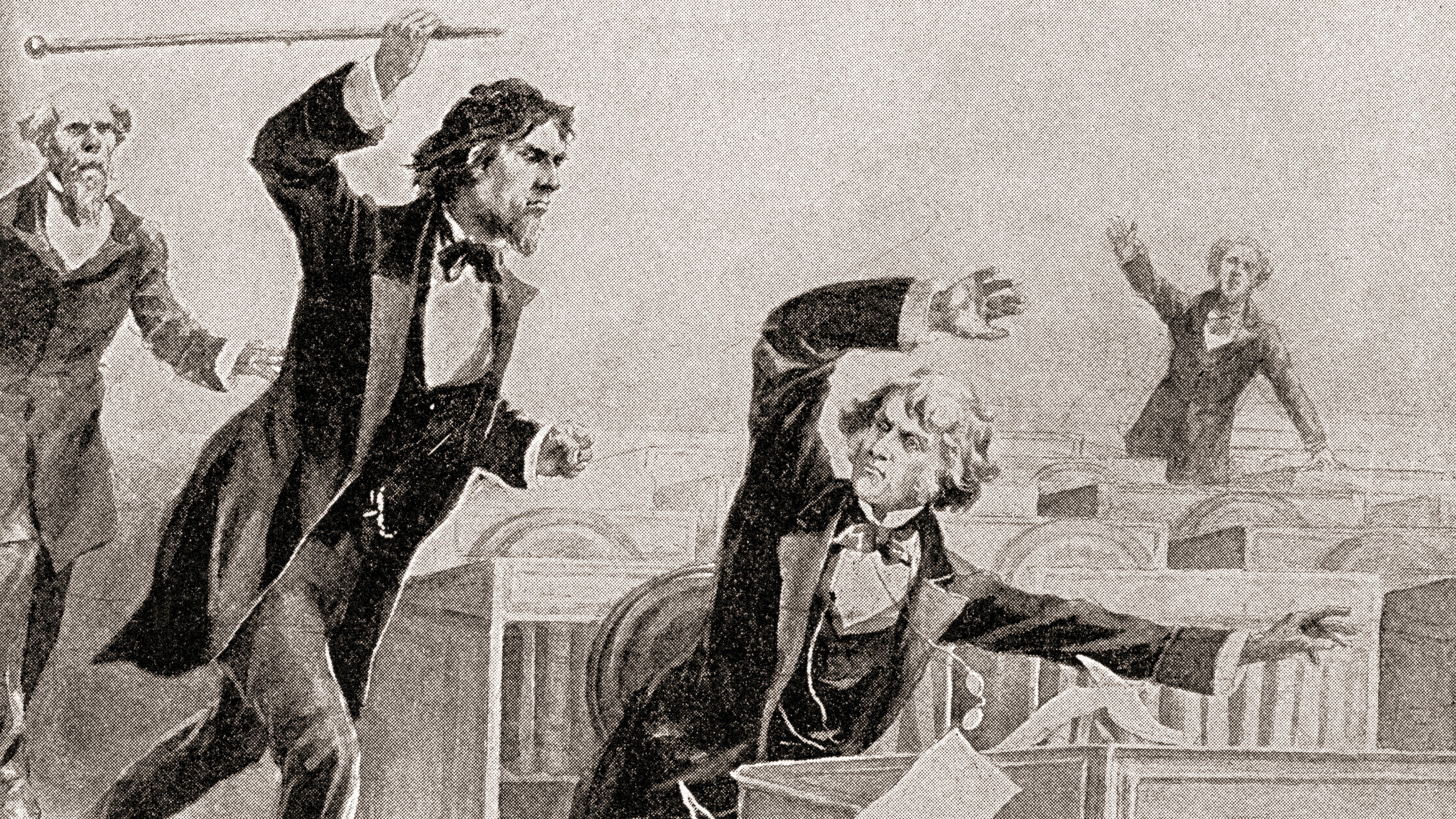
The Caning That Changed America
Most people in the Senate chamber noticed the sound before anything else—the sharp, sickening crack of a metal-tipped cane landing on an unprotected skull.On May 22, 1856, Preston Brooks, a young representative from South Carolina, confronted Senator Charles Sumner of Massachusetts during a visit to the upper chamber. Sumner, known for his fiery abolitionist orations, had recently given a speech leveling insults at Brooks’s kinsman Senator Andrew P. Butler, including that he consorted with “the harlot, Slavery.”Suddenly, Brooks began raining down blows on Sumner with a gutta-percha cane while an accomplice warded off lawmakers who tried to intervene. Sumner’s long legs were trapped under his bolted-down desk; the best he could do was raise his arms. Brooks beat him until the cane splintered in his hand, and then, even after the desk was wrenched free, he kept going. Finally, bystanders pulled the men apart. Sumner barely escaped death; his head and shoulders were slashed to the bone. One of America’s best legal thinkers had just been chastised like a farm animal.The attack on Sumner poured gasoline on a smoldering fire. More than 1 million copies of his speech “The Crime Against Kansas” were circulated. A little-known abolitionist named John Brown heard the news and was moved toward violent rebellion. The newly founded Republican Party, which emerged from the ashes of the establishment Whigs, campaigned that year on “Bleeding Kansas” and “Bleeding Sumner,” paving the way for Abraham Lincoln and secession. Outraged white people finally understood Sumner’s point: As long as the slaveholder oligarchy persisted, no one was free.In time, the symbols loomed larger than the men themselves: Sumner’s chair was left empty as a testament to the brutality of the “Slave Power,” and pieces of the shattered cane were hoarded like relics of the true cross. Yet as the memory of the Civil War faded, the meaning of the symbols changed; the names Sumner and Brooks became emblems of par