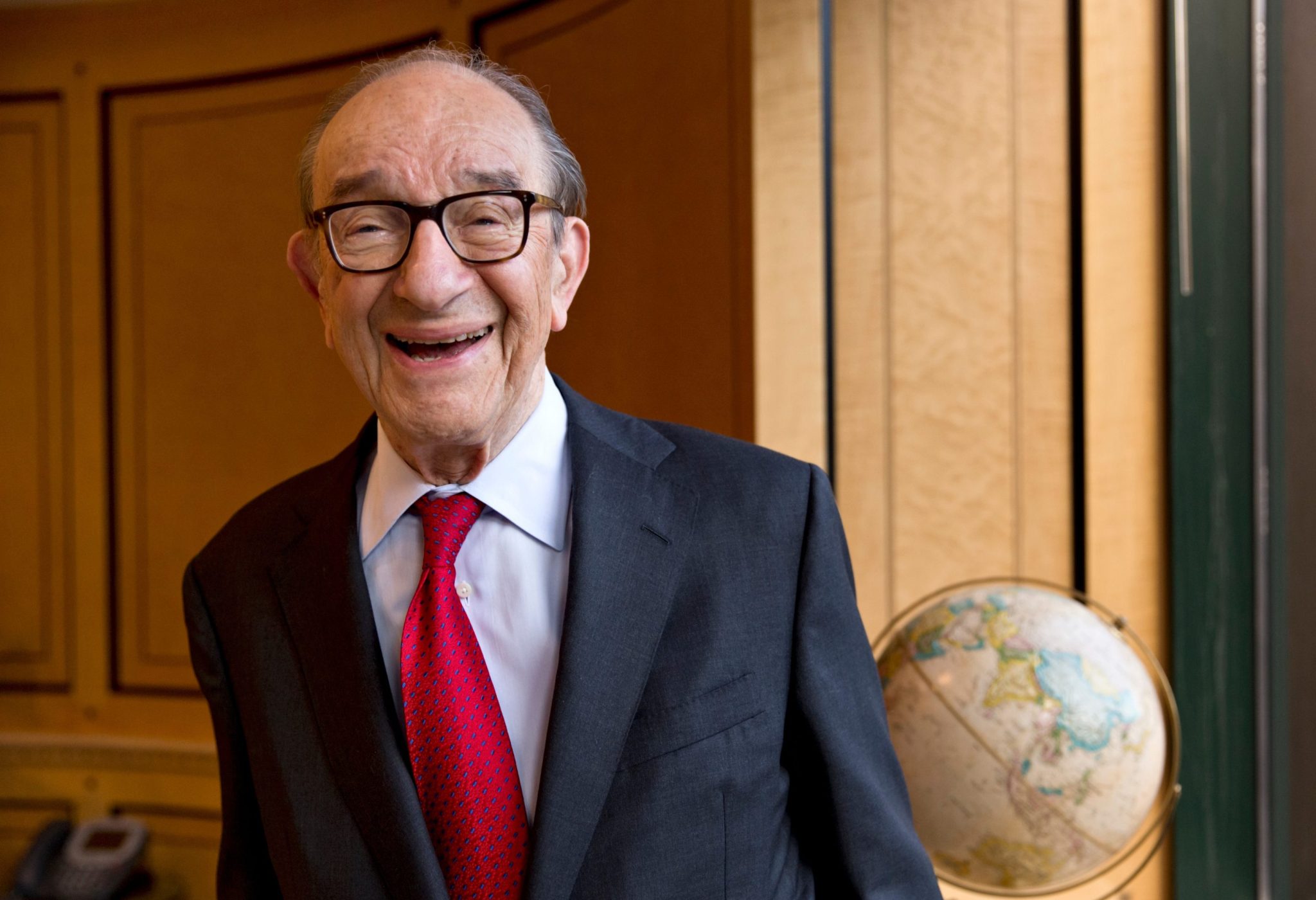
Alan Greenspan dies at 100. As Fed chair, he was hailed as the ‘Oracle’ but later admitted he made a mistake assuming banks could self-regulate
Former U.S. Federal Reserve Chair Alan Greenspan died Monday from complications of Parkinson’s Disease, said his wife of 29 years, NBC News correspondent Andrea Mitchell. He was 100. “To me he was my husband, who shaped my life from our very first date in 1984,” Mitchell said. “He had ‘irrational exuberance’ for baseball, the Washington Commanders, tennis, golf, and music, especially jazz. He will be remembered for his brilliance and his kindness. Being his life partner was the joy of my life.” In his 18½ years at the helm of the Fed, Greenspan presided over a sustained era of American growth and prosperity, yet one that ended with devastating consequences in 2008, two years after he had left the central bank. Era of US economic growth Greenspan was so respected during his many years as head of the world’s most influential central bank that by the time he stepped down in 2006, he was widely celebrated as the “Oracle’’ and “Maestro.’’ He presided over a breathtaking surge in stock prices and a 10-year economic boom that began in March 1991. He was widely celebrated as a virtuoso who nurtured America’s economic well-being and whose nearly every utterance was parsed for clues as to where interest rates, the economy and the financial markets might be headed. The intense scrutiny of Greenspan’s intentions gave birth to new Fed folklore: The “Briefcase Indicator.” A stuffed briefcase carried into Fed meetings implied changes might be afoot because Greenspan carried with him charts and research to make his point. US housing crisis raised questions about policies Greenspan’s reputation suffered a serious setback, however, soon after he left the Fed in 2006. The American housing market collapsed, igniting a global financial crisis that nearly toppled the U.S. banking system and plunged the economy into the worst recession since the 1930s. Critics pinned much of the blame for the crisis on Greenspan’s easy-money policies and on what they believed was an overexuber