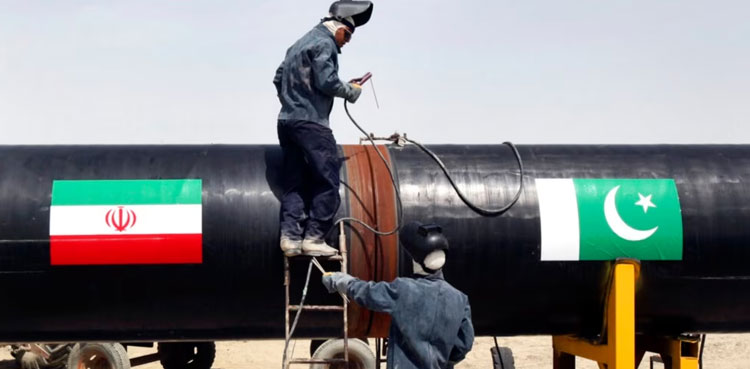
Pakistan-Iran gas pipeline revival on the cards?
Key takeaways
- Signed in 2009, the pipeline agreement envisaged Iran supplying up to one billion cubic feet of natural gas per day to Pakistan over a 25-year period.
- The delay has remained a source of concern in bilateral relations, with Tehran repeatedly urging Islamabad to fulfil its commitments under the agreement.
- With Pakistan facing persistent energy shortages and rising fuel import costs, the prospect of accessing relatively affordable Iranian gas has once again brought the project into the spotlight.
Why this matters: local context for readers following news across Pakistan and the region.
Add ARY News on Google AAResize The Pakistan-Iran gas pipeline project has once again emerged as a key topic of discussion amid improving diplomatic engagement between Tehran and Washington and growing expectations that sanctions on Iran could eventually be eased.
Chairman ARY Group Kamran Khan believes that any relaxation of restrictions on Iran could provide fresh momentum to the long-delayed energy project, which has remained stalled for years due to sanctions-related concerns and financial constraints.
Signed in 2009, the pipeline agreement envisaged Iran supplying up to one billion cubic feet of natural gas per day to Pakistan over a 25-year period. While Iran completed construction of its section of the pipeline, Pakistan has yet to finish its portion of the project.