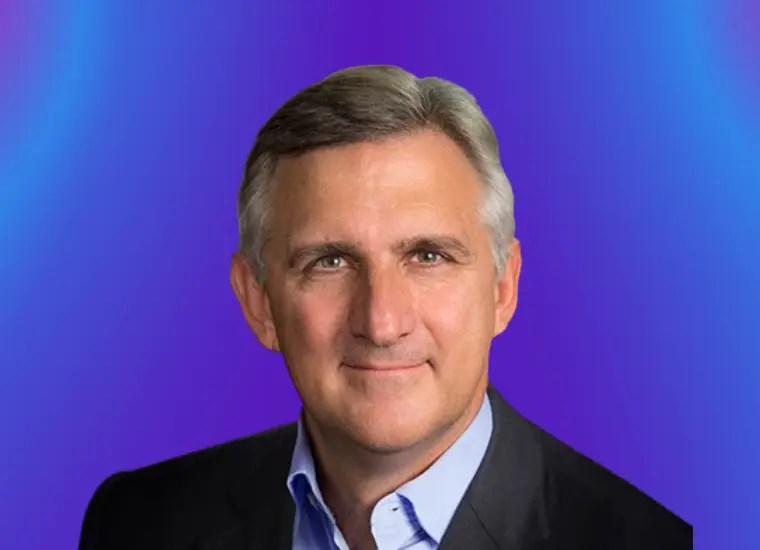
The CEO who loves AI autodidacts — and desperately needs his experts
Bob Bradway has a word for the kind of leader who will thrive in the AI era: “autodidact.” Curious. Self-taught. Comfortable with uncertainty. The kind of person who picks up a new tool on a Saturday and figures it out by Sunday — which, as it happens, is exactly what Bradway himself does. The Amgen CEO spends his weekends vibe-coding, has required his entire senior executive team to take AI courses, and talks about artificial intelligence with a rare fluency. In a podcast interview with AI pioneer Andrew Ng, he was told: “A lot of times you sound more like an AI person than a biotech CEO.” The irony is that Bradway runs a company built on the opposite of the autodidact. Amgen’s competitive moat is its experts — scientists who have spent decades learning that molecules are delicate constructions indeed. “The hallways are full of people who have the experience of understanding if you make a substitution of one amino acid for another, there’s a consequence,” Bradway said. “We want to be very careful not to lose that.” Reconciling those two things — the adaptable generalist and the irreplaceable specialist — is the central challenge of Bradway’s AI moment. And few CEOs are better positioned to navigate it. That’s because Bradway didn’t just start thinking about AI recently. He started in 2012. That year, Amgen acquired DeCODE Genetics, a small Icelandic company holding longitudinal genomic data on virtually the entire population of Iceland — not a drug or a patent, but a bet that data and AI would eventually transform how medicines get discovered. His peers were skeptical. Even Andrew Ng, who would later become a close collaborator, told Bradway at the time that the genetic data wasn’t “tractable” yet and steered him toward nearer-term AI applications like computer vision. Bradway made both bets and today, an Nvidia SuperPod hums in Reykjavik, Amgen has developed its own pro