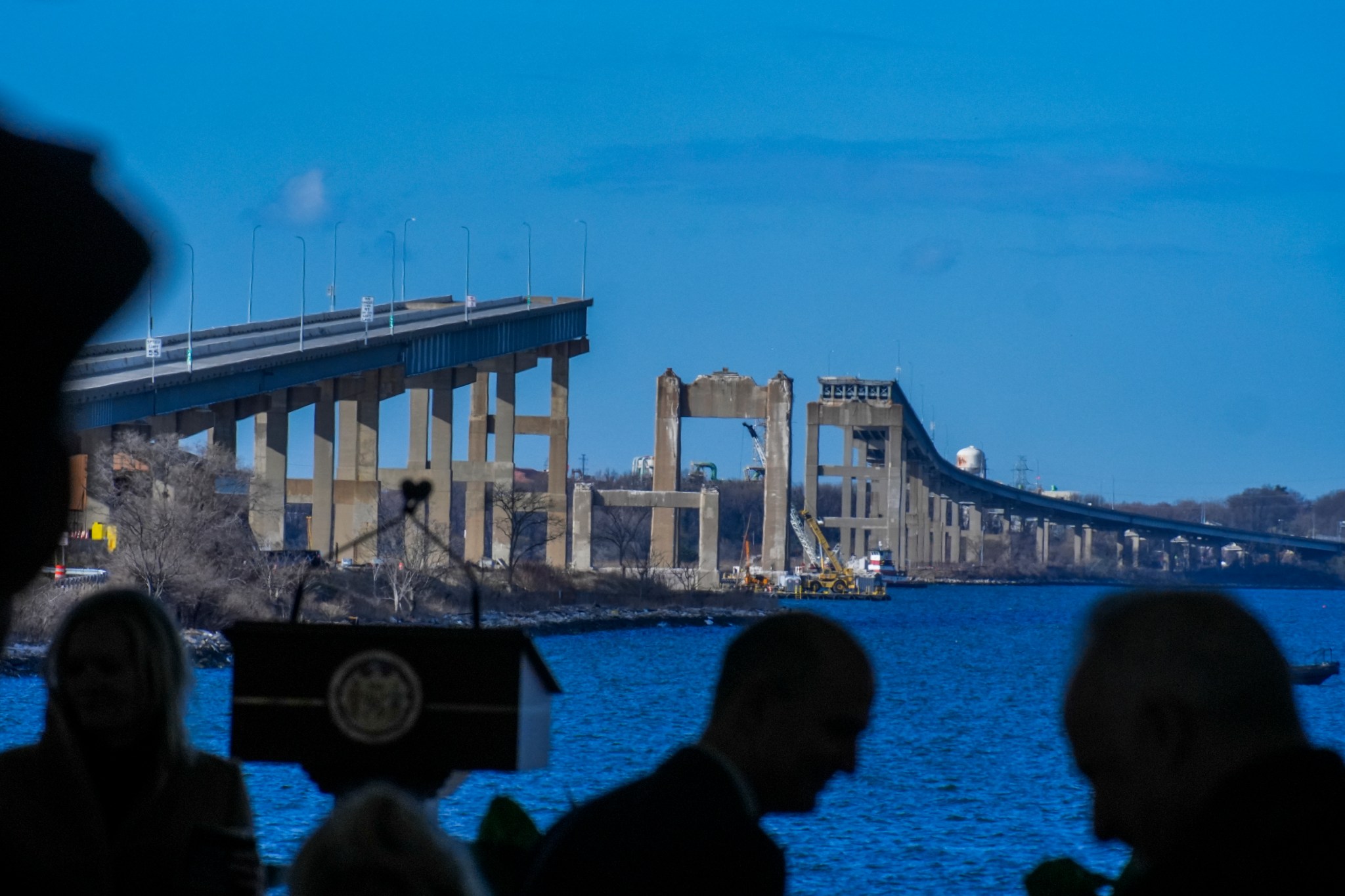
Over 40,000 American bridges have structurally deficient ratings. Why aren’t we using quantum sensors on them?
Every bridge has parts that drivers never see: steel buried in concrete, welds tucked under girders, and soil packed around foundations below the waterline. A bridge can look fine from the road while rust spreads around steel hidden inside concrete. A small fatigue crack can lengthen. A flood can wash soil away from a pier. By the time cracks, loose concrete or lane closures appear, the cheapest repair window may already have closed. When it comes to these damaged bridges, this problem is national. The United States has more than 624,000 highway bridges. About 220,000 need major repair or replacement, and 41,677 are rated poor, also called structurally deficient. While “poor” does not mean unsafe, it does mean at least one key bridge element received a poor rating, indicating deterioration or cracking that will require significant repair. (function(){function e(){window.addEventListener(`message`,function(e){if(e.data[`datawrapper-height`]!==void 0){var t=document.querySelectorAll(`iframe`);for(var n in e.data[`datawrapper-height`])for(var r=0,i;i=t[r];r++)if(i.contentWindow===e.source){var a=e.data[`datawrapper-height`][n]+`px`;i.style.height=a}}})}e()})(); As a researcher who studies photonics and quantum sensing, I work on devices that measure faint or hidden signals. My lab applies physics to develop devices, including quantum sensors. Advanced sensors of this type might one day be able to help engineers pinpoint where to look to determine whether hidden damage in infrastructure is worsening. However, they cannot replace human inspectors. Inspections keep bridges safe, but are snapshots Federal bridge inspections – rooted in National Bridge Inspection Standards mandated by Congress in 1968 – exist because past failures showed that small defects can threaten large structures. Under current federal rules, many bridges must be inspected in, at most, 24-month intervals. Higher-risk bridges, such as those carrying heavy interstate traffic, those with aging structures