Six charts show how clean power was world’s largest source of new energy in 2025
Why this matters: environmental and climate reporting with long-term consequences.
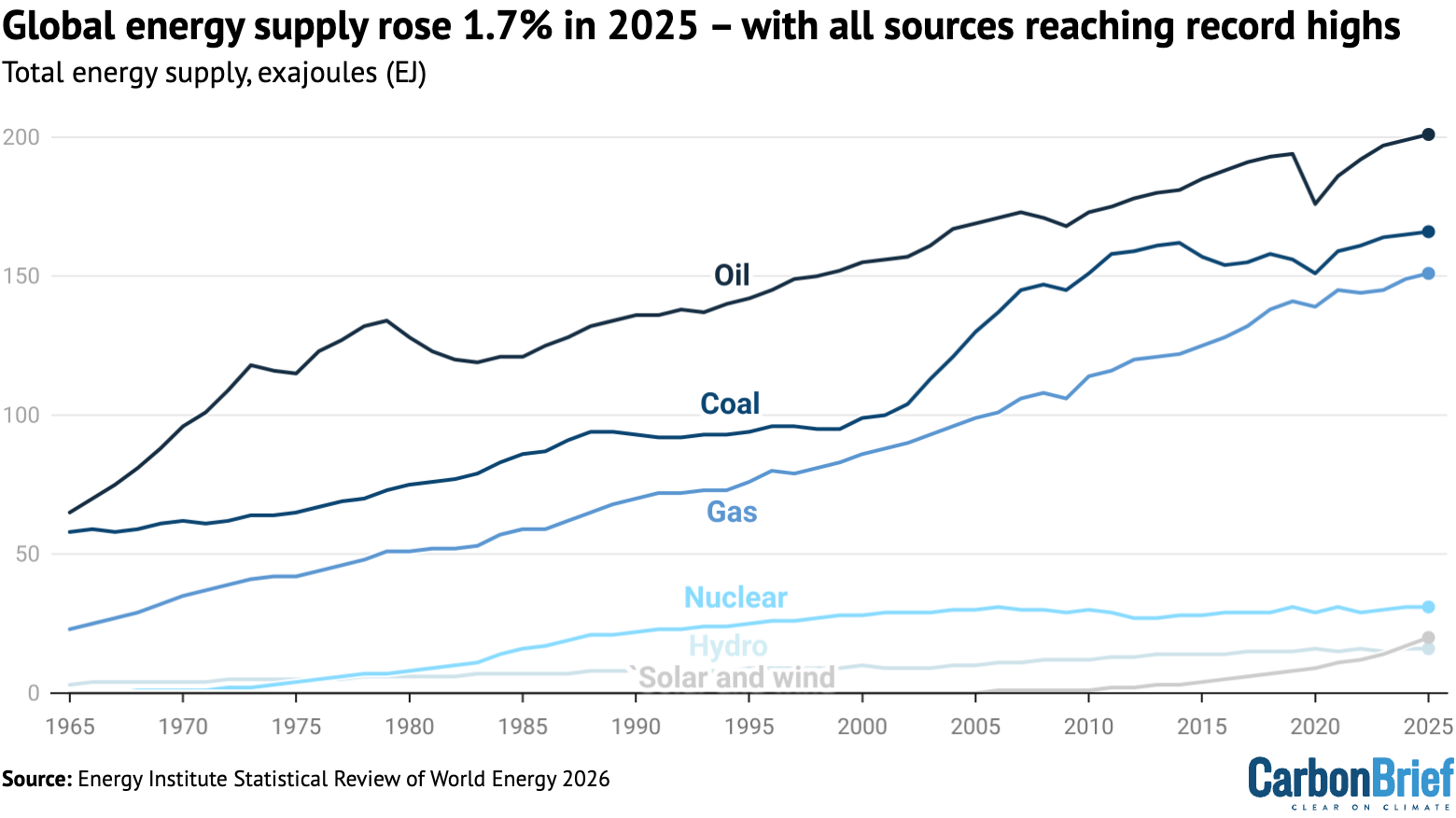
Clean power added more to global energy supplies than any other source in 2025, according to the latest Energy Institute statistical review of world energy. Outside the Covid pandemic, it was also the first year ever in which wind and solar, when combined, contributed more new energy than any of the individual fossil fuels. The findings illustrate the “growing prominence” of electricity in the global energy system, according to the Energy Institute, a professional membership body that took over the production of the annual statistical review from oil firm BP in 2023. It notes that electricity demand is rising much faster, at 3% in 2025, than energy use overall at 1.7% – and that all of the new power supply came from low-carbon sources. While it includes data on data-centre demand for the first time, the review shows that these only make up 2% of all electricity use and 15% of the increase in 2025. (The review does not explore other sources of demand, but separate data shows electrification of industry, heat and transport is a far larger driver of growth than data centres.) At the same time, every source of energy – including coal, oil, gas, nuclear and hydro – also reached global all-time highs in 2025, the statistical review shows. While the 86% of “primary energy” that came from fossil fuels is a record low, their real contribution to the economy is far lower, because roughly two-thirds of their energy is lost during combustion. Below, Carbon Brief highlights the key findings of the review in six charts. Global energy supplies increase 1.7% in 2025 Fossil fuels met a record-low 86.2% of global energy supply The ‘primary energy fallacy’ ‘inflates fossil fuels’ Wind and solar were biggest source of new energy in 2025 Clean energy met all of global electricity growth in 2025 China generates more power than the US, EU and India combined Global energy supplies increase 1.7% in 2025 The review shows that global energy supply reached a record high in 2025, climbing 10 ex