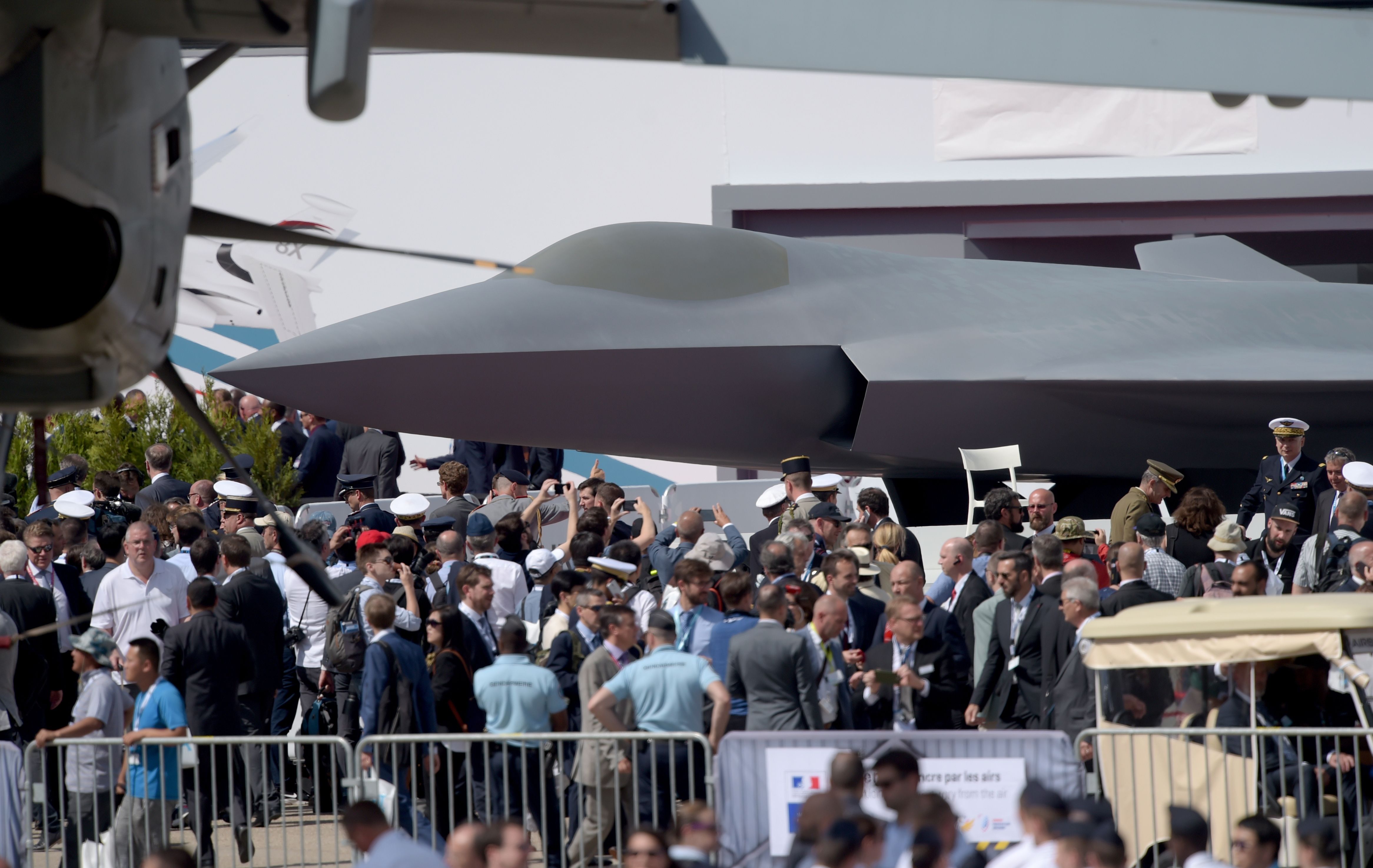
German, Spanish FCAS companies rally to preserve breakthrough fighter tech
Why this matters: an international story with cross-border implications worth tracking.
COLOGNE, Germany — German and Spanish companies involved the now-defunct Future Combat Air System program are appealing to their respective governments to keep funding sixth-generation fighter jet expertise gained under the developmental effort.Separate statements to that effect published Thursday by the lead companies of both nations, Airbus and Indra, come as news broke this week that German Chancellor Friedrich Merz and French President Emmanuel Macron had decided to drop the sixth-generation fighter jet segment of FCAS.That warplane was meant to be a centerpiece of the effort, with accompanying drones, sensors and communications equipment envisioned to act in concert as a first-of-its-kind uber-weapon in the skies.Years of squabbling between German industry lead Airbus and French lead Dassault Aviation over leadership and intellectual property ultimately led to the program’s demise, essentially overruling political goodwill among the leadership of both countries.On the German side, a group dubbed “Team Gen 6” now includes Airbus Defence and Space, Autoflug, Diehl Defence, Hensoldt, Liebherr, MBDA Deutschland, MTU Aero Engines and Rohde & Schwarz.In a joint statement circulated at the ILA Berlin Airshow on Thursday, the companies argue the fielding of a sixth-generation fighter plane should remain Berlin’s goal.“An effective new setup is now indispensable for achieving our common objective: a superior European air combat system for our collective security,” the firms wrote in the statement.With existing FCAS contracts ending this year, the companies want the government to keep spending money on such a warplane, warning that a lapse in funding would lead to an “irreversible” loss in expertise.In Spain, the corresponding industry grouping encompasses Indra, the Spanish arm of Airbus Defence and Space, Grupo Oesia, GMV, ITP and Sener.Notably, the companies emphasize a desire to work as part of a multinational team, leaving the door open to piggybacking on an existin