Brackets Are a Bad Way to Regulate
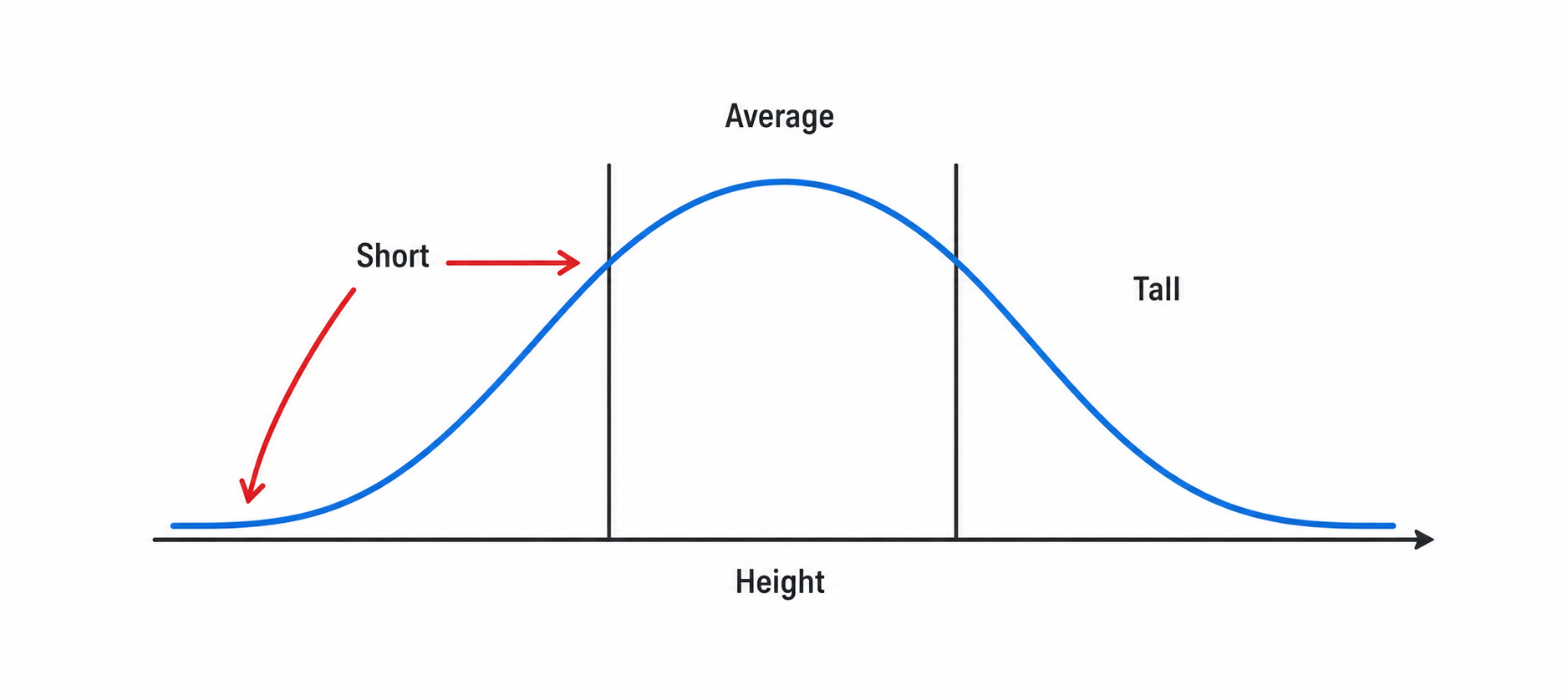
Continuous distributions are everywhere - for virtually everything we care about, a little more is a little better (or worse), and a lot more is a lot better (or worse). This presents a problem - we need to create rules that reasonably and fairly apply across these continuums, where the degree to which a thing possesses a trait makes a difference to the reasonable treatment of it. Going 1m/h over the limit, and going 150 in a 40 zone are both “speeding”, yet we must punish these things differently. The default solution for almost all regulations is to slice these continuous distributions into chunks, and treat the chunks as basically equivalent phenomena - squishing a continuous distribution into five or so blocks, and manually writing rules to apply uniformly within the blocks.Examples include:Speed limitsTax bracketsSentencing thresholdsOvertime thresholdsPension eligibilityThis is a very bad system.Brackets are fundamentally inefficientFor any bracket over a continuous distribution, the upper section of the bracket has more of the trait than the bottom section. As a result, for any incentive or punishment applying uniformly across a bracket, the ends of the bracket will be disproportionately affected. This introduces inefficiency and incentivises clustering near the edges of the bracket.Businesses exploit the inefficiency of brackets all the time. Telcos may charge you per minute of usage, such that the second you have called for 1:00:01, you’ve paid for 2 minutes of phone time. More blatantly, hotels will often bill you for an entire extra night if you check out a minute late. Airlines will gleefully charge you double for a bag that’s a gram over the 20kg cutoff. Software subscriptions charge you monthly rather than by the second, and will push you towards even longer, yearly intervals.Discontinuous thresholds of reward and punishment imposed on continuous distributions almost always incentivise moving to the the top of a given bracket. Once you’re in the bracke