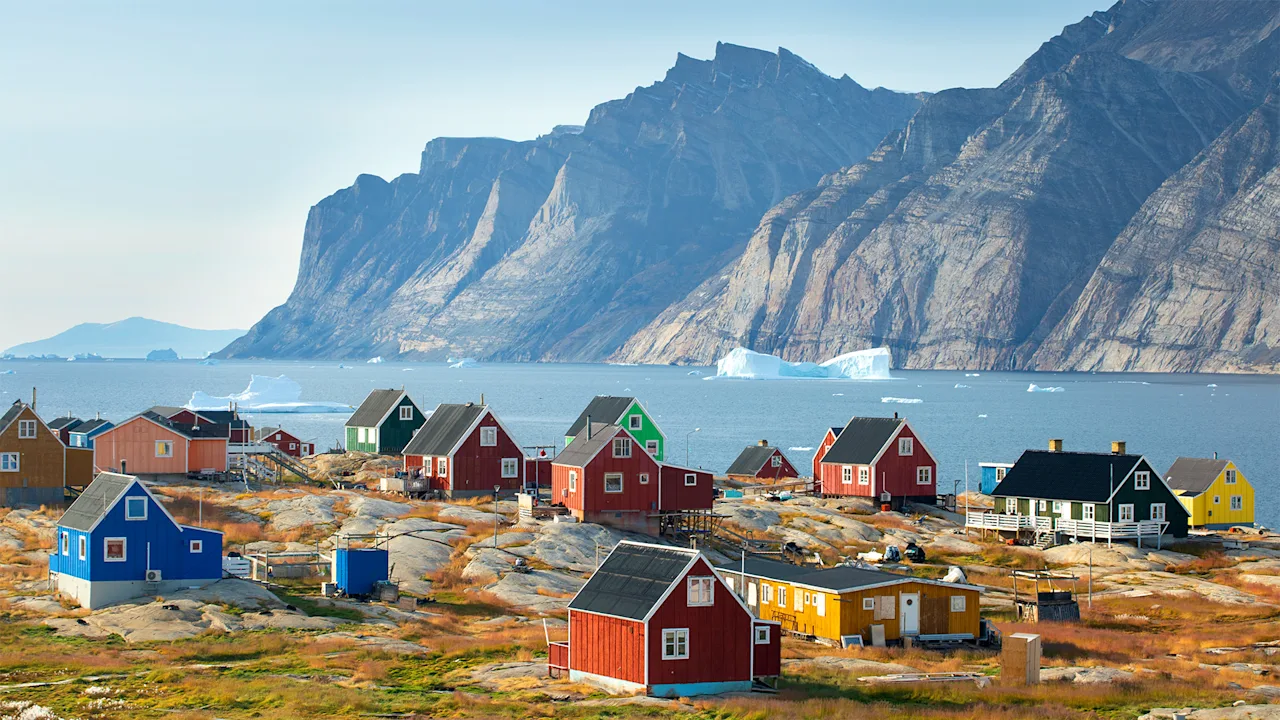
Why Denmark removed 40% of Greenland from the economy—and what it teaches us about modern capital
A useful rule of thumb is that when a problem persists for decades despite serious effort, the failure is usually not one of effort or intelligence, but of framing. Climate change sits squarely in this category. We have poured talent, capital, policy, and good intentions into solving it, and yet the core dynamics continue to worsen. This suggests that something foundational is off in how we are thinking about the problem. One of the clearest illustrations of that deeper issue sits far from financial centers and climate summits, in the Arctic. About 50 years ago, Denmark made a decision that looks increasingly unusual by modern economic standards. It removed around 40% of Greenland—nearly 1 million square kilometers—from economic use. This was not a marginal conservation effort. It was the largest protected land designation on earth, an area over 100 times the size of Yellowstone. The land remains a functioning Arctic ecosystem, supporting polar bears, seals, walruses, musk oxen, Arctic foxes, wolves, and vast seabird populations. From a narrow economic lens, this choice appears irrational. Greenland contains valuable mineral resources. It also holds growing geopolitical importance as Arctic shipping routes open and strategic competition intensifies. By standard economic logic, leaving that much land “unused” looks like a forfeited opportunity. But Denmark’s decision reveals something important: Not everything that can be monetized must be. And, more important, not everything should be exposed to economic optimization. In today’s dominant economic framework, nature is treated primarily as an input. Land, minerals, forests, water, and even stable climate conditions are framed as raw materials for industrial activity. Protection, when it occurs, is often justified as a temporary or charitable act—acceptable only until a more profitable use emerges. Under this logic, conservation survives only as long as it loses less money than extraction. This is not an accident. It i